
Table of Contents
- <strong>Can Cats Eat Tuna? What Every Cat Owner Needs to Know</strong>
- What It Means That Cats Are Obligate Carnivores
- Why Tuna Appeals to Cats
- Are There Health Benefits to Tuna for Cats?
- What the Experts Say (Top Competitive Insights)
- Can Cats Eat Tuna? The Short Answer
- Types of Tuna: Which Are Safe & Which to Avoid?
- Risks of Feeding Tuna to Cats
- Serving Guidelines: How Much Tuna Is Safe?
- Special Considerations by Life Stage or Health Condition
- How to Introduce Tuna Safely (Step-by-Step)
- Summary & Recommendations
- Frequently Asked Questions
This blog post may contain affiliate links. As an Amazon Associate I earn from qualifying purchases.
Can Cats Eat Tuna? What Every Cat Owner Needs to Know
If you’ve ever cracked open a can of tuna and wondered whether it’s safe to share with your feline friend, you’re not alone. Cats are famously drawn to the rich aroma and taste of tuna. But is it truly safe? And under what conditions?
In this comprehensive guide from Mad Cat Man, you’ll learn:
- Whether cats can eat tuna (and in what form)
- The benefits and risks of feeding tuna to cats
- Safe serving guidelines (how much, how often)
- Special considerations (kittens, senior cats, health conditions)
- How to introduce tuna safely
- Snippet-friendly FAQs for quick reference
This article draws on vet-reviewed sources, nutritional research, and up-to-date recommendations to ensure you’re getting accurate, trustworthy information.
What It Means That Cats Are Obligate Carnivores
Cats are obligate carnivores — meaning their bodies are built to rely on nutrients found only in animal tissues. They need certain amino acids, vitamins, and fatty acids that plants can’t reliably provide. Wikipedia
Because of this, some pet owners see fish like tuna as a natural, tempting option. Indeed, tuna offers protein, omega-3 fatty acids, and some vitamins. But giving tuna to cats comes with caveats — because it is not a complete food on its own.
Why Tuna Appeals to Cats
One reason cats find tuna so irresistible has to do with their sense of taste. Recent research shows that cats have specialized taste receptors (TAS1R1 and TAS1R3) attuned to umami — the savory profile many meats and fish carry — and tuna is rich in nucleotides like inosine monophosphate (IMP) and free l-histidine, which amplify that umami signal. Wikipedia
In short: tuna is tasty to cats. But tasty doesn’t always equal safe when it comes to nutrition.
Are There Health Benefits to Tuna for Cats?
When given in moderation, tuna can offer certain nutritional perks:
- High-quality protein — Tuna delivers lean protein, supporting muscle health.
- Omega-3 fatty acids (EPA & DHA) — These support skin, coat, and anti-inflammatory health.
- Vitamins and minerals — Tuna contains vitamin B12, vitamin D, selenium, and potassium.
- Low carbohydrates — Because cats metabolize carbs inefficiently, high-protein, low-carb foods align with their biology.
However, these benefits are conditional: they assume the tuna is plain, free from additives, and used as just a small part of the cat’s diet. Tuna alone lacks essential nutrients (e.g. taurine, balanced vitamins, minerals) and cannot sustain a cat’s dietary needs over time. Hill’s Pet Nutrition+1
What the Experts Say (Top Competitive Insights)

When benchmarking top-ranking content for “Can cats eat tuna”, several common themes and best practices emerge:
- Tuna is not nutritionally complete, so it shouldn’t replace balanced cat food. yourvetonline.com+4PetMD+4Hill’s Pet Nutrition+4
- Mercury risk is a recurring concern, especially with certain types of tuna (e.g. albacore). Daily Paws+3Hill’s Pet Nutrition+3Tufts Now+3
- Vitamin E deficiency & steatitis (yellow fat disease) can occur if tuna (rich in unsaturated fat) is overfed. The Dodo+2The Spruce Pets+2
- Allergy potential — fish is a known allergen in cats (itching, GI upset). Hill’s Pet Nutrition+1
- Serving guidelines are nearly universally given: make tuna a treat (<10% of calories), choose tuna in water, avoid oil and salt, limit frequency. The Spruce Pets+4Tufts Now+4Hill’s Pet Nutrition+4
- Citations and authority — vet-authored sites, university/extension pages, and pet nutrition brands dominate the top spots.
- Featured snippets and FAQs — Many pages include “Can cats eat tuna?” as a bold question with a short answer, then expand.
- Visuals, tables, and practical tips — Several sites offer tables for “safe amounts,” “types of tuna,” or “risks vs benefits.”
To outperform them, this article must be deep, fact-checked, rich in practical guidance, and SEO-structured with snippet-ready sections.
Can Cats Eat Tuna? The Short Answer
Yes — cats can eat tuna occasionally, but only under controlled conditions. It must never become a regular meal or their primary protein source.
Here’s a snippet-style answer suitable for featured snippets:
Featured Snippet:
Cats can eat plain, unseasoned tuna in small amounts (less than 10% of their daily calories) as an occasional treat. Avoid tuna packed in oil, brine, or with spices. Tuna lacks essential nutrients and carries risks like mercury exposure, so it should never substitute for balanced cat food.
Types of Tuna: Which Are Safe & Which to Avoid?
Choosing the right kind of tuna makes all the difference in safety.
| Tuna Type | Safety Notes | Best Use |
|---|---|---|
| Canned tuna in water (plain, no salt/additives) | Lowest risk; often recommended in moderation | Occasional safe treat |
| Canned “chunk light” | Lower mercury than albacore | Safer option among canned |
| Canned albacore (“white tuna”) | Higher mercury | Use rarely, sparingly |
| Canned tuna in oil / brine / with seasonings | High fat, sodium, and additives — can cause digestive and electrolyte issues | Avoid |
| Fresh or cooked tuna (plain, boned, steamed/grilled) | Acceptable if fully cooked, unseasoned | Occasional small servings |
| Raw or sushi-style tuna | Risk of bacteria, parasites, and enzyme thiaminase (destroys vitamin B1) | Avoid |
Key takeaway: Always choose plain, water-packed tuna without additives, and serve cooked or canned in water.
Risks of Feeding Tuna to Cats
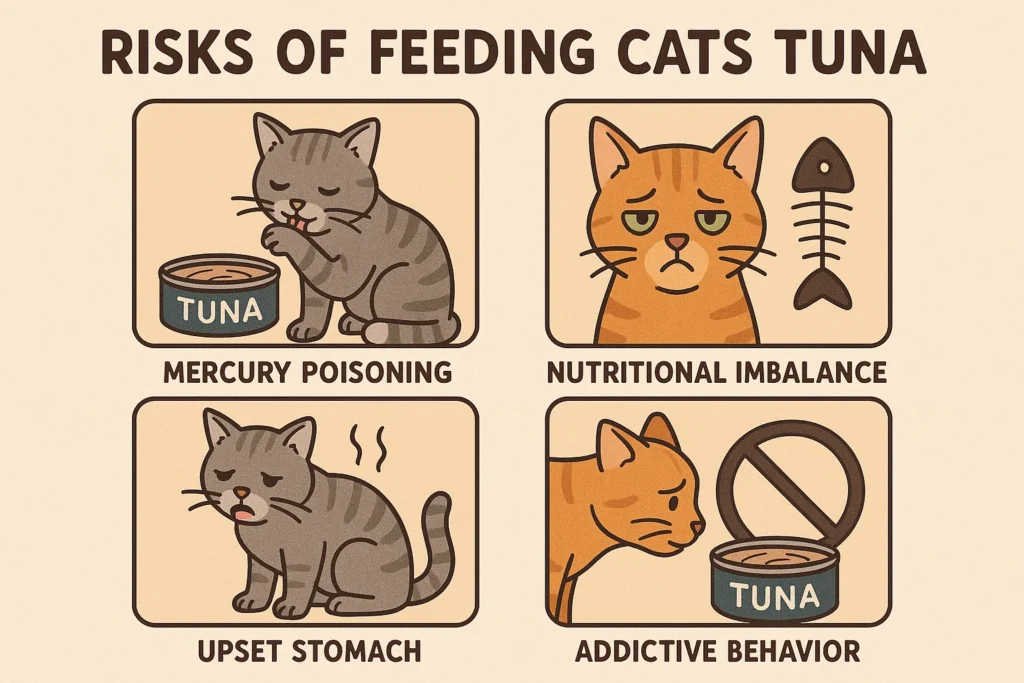
Feeding tuna frequently or in large amounts may lead to the following risks:
1. Mercury Poisoning (Heavy Metal Accumulation)
Tuna tends to accumulate mercury, especially in larger species like albacore. Over time, mercury buildup can lead to neurological symptoms: tremors, loss of coordination, vision issues, weakness. uk.sheba.com+3Tufts Now+3Hill’s Pet Nutrition+3
A veterinary advice article from Tufts recommends keeping tuna treats rare and avoiding albacore. Tufts Now
2. Vitamin E Deficiency / Steatitis (“Yellow Fat Disease”)
Tuna contains high levels of unsaturated fats. If a cat’s diet is skewed with too much tuna, they may not get enough antioxidants like vitamin E. This imbalance can lead to steatitis — inflammation of fat tissue. The Dodo+2The Spruce Pets+2
3. Nutritional Imbalance / Malnutrition
Tuna lacks key nutrients such as taurine, adequate vitamins, and minerals in the right ratios. A diet overly reliant on tuna can lead to deficiencies and health problems. The Spruce Pets+2Hill’s Pet Nutrition+2
4. Allergies & Food Sensitivities
Fish (including tuna) is among the more common allergens for cats. Signs include itching, vomiting, diarrhea, skin changes, and hair loss. Hill’s Pet Nutrition+1
5. “Tuna Addiction” / Picky Eating
Because tuna is so palatable, some cats may refuse regular food in favor of tuna, leading to feeding difficulties and imbalance. The Dodo+2Daily Paws+2
6. Excess Sodium / Electrolyte Imbalance
Tuna packed in brine or salt water may contain excessive sodium, which can lead to dehydration, electrolyte problems, or kidney strain. uk.sheba.com+2Daily Paws+2
7. Other Potential Concerns (lesser evidence)
Some sources suggest a possible link between long-term canned tuna consumption and oral cancers (e.g. squamous cell carcinoma), though evidence is not conclusive. Cornell Vet College
Serving Guidelines: How Much Tuna Is Safe?
To use tuna responsibly, follow these general best practices:
- Limit tuna to < 10% of daily calories. If your cat’s daily intake is 200 kcal, tuna should provide no more than about 20 kcal.
- Small portion sizes: Many veterinarians suggest about 1 tablespoon of plain tuna (cooked or water-packed) once per week for an average adult cat. PetMD+1
- Best frequency: Once per week or less. Some sources allow up to 2 times weekly at most. yourvetonline.com+2Hill’s Pet Nutrition+2
- Mix with regular food: Use tuna as a topper or flavor enhancer rather than a standalone meal.
- Monitor total tuna intake: If your cat is already eating commercial food containing tuna, adjust accordingly to avoid total excess.
- Avoid extreme portions: A full can (even small) often far exceeds safe limits.
Special Considerations by Life Stage or Health Condition
Kittens (Under 1 Year)
- Their nutrient needs are delicate. Tuna (alone) is not balanced for growth. The Spruce Pets+3PetMD+3encorepetfood.com+3
- Some sources caution even against occasional tuna until after 1 year. PetMD
- If offered at all, it should be tiny, rare, and mixed with kitten-formulated food.
Senior Cats / Cats with Kidney or Liver Disease
- These cats may be more vulnerable to mercury and higher sodium intake. Consult your vet before introducing tuna.
- Monitor kidney parameters closely if you do offer a small treat.
Cats with Food Sensitivities or Allergies
- If your cat has a known fish or food allergy, avoid tuna entirely.
- Always introduce tuna as a novel food slowly and watch for GI or skin reactions.
Overweight or Sedentary Cats
- Tuna is calorie-dense relative to many commercial cat foods. Giving it as a treat can contribute to weight gain. Hill’s Pet Nutrition+1
How to Introduce Tuna Safely (Step-by-Step)
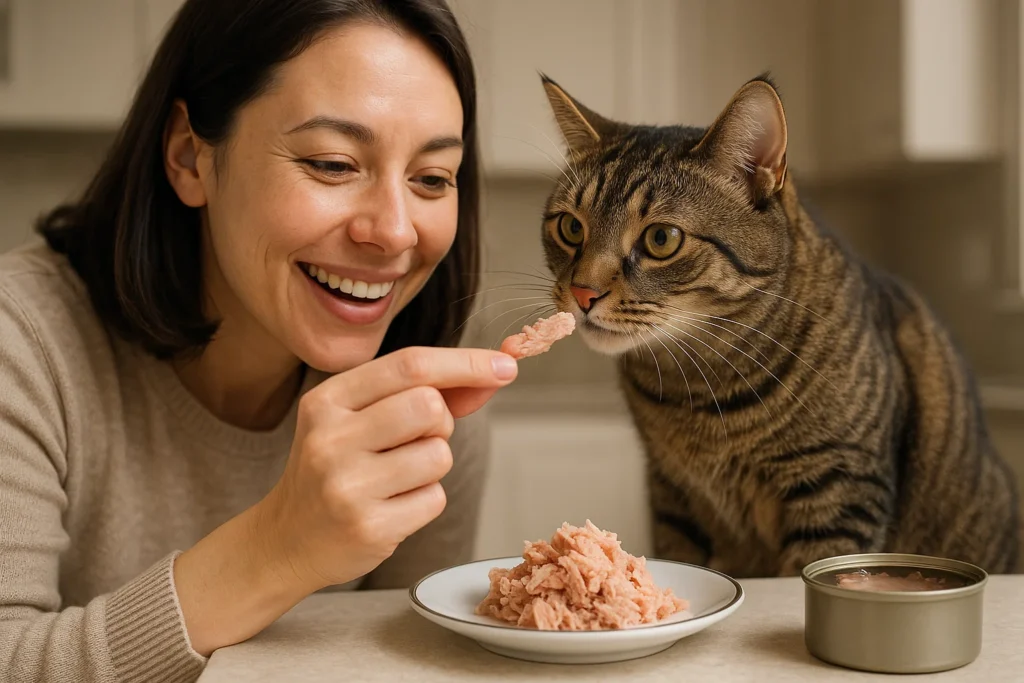
- Get vet approval — especially for cats with health issues.
- Start very small: Offer a pea-sized amount mixed into their regular food.
- Observe closely over 24–48 hours for vomiting, diarrhea, allergic signs.
- Increase gradually (if no issues) — but keep total well under 10% of daily calories.
- Alternate with other proteins — don’t become reliant on tuna.
- Track cumulative tuna intake (even if it’s part of commercial food) to avoid overexposure.
- Stop immediately if adverse signs appear.
Summary & Recommendations
- Tuna can be given to cats occasionally as a treat — in small, controlled amounts and plain (water-packed, no additives).
- Never let tuna replace a balanced cat food diet.
- Watch for the major risks: mercury accumulation, vitamin E deficiency (steatitis), nutritional imbalance, and food sensitivities.
- For kittens, seniors, or cats with health conditions, consult your veterinarian first.
- Use tuna more as a flavour enhancer or training reward, not a daily staple.
- If your cat already consumes commercial tuna-based cat food, adjust your extra tuna treats accordingly.
When used wisely, tuna can delight your cat — but always keep its role modest, and place your trust in a well-formulated, complete cat diet as the foundation of their nutrition.
Frequently Asked Questions
Q: Can cats eat tuna every day?
A: No. Tuna lacks balance and carries risk. Use it only occasionally, not daily.
Q: Is canned tuna okay for cats?
A: Yes — if it’s packed in water, plain, without salt, oil or seasonings.
Q: Can kittens have tuna?
A: It’s best to avoid or severely limit it in juveniles; their growth demands require highly balanced nutrition.
Q: Why avoid tuna in oil or brine?
A: Oil adds excessive fat/calories; brine contains high sodium — both can cause digestive or electrolyte disturbance.
Q: Does tuna cause mercury poisoning in cats?
A: Over time, yes — especially with large or frequent servings of high-mercury species like albacore.
Q: What are signs my cat overate tuna or is having issues?
A: Watch for vomiting, diarrhea, loss of balance, weakness, skin inflammation, refusal to eat regular food, or neurological signs.
In my experience, while these alternatives can work in a pinch, it’s always best to transition back to your cat’s regular diet as soon as possible to avoid digestive upset or nutritional imbalances.