
Table of Contents
This blog post may contain affiliate links. As an Amazon Associate I earn from qualifying purchases.
⚠️ Medical Disclaimer: This article is for informational purposes only and does not replace professional veterinary diagnosis or treatment. If your cat is showing signs of a tail injury, contact your veterinarian immediately. Always seek the advice of a qualified veterinarian for any health concerns about your pet.
Reviewed by a Doctor of Veterinary Medicine (DVM). This content reflects current veterinary clinical guidance and peer-reviewed research.
You noticed your cat’s tail hanging limp — and now your stomach is in knots. You’re not sure if this is a minor bruise or something that needs an emergency vet visit in the next hour. The problem with cat tail injury signs is that the most dangerous ones — the kind that damage nerves controlling your cat’s bladder — can look deceptively mild at first. Waiting too long to act can mean the difference between full recovery and permanent nerve damage.
In this guide, you’ll learn exactly which cat tail injury signs indicate a true emergency, what to do before you reach the vet, and how to use The Tail Triage Scale to make that decision in minutes. You’ll move through four key areas: spotting the signs, recognizing neurological emergencies, understanding treatment options, and clearing up the most common myths.
Key Takeaways: Cat Tail Injury Signs
A limp, dragging, or kinked tail is the most visible cat tail injury sign — but the real danger is nerve damage, which can cause permanent incontinence if left untreated.
- Emergency now: Inability to urinate, dragging hind legs, or a completely limp tail base requires immediate vet care
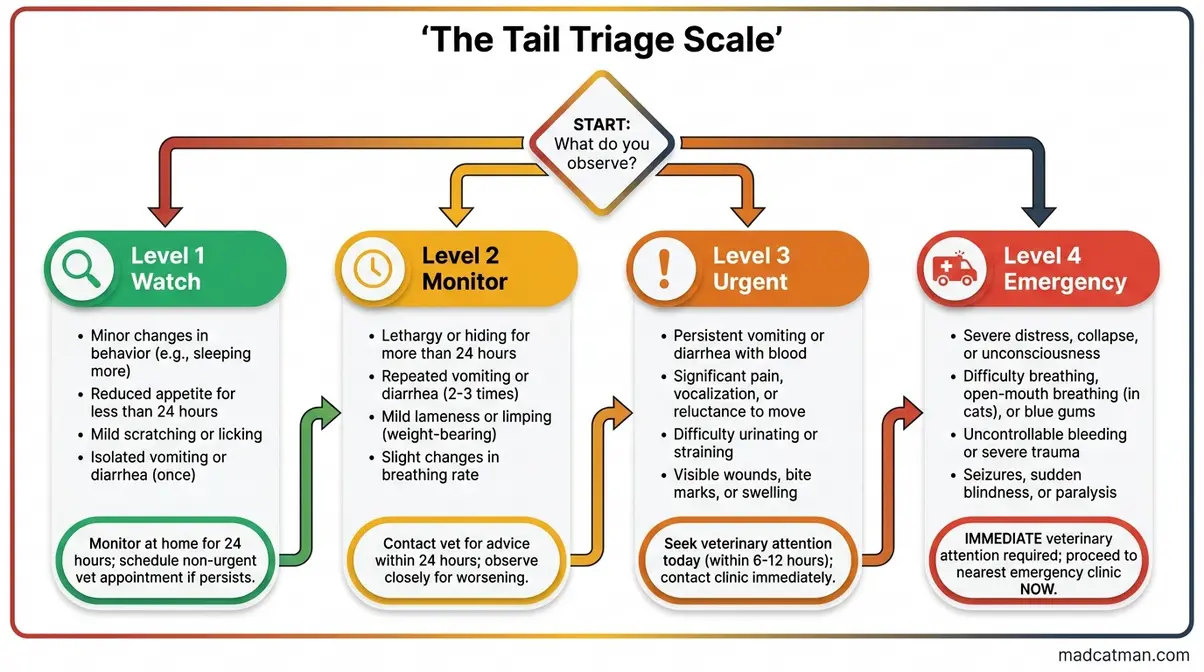
- The Tail Triage Scale categorizes injuries into 4 levels — Watch, Monitor, Urgent, and Emergency — to guide your decision fast
- Behavioral signs matter: Tail-tucking, loud vocalization, and hiding are as important as visible physical changes
- Tip injuries can sometimes heal on their own; base injuries almost never can without veterinary treatment
- Stray cats: You can assess tail injuries from a distance using 3 observational techniques — no handling required
How to Spot Cat Tail Injury Signs
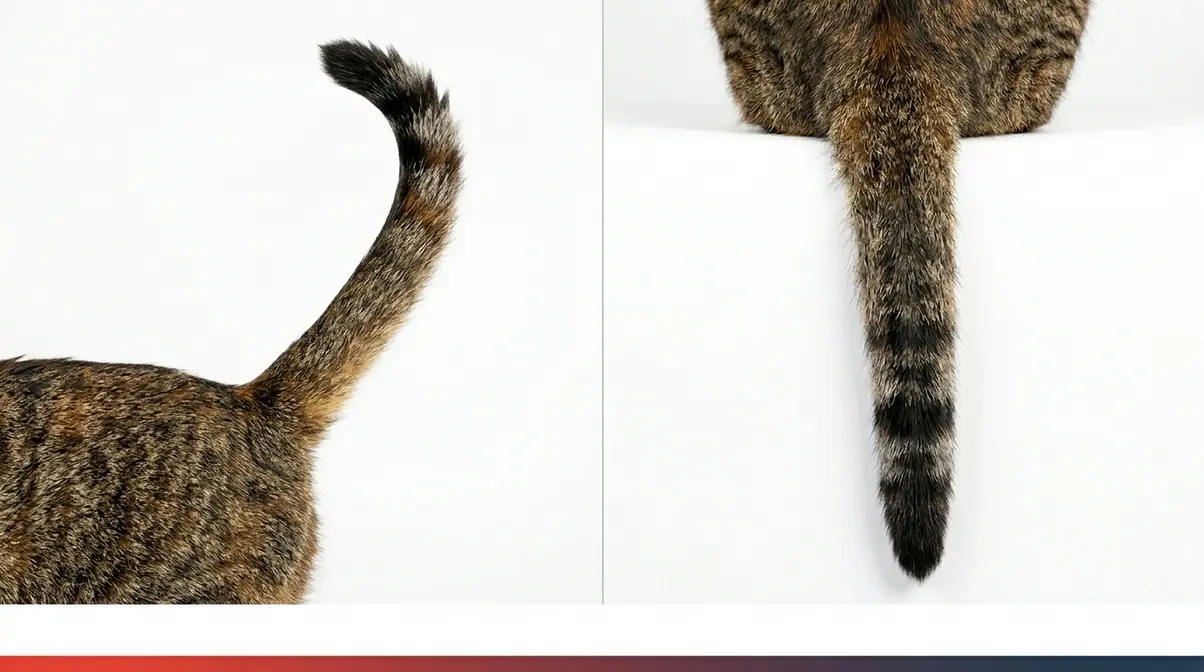
A cat’s tail contains up to 23 vertebrae and dozens of nerves — making it far more complex than it looks. When something goes wrong, the signs range from a subtle kink to a tail dragging completely along the ground. According to the American Association of Feline Practitioners (AAFP) 2026 Pain Management Guidelines, acute pain in cats is frequently expressed through behavioral shifts — including loud vocalization, hiding, and altered body postures such as a continuously drooping or limp tail — rather than through obvious distress signals that owners easily recognize.
That’s exactly why this guide introduces The Tail Triage Scale: a 4-level severity framework (Watch → Monitor → Urgent → Emergency) that assigns a clear risk level to each sign you observe. Using both physical and behavioral signs together gives you a far more accurate picture than either category alone. Most owners focus on what they can see and miss the behavioral half of the equation entirely.
Physical Changes to Look For
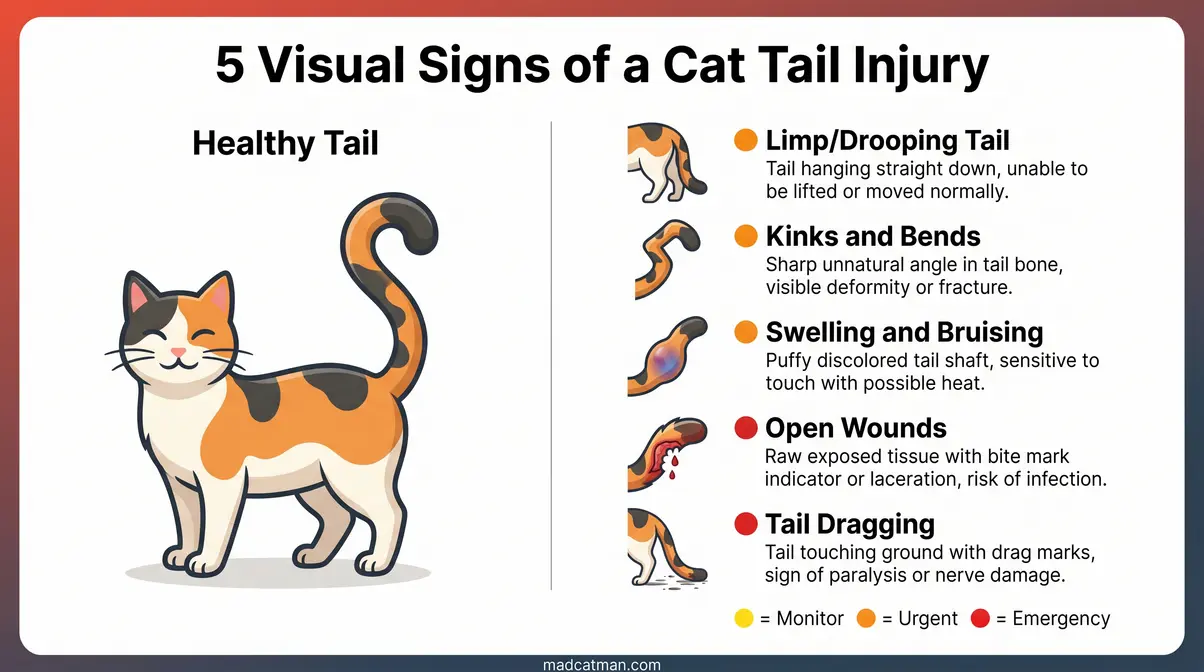
The physical signs of a tail injury are often the first thing you’ll notice. Here’s what each one means — and where it falls on The Tail Triage Scale:
- Limp or drooping tail — The tail hangs straight down with no muscle control, rather than curling or lifting naturally. This happens when nerves are compressed or severed at the tail base. Tail Triage Scale: Monitor (tip affected) → Urgent (base affected). Why it matters: a limp tail base almost always signals nerve involvement.
- Kinks, bends, and abnormal angles — A kinked tail has a sharp, unnatural bend in the bone — like a broken pencil. You may be able to gently feel a distinct bump or displacement along the tail shaft. Tail Triage Scale: Monitor (tip) → Urgent (base). A kink near the base warrants same-day veterinary assessment.
- Swelling, bruising, and open wounds — Swelling appears as puffiness along the tail shaft; bruising shows as darkened or discolored skin beneath the fur. Open wounds, bite marks, or raw exposed tissue signal serious injury. Degloving — a traumatic injury where the skin is stripped from the tail, often by car wheels or machinery — requires immediate emergency care. Tail Triage Scale: Urgent → Emergency.
- Tail dragging on the ground — There is an important difference between a cat voluntarily holding its tail low (a communication behavior) and a tail that drags because the cat physically cannot lift it. The latter is a neurological sign covered in the next section. Tail Triage Scale: Emergency.
If you see your cat’s tail hanging at a 90-degree angle from the base and your cat cannot lift it while walking, this is not a sprain. It requires same-day veterinary assessment. For more on severe injuries including degloving and necrosis, see our guide to recognize the signs of tail injuries.
According to the AAFP pain guidelines, acute pain in cats is frequently indicated by behavioral shifts, including loud vocalization, hiding, and altered body postures such as a continuously drooping or limp tail (AAFP, 2026).
What does a fractured tail look like?
A fractured cat tail typically shows a sharp, unnatural bend or kink — like a pencil snapped at an angle. You may feel a distinct bump or displacement along the tail shaft. Swelling, bruising, and sensitivity when touched are also common. Near the tip, fractures sometimes cause only a small, painless kink. Near the base, fractures are more likely to involve swelling, limpness, and pain. Not all fractures are visible — some require X-rays to confirm. If the tail hangs at an abnormal angle and your cat cannot lift it, treat this as an Urgent-to-Emergency finding.
Physical changes are often the easiest signs to spot — but behavioral changes can reveal pain that isn’t visible to the naked eye. Here’s what to watch for in your cat’s behavior.
Behavioral and Mobility Signs
Cats are stoic animals. They are biologically wired to hide pain, which makes behavioral signs especially important. According to Texas A&M veterinary guide, the feline tail is a direct extension of the spine — severe injuries at the base can cause nerve damage that directly impairs bladder and bowel function (Texas A&M Vet Med).
Here are the five behavioral signs most commonly associated with a tail injury:
- Loud vocalization — Cats in significant pain often cry out when their tail is accidentally touched or when they attempt to move. Cats are typically stoic; if yours is vocalizing loudly, the pain is real and serious. Tail Triage Scale: Monitor → Urgent.
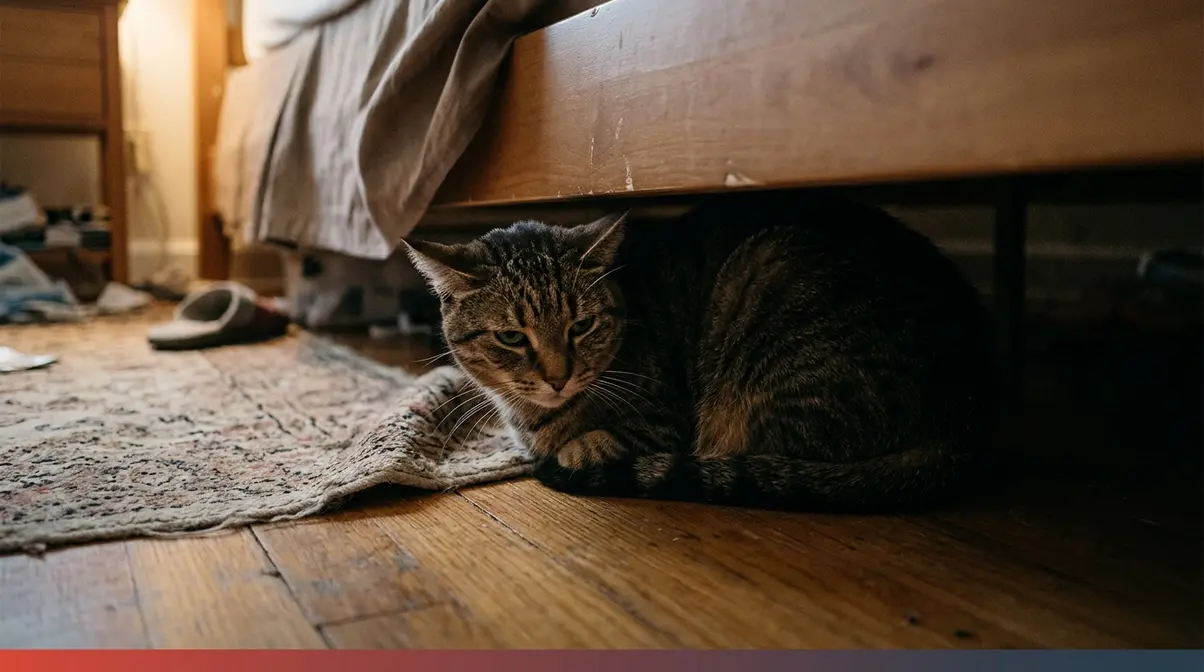
- Hiding and withdrawal — A normally social cat that suddenly retreats under the bed and refuses to come out is sending a pain signal — not a mood message. Cats instinctively conceal vulnerability when injured. Tail Triage Scale: Monitor.
- Tail-tucking — Distinguish between communicative tail-tucking (brief, situational, linked to fear) and injury-related tail-tucking (persistent, the cat keeps the tail pressed tightly to the body because any movement causes pain). The injury version doesn’t resolve when the stressor disappears. Tail Triage Scale: Monitor → Urgent.
- Overgrooming or chewing at the tail — Obsessive licking, biting, or chewing at the tail often indicates nerve pain — a tingling or hypersensitivity sensation the cat cannot ignore. This behavior can also worsen existing wounds significantly. Overgrooming can signal underlying pain — learn more about overgrooming as a sign of discomfort and when it requires attention.
- Aggression when the tail is touched — A normally gentle cat that hisses, swipes, or bites when you approach their hindquarters is communicating significant pain. Never force a tail examination.
If your cat is hiding, not eating, and flinches or cries when you approach their hindquarters, those three behavioral signs together are a stronger indicator of serious injury than any single physical change. The combination is your most reliable diagnostic tool.
Now that you know what to look for in your cat’s body and behavior, the next step is understanding which signs cross the line from “monitor at home” into genuine emergency territory.
Injuries Needing Immediate Care
Not all tail injuries carry the same risk. Some escalate within hours. Here’s a quick overview of the injury types most likely to become serious — and where each falls on The Tail Triage Scale:
| Injury Type | Tail Triage Scale Level |
|---|---|
| Bite wounds (animal bites — dog, cat) | Urgent — vet within 24 hours |
| Degloving (skin stripped from tail) | Emergency — vet immediately |
| Fan belt / machinery crush injuries | Emergency — vet immediately |
| Self-mutilation (chewing own tail) | Urgent → Emergency (neurological) |
Bite wounds look small on the surface but create deep puncture wounds. The skin frequently closes over the entry point, trapping bacteria and creating a rapidly spreading infection. Any cat tail injury signs involving a bite should be assessed by a vet within 24 hours, even if the wound looks minor.
Degloving injuries are severe emergencies. The tail may appear intact from a distance, but the skin is missing or hanging loosely. Fan belt and machinery injuries cause crushing and degloving simultaneously — these are always Emergency-level.
Self-mutilation — a cat compulsively chewing its own tail — indicates significant neurological distress. The cat is responding to nerve pain it cannot escape. According to the AAFP feline pain guidelines, self-mutilation is a recognized behavioral indicator of nerve pain in cats (AAFP, 2026).
Minor sprains and tip fractures are one thing. But there’s a category of tail injury that’s genuinely life-threatening — and it can happen even when the tail looks relatively normal. Here’s what you need to know about tail pull injuries.
Emergency Neurological Signs
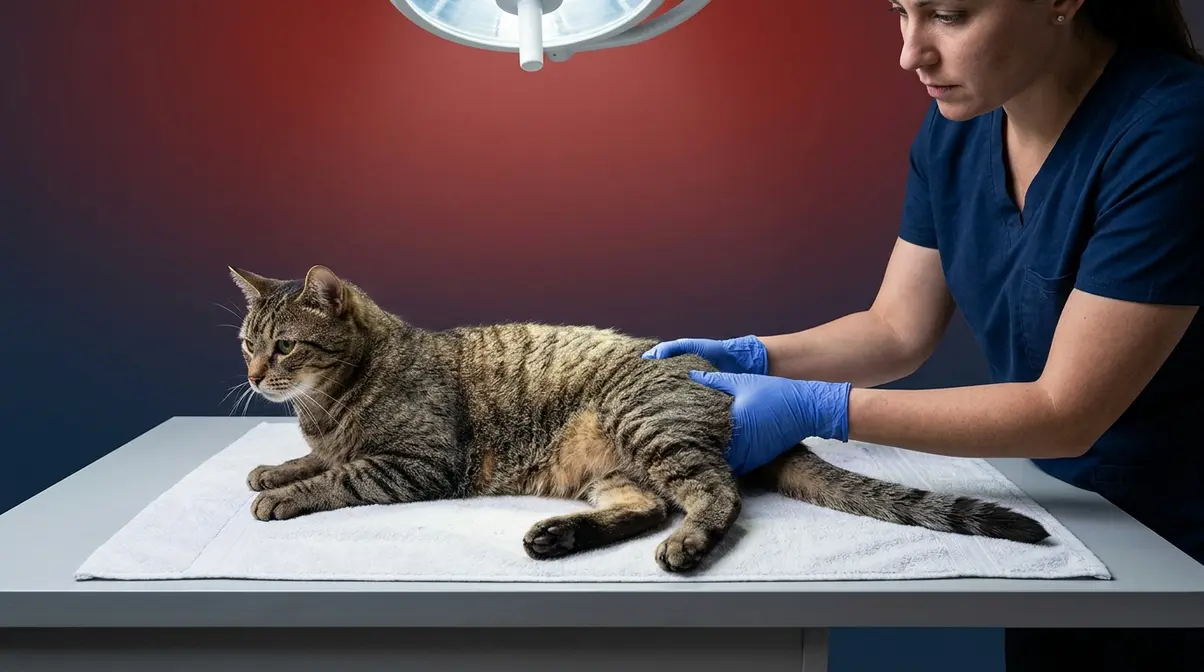
A clinical study published in the Journal of Veterinary Internal Medicine found that approximately 60% of cats with tail pull injuries regained full bladder function within 30 days of the initial trauma — but only when they received prompt veterinary intervention (PubMed/NIH, 2001). That statistic carries a critical implication: the cats who recovered did so because their owners recognized the neurological signs early and acted fast. Nerve damage, inability to urinate, and hind-leg weakness are not symptoms to wait out.
What Is a Tail Pull Injury?
A tail pull injury — also called a sacrocaudal avulsion (where the tail is forcefully separated from the spine) — occurs when the tail is grabbed, caught, or pulled with enough force to stretch or tear the nerves at its base. The sacrococcygeal region (the junction where your cat’s tail meets the base of the spine) is the most vulnerable point in any tail trauma.
Think of the tail’s nerves like electrical cables. When the tail is pulled hard enough, those cables can snap — cutting off signals to the bladder and bowel entirely. The cat may still have some tail movement and look relatively normal on the outside. But internally, the nerve damage is already done.
Common causes include:
- A cat’s tail being caught in a closing door
- A dog grabbing and pulling the tail
- A cat being struck by a vehicle and dragged
- A kitten’s tail being pulled by a child
According to VCA Hospitals’ first aid guide for injured tails, tail pull injuries are among the most serious cat tail injury signs because the visible damage rarely reflects the full extent of internal nerve trauma (VCA Hospitals). The sacrococcygeal region must be assessed by a veterinarian using imaging to determine the true extent of injury.
Critical Neurological Red Flags
If your cat’s tail injury has reached the neurological level, these are the signs that classify it as Tail Triage Scale Level 4: Emergency. Act immediately — do not wait until morning.
“Serious Warning Signs: Loss of tail movement; Inability to lift the tail; Trouble urinating or defecating. These severe symptoms may indicate nerve damage at the base of the tail — a condition that can become permanent without prompt treatment.”
The critical neurological red flags are:
- Inability to urinate — If your cat is straining in the litter box, producing no urine, or dribbling urine constantly without control, this is a medical emergency. Bladder dysfunction from nerve damage can become life-threatening within 24-48 hours.
- Constant urine dribbling — Urine leaking continuously without the cat squatting or attempting to urinate signals complete loss of bladder nerve control.
- Dragging hind legs — When hind-leg weakness or paralysis accompanies a tail injury, the nerve damage has extended beyond the tail into the spinal cord. This is an emergency.
- No tail movement at the base — A cat that cannot move the base of its tail at all — even when stimulated — has likely suffered significant nerve avulsion (tearing of the nerve root from the spinal cord).
- Extreme pain at the base of the spine — Vocalization, aggression, or extreme sensitivity when you touch the area where the tail meets the body indicates active nerve compression.
According to the NDSR veterinary management guide, early veterinary assessment is essential because the degree of initial neurological deficit does not always predict long-term outcome — cats with severe initial signs sometimes recover fully, while those with mild signs can deteriorate rapidly (NDSR Neurology, 2026).
If your cat is showing any of the signs above, stop reading and contact an emergency vet now.
Prognosis and Recovery Timeline
The 60% bladder recovery figure is genuinely hopeful — but it comes with an important condition. Recovery depends heavily on how quickly treatment begins and whether the nerve damage is partial or complete.
Here’s what veterinary research tells us about prognosis:
- Partial nerve damage: Cats with some residual tail movement and partial bladder control have the best prognosis. Many recover full function within 30-60 days with supportive care.
- Complete nerve avulsion: When nerves are fully severed, recovery of bladder and bowel function is unlikely. Amputation of the tail is often recommended to prevent self-mutilation and chronic infection.
- The 30-day assessment window: Most veterinarians evaluate neurological recovery at 30 days post-injury. Improvement within that window is a strong positive indicator.
According to the GSVS emergency tail pull guide, cats that regain voluntary bladder control within the first month of injury have significantly better long-term outcomes than those who do not (Garden State Veterinary Specialists, 2026). All neurological signs on The Tail Triage Scale fall at Level 4: Emergency — there is no safe version of bladder dysfunction to monitor at home.
Cat Tail Injury Treatment Guide
Knowing what to do before you reach the vet is just as important as recognizing the signs. Veterinarians consistently report that improper handling of an injured cat — particularly one in pain — is one of the most common causes of additional injury during transport. The Tail Triage Scale guides not just your assessment, but your action: each level calls for a different response.
Safe Handling & First Aid Steps
- Estimated Time: 5-10 minutes
- Tools and Materials:
- Soft, thick towel
- Secure cat carrier
- Protective gloves (optional, for safety)
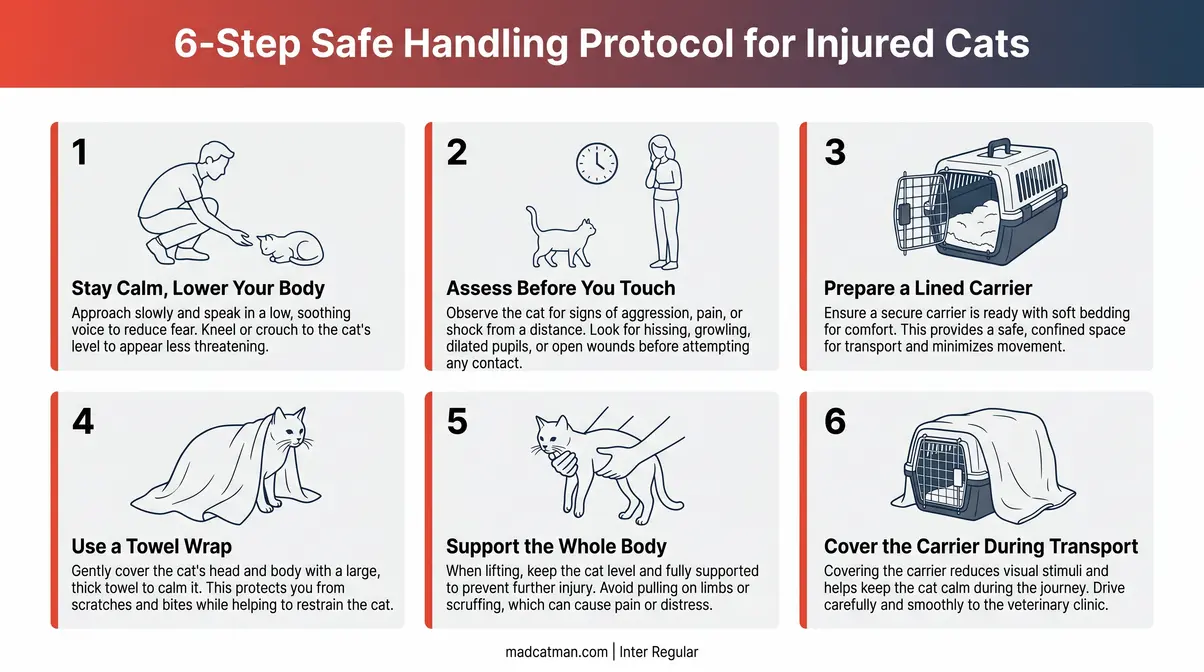
Before you touch your cat, understand one rule: a cat in pain will bite and scratch — even a cat that has never shown aggression before. Pain removes predictability. Follow these six steps to keep both of you safe:
Step 1: Stay calm and lower your body
Crouch down to your cat’s level. Slow, quiet movements reduce your cat’s stress response. Speak softly and avoid direct eye contact, which cats read as threatening.
Step 2: Assess before you touch
Spend 30 seconds observing from a short distance. Note tail position, leg movement, and whether your cat is vocalizing. This information is valuable for the vet.
Step 3: Prepare a carrier lined with a soft towel
Place the carrier on the floor with the door open before approaching your cat. Never lift an injured cat by the tail or hindquarters.
Step 4: Use a thick towel as a wrap
If your cat is distressed, drape a large towel gently over them before picking them up. This reduces the risk of bites and scratches, and provides light compression that can be calming.
Step 5: Support the whole body
Scoop one hand under the chest and one under the hindquarters. Keep the tail in its natural resting position — do not attempt to straighten or manipulate it.
Step 6: Keep the carrier covered during transport
A towel over the carrier reduces visual stimulation and keeps your cat calmer during the journey.
Do not apply bandages, splints, or any topical treatments to a tail injury before veterinary assessment. Bandaging a tail incorrectly can cut off circulation and worsen the injury. According to VCA Hospitals’ first aid guide, owners should avoid all home treatment beyond gentle containment and safe transport (VCA Hospitals).
Veterinary Treatment Options
Once at the clinic, your veterinarian will assess the injury using a structured neurological examination and, if needed, imaging such as X-rays or MRI. Here’s what to expect:
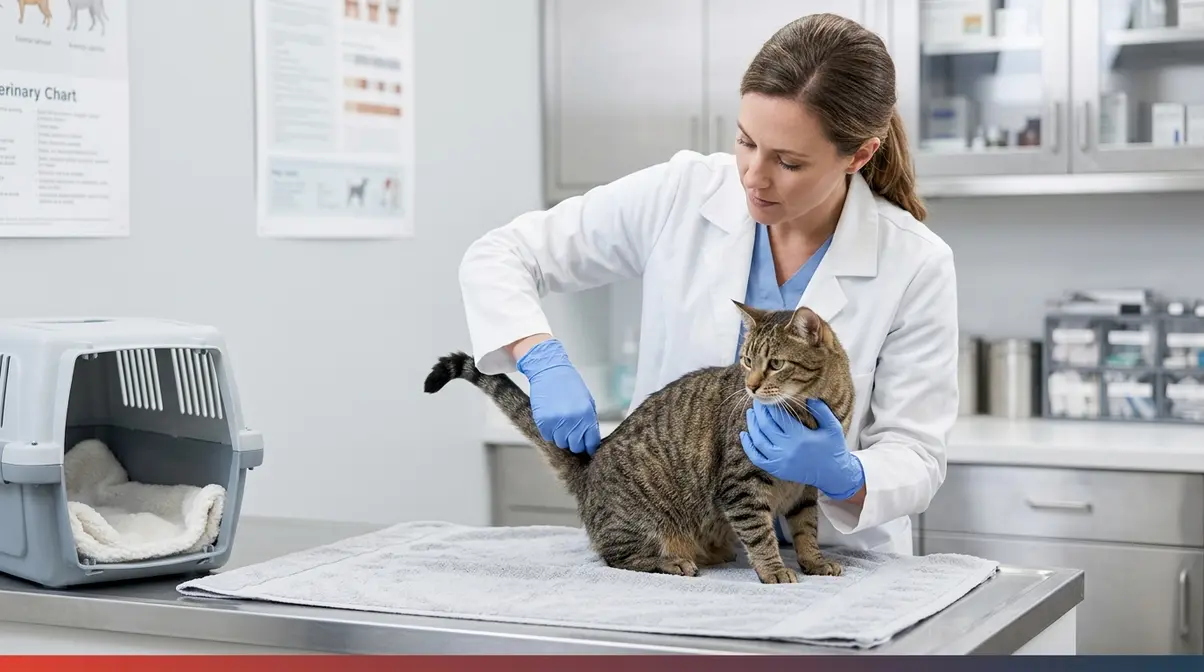
- Neurological exam: The vet will test tail movement, anal reflex (a key indicator of nerve function), and bladder tone. These tests take only a few minutes but provide critical diagnostic information.
- X-rays: Used to identify fractures, dislocations, or vertebral damage at the sacrococcygeal region.
- Pain management: Injectable pain relief is typically administered immediately, regardless of injury severity.
- Wound care: Bite wounds, abrasions, and degloving injuries are cleaned, debrided (dead tissue removed), and dressed. Antibiotics are prescribed for all bite wounds.
- Bladder management: If your cat cannot urinate, the vet will manually express the bladder or place a urinary catheter. Owners may be taught to manually express the bladder at home during recovery.
- Surgery or amputation: Severe cases — particularly those involving degloving or complete nerve avulsion — may require partial or full tail amputation to prevent chronic pain and infection.
Treatment costs vary widely by injury severity and location, ranging from a few hundred dollars for wound care to several thousand for surgical intervention and hospitalization. Pet insurance can significantly offset these costs — contact your provider before your appointment if time permits.
Can a Cat’s Tail Heal on Its Own?
This depends almost entirely on where the injury is located and what type of damage has occurred.
Tip injuries (the distal, or far end, of the tail) often involve minor fractures or kinks that cause little functional impairment. These sometimes heal without intervention, though veterinary assessment is still recommended to rule out infection and manage pain.
Base injuries (near the sacrococcygeal junction) almost never resolve without veterinary care. Nerve damage at the base does not repair itself reliably. Waiting to “see if it gets better” risks permanent incontinence and chronic pain.
According to the VIN veterinary partner resource on tail injuries, even fractures that appear minor on X-ray can mask significant nerve involvement — a veterinary examination is always the only reliable way to determine whether home monitoring is appropriate (VIN, 2026).
The honest answer: If you are asking whether the tail can heal on its own, the safer question to ask your vet is: “Can I monitor this at home, or does it need treatment today?” That question puts the decision in qualified hands.
Tail Myths & Stray Cat Assessment
Several persistent myths lead cat owners to underestimate tail injuries — or to misread their cat’s behavior entirely. Understanding what a cat’s tail actually does, and what certain behaviors really mean, makes you a more effective observer and advocate for your cat.
Can a Cat Still Wag a Broken Tail?
Yes — and this is one of the most common reasons owners delay seeking care. Partial tail movement does not mean the injury is minor. A cat with a fractured tail tip may still be able to move portions of the tail, particularly if the fracture is distal (toward the tip) and the nerves running through the base remain intact.
However, partial movement is not reassurance. A cat wagging or twitching a tail that has a visible kink, swelling, or that the cat otherwise avoids using is still showing signs of injury. The movement simply means the fracture has not disrupted the entire nerve pathway — yet.
The key question is not “Can my cat move their tail at all?” but rather: “Can my cat move the base of the tail normally, and is there any change in bladder or bowel function?” If the base of the tail is limp, if the cat avoids using the tail expressively, or if any change in urination occurs alongside the movement, the injury may still be serious. Movement at the tip with a limp base is still an Urgent-to-Emergency finding on The Tail Triage Scale. A cat wagging a kinked or swollen tail still needs veterinary assessment.
Assessing a Stray Cat’s Tail
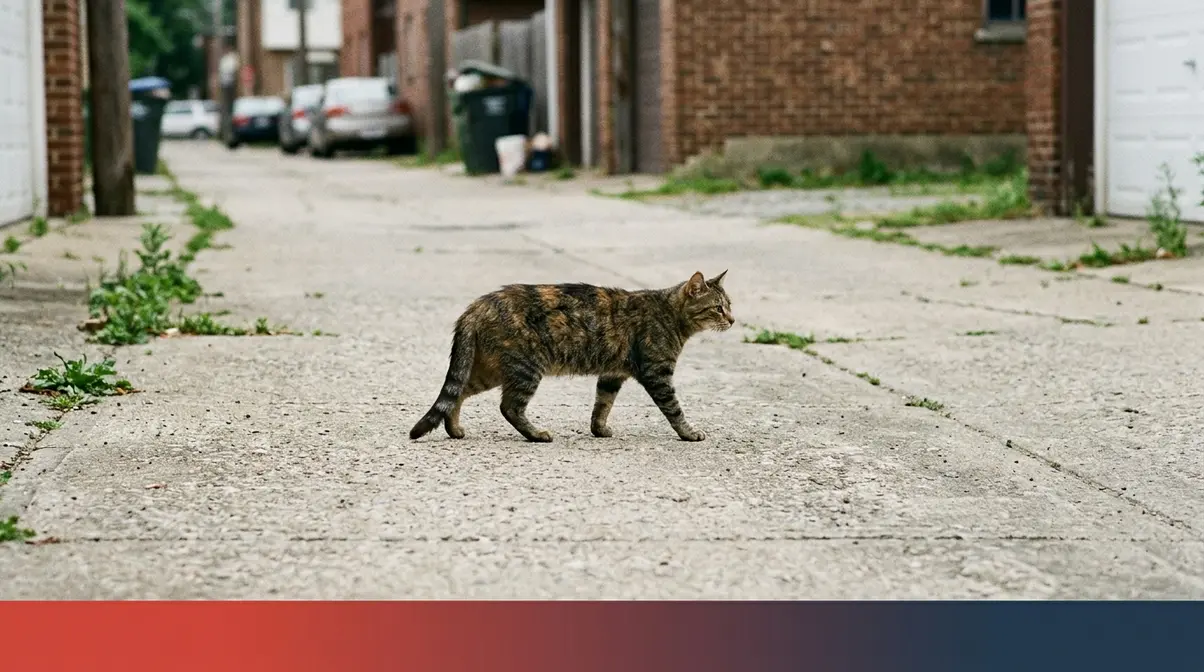
Stray and feral cats with tail injuries present a unique challenge: you cannot safely handle them, but you still want to determine whether they need emergency intervention. Veterinarians who work with community cats recommend three hands-off observational techniques:
- Watch the tail’s resting position from 10-15 feet away — A healthy cat’s tail moves fluidly and responds to stimulation (sound, movement nearby). A tail that hangs completely motionless, drags on the ground, or is held rigidly to one side suggests nerve involvement or fracture. Observe for at least two minutes before drawing conclusions.
- Observe gait and mobility — A stray cat with a tail pull injury often shows a distinctive wide-based, unsteady gait in the hind legs. Watch whether the cat can trot normally or appears to be dragging or compensating with its hindquarters. Hind-leg weakness alongside a limp tail is an Emergency-level finding even in a cat you cannot touch.
- Monitor elimination behavior if possible — If you can safely observe the area where the stray cat rests, look for signs of uncontrolled urination (wet patches beneath where the cat sits or lies) or repeated unsuccessful attempts to urinate. These are neurological red flags that justify contacting a local animal rescue organization or animal control for professional assessment and humane trapping.
If a stray cat shows any Emergency-level signs from a distance, contact your local animal rescue group, humane society, or animal control agency. Many have trap-neuter-return (TNR) programs with veterinary access that can provide emergency assessment without requiring you to handle the cat.
Tail Balance and Communication
A cat’s tail is not decorative. It serves two critical biological functions that explain why tail injuries affect your cat far beyond the injury site itself.
Balance: The tail acts as a dynamic counterweight during high-speed movement and precise navigation. Cats with tail amputations or severe tail injuries often show temporary — and sometimes permanent — changes in their ability to jump, land, and navigate narrow surfaces. This is why even “cosmetic” tail injuries can affect your cat’s quality of life.
Communication: The tail is one of the most expressive parts of a cat’s body. A tail held high signals confidence; a puffed tail signals fear; slow tail swishing signals focused attention or mild irritation. When a cat stops using their tail expressively — holding it flat, limp, or tucked regardless of context — this communicative shutdown is itself a clinical sign worth noting. It suggests the cat is in enough pain or neurological distress that normal communication has been suppressed.
Understanding this dual function also explains why tail injuries can cause behavioral changes that seem unrelated to the tail itself: reduced jumping, reluctance to climb, and social withdrawal are all downstream effects of tail dysfunction.
When to Call the Vet Immediately
Even with The Tail Triage Scale as a guide, home monitoring has clear limits. Veterinary clinical teams consistently identify the same pattern: owners who wait “one more day” to see if things improve are the ones most likely to arrive at the clinic with a cat whose prognosis has worsened significantly.
Common Mistakes Cat Owners Make
Understanding what not to do is as important as knowing the right steps. These are the most frequent mistakes veterinarians see following tail injuries:
- Applying home bandages or splints — Improper bandaging cuts off circulation and can cause tissue death within hours. Never wrap a tail injury at home.
- Giving human pain medications — Ibuprofen, acetaminophen (paracetamol), and aspirin are toxic to cats. Even small doses can cause liver failure, kidney damage, or death. Only use medications prescribed by your vet.
- Waiting to see if urination resolves — Bladder dysfunction from nerve damage does not resolve with rest. Every hour of untreated bladder obstruction or paralysis increases the risk of permanent damage.
- Assuming movement means safety — As discussed above, partial tail movement does not rule out serious nerve injury at the base.
- Attempting to straighten or manipulate the tail — This can worsen fractures, increase nerve compression, and cause extreme pain. Observe, contain, and transport — do not manipulate.
When Home Monitoring Is Not Enough
Use this as your go/no-go decision framework. If any single item on the Emergency list applies to your cat, do not wait — contact an emergency vet now.
Monitor at home (Watch — Level 1): Minor tip kink with no swelling, normal movement, normal eating, drinking, and litter box use. Recheck in 24 hours. Schedule a routine vet appointment within 48 hours.
Schedule a next-day appointment (Monitor — Level 2): Swelling or bruising along the tail shaft, mild limp, cat is eating and using the litter box normally, no vocalization at rest.
Seek urgent care today (Urgent — Level 3): Bite wound of any size, open wound or abrasion, significant kink near the tail base, moderate pain with vocalization when touched, or any change in litter box behavior.
Go to an emergency vet now (Emergency — Level 4): Inability to urinate or constant urine dribbling, dragging hind legs, complete loss of tail movement at the base, extreme pain response, degloving, fan belt injury, or any sign of neurological involvement.
This framework reflects guidance from VCA Hospitals and the VIN Veterinary Partner resource on tail injury management. When in doubt, call your vet. A five-minute phone consultation can clarify whether your situation is a Watch or an Emergency.
Cat Tail Injury FAQs
Is my cat’s tail injury serious?
A cat tail injury is serious when it involves the base of the tail, shows neurological signs, or affects bladder and bowel function. Look for a completely limp tail base, inability to urinate, hind-leg weakness, or extreme pain when the tail root is touched. These signs fall at Level 4 (Emergency) on The Tail Triage Scale. A minor tip kink with normal litter box use and eating behavior is less immediately urgent — but still warrants a vet appointment within 48 hours. When uncertain, call your vet: a brief phone consultation is always worth it.
How to treat an injured tail?
Treatment depends on injury severity. Minor injuries may only require pain relief and antibiotics, while neurological injuries might need catheterization or surgery. Always keep your cat calm and avoid human pain medications, as they are highly toxic to felines.
Can a cat’s tail heal on its own?
Minor tip fractures sometimes heal without treatment, but base injuries almost never do. Tail tip kinks with no swelling, normal mobility, and normal litter box use can occasionally resolve with rest — though veterinary confirmation is always the safer path. Any injury involving the sacrococcygeal region (where the tail meets the spine), nerve involvement, or bladder changes requires veterinary care. Nerve damage does not reliably self-repair, and waiting increases the risk of permanent incontinence. According to the VIN Veterinary Partner resource, even X-ray-mild fractures can mask significant nerve involvement (VIN, 2026).
Final Assessment & Next Steps
For worried cat owners, the most important shift you can make is moving from “does this look bad?” to “where does this fall on The Tail Triage Scale?” A limp, dragging, or kinked tail is the most visible cat tail injury sign — but neurological involvement at the base is the real danger, capable of causing permanent incontinence if untreated. Clinical research shows approximately 60% of cats with tail pull injuries regained full bladder function within 30 days — but that recovery rate applies to cats who received prompt care, not those who were monitored at home through worsening symptoms (PubMed/NIH, 2001).
The Tail Triage Scale exists because guesswork under pressure leads to delayed care. By pairing physical signs (limp tail, kinks, swelling, dragging) with behavioral signs (vocalization, hiding, tail-tucking, overgrooming), you have a more complete picture than any single observation provides. The framework moves you from anxious uncertainty to a clear, structured decision — Watch, Monitor, Urgent, or Emergency — in under five minutes.
Your next step is straightforward: run through the go/no-go framework in the Limitations section above right now. If your cat falls into the Urgent or Emergency categories, contact a vet immediately — do not wait for morning. If your cat falls into Watch or Monitor, schedule an appointment within 24-48 hours and observe closely for any change in litter box behavior. A five-minute call to your veterinary clinic can confirm which level applies to your cat’s specific situation — and that call is always worth making.