
Table of Contents
This blog post may contain affiliate links. As an Amazon Associate I earn from qualifying purchases.
Reviewed by: , DVM | Last Medically Reviewed: January 2026
⚕️ Medical Disclaimer: This article is for informational purposes only and does not constitute veterinary advice. Always consult a licensed veterinarian before starting any flea treatment for your cat.
“My cat is having a lot of problems with fleas. We just treated her with Frontline yesterday, but she is still absolutely swarming with them.”
— Real cat owner, Reddit
If this sounds familiar, you are not alone — and you have not done anything wrong. The problem might not be the treatment you chose. It might be how you chose it.
There are dozens of flea treatments on the market — spot-on drops, tablets, collars, prescription-only options — and most guides just list them without telling you which one is right for your specific cat. Choosing the wrong one wastes money at best, and at worst, it can be dangerous for your pet.
By the end of this guide, you’ll know exactly how to choose flea treatment for cats based on your cat’s age, weight, lifestyle, and health history — so you can make a safe, vet-approved decision with confidence. We’ll walk you through a step-by-step decision framework, compare the most popular treatment types and brands, and cover critical safety warnings you need to know before buying anything.
Learning how to choose flea treatment for cats means matching the product to your cat’s age, lifestyle, and health — not just grabbing the cheapest option. The Cat Flea Risk Profile framework simplifies this decision in three steps.
- Age matters most: Kittens under 8 weeks need kitten-specific products — most adult treatments are unsafe for them
- Spot-on treatments (like Advantage II and Frontline Plus) are the most widely vet-recommended starting point for most cats
- Never use dog flea products on cats — permethrin, found in many dog treatments, is toxic and potentially fatal to cats
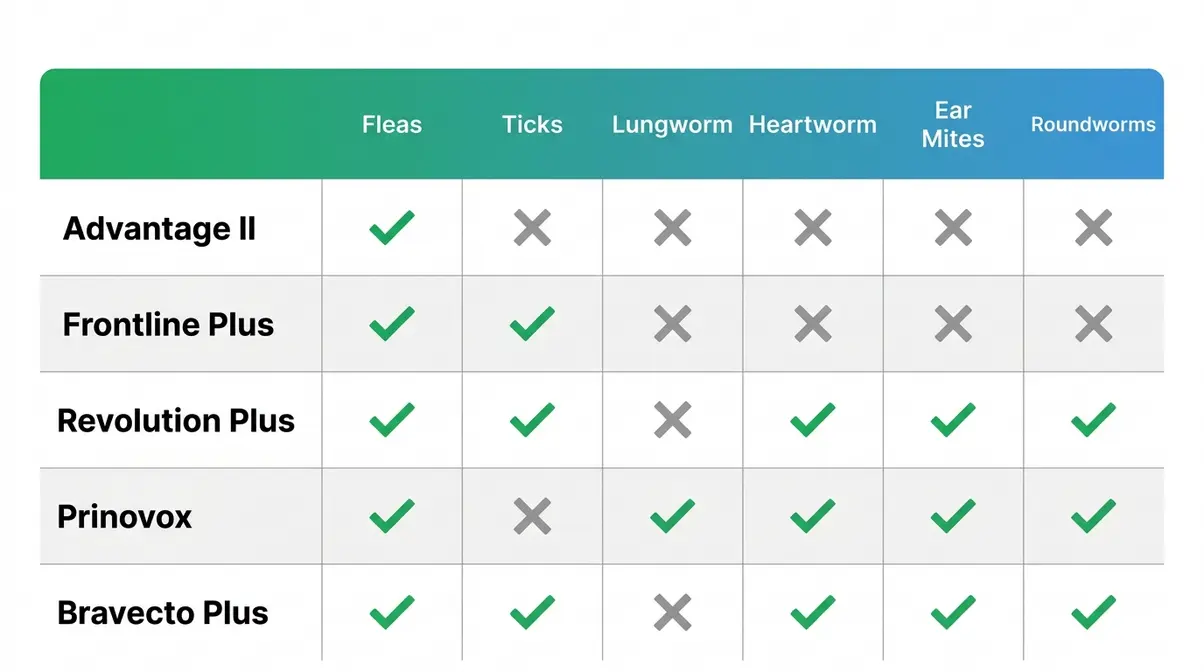
- Standard flea treatments don’t cover lungworm — ask your vet about broad-spectrum options like Prinovox or Bravecto Plus
- The Cat Flea Risk Profile helps you match your cat’s specific situation to the right treatment type in under 3 minutes
How to Choose Flea Treatment for Cats
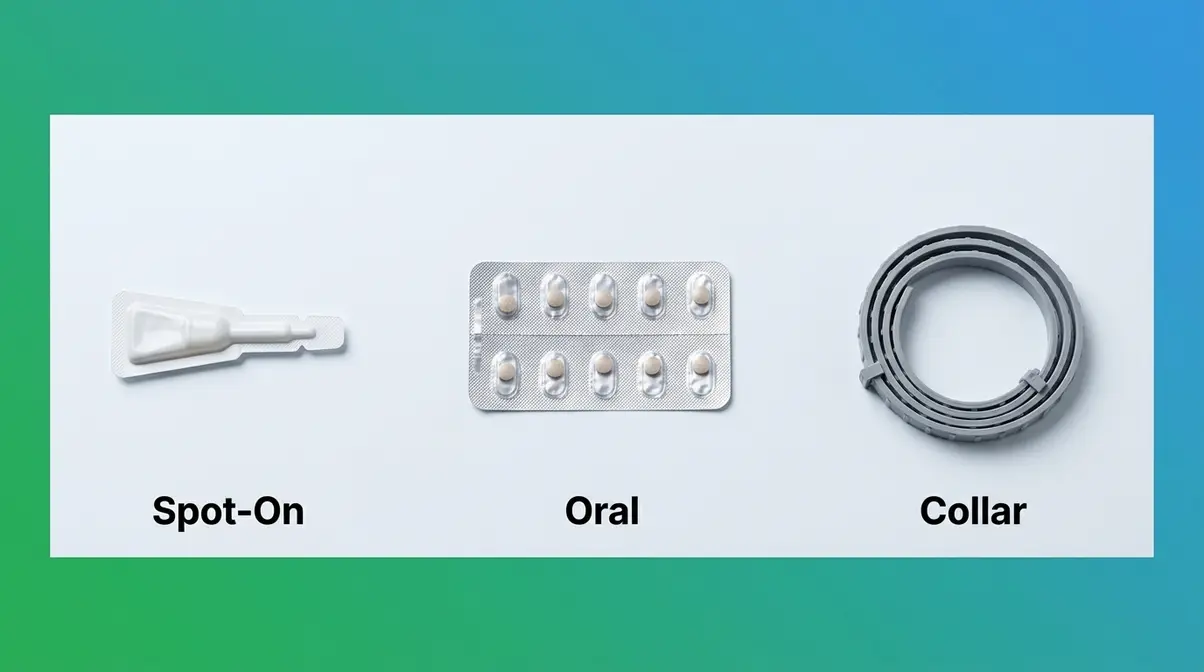
When figuring out how to choose flea treatment for cats safely, you need to match the product to your cat’s specific situation — not just pick the most popular brand. The right treatment depends on four key factors: your cat’s age, weight, current health status, and whether they go outdoors. Getting these factors right first saves time, money, and stress.
The American Veterinary Medical Association (AVMA) advises cat owners to consult their veterinarian before applying any flea treatment, because the safest choice depends on the cat’s individual age, weight, health status, and lifestyle. That guidance exists for good reason — a product that works perfectly for one cat can cause serious harm to another.
Your Cat’s Risk Profile
Before you buy anything, evaluate your cat across four specific factors. Each one directly affects which products are safe and appropriate.
Factor 1 — Age
Kittens under 8 weeks old cannot safely use most flea treatments. A young kitten’s liver is not fully developed, which means it cannot process the same active ingredients (chemical compounds that kill fleas) as an adult cat. Most product labels clearly state a minimum age — look for “safe for cats 8 weeks and older” on the packaging.
If you have a very young kitten, two products are specifically formulated for them: Advantage II for kittens (labeled safe from 8 weeks) and Capstar oral tablets (safe from 4 weeks, for kittens weighing at least 2 lbs). For kittens younger than 4 weeks, consult your veterinarian immediately — manual flea removal with a fine-toothed flea comb is often the only safe option at that age.
Factor 2 — Weight
Most flea treatments have minimum weight requirements, typically “cats over 2 lbs.” Giving an undersized cat or kitten an adult-dose product can cause an overdose, because the amount of active ingredient is too high for their small body. Always check the label. If your cat is unusually small for their age, your vet can advise on weight-appropriate dosing before you apply anything.
Factor 3 — Health Status
Cats with kidney disease, liver conditions, or epilepsy — and cats who are pregnant or nursing — require special consideration before any flea treatment. Some active ingredients carry specific FDA warnings. For example, the isoxazoline class of flea treatments (which includes products like Bravecto and Credelio) carries an FDA safety warning about potential neurological side effects, including muscle tremors and seizures, in some animals. This does not mean these products are unsafe for all cats — but it does mean your vet needs to know your cat’s full health history before recommending one.
Always disclose your cat’s complete medical history, including any current medications, to your veterinarian before starting any new flea treatment.
Factor 4 — Lifestyle (Indoor vs. Outdoor)
This is the factor most guides overlook entirely. An indoor-only cat and an outdoor cat have fundamentally different flea risk profiles — and that changes not just which product you choose, but how often you apply it.
- Indoor-only cats have lower flea exposure risk. However, fleas can still enter your home on clothing, shoes, or other pets. Year-round prevention is still recommended by the Companion Animal Parasite Council (CAPC), but a standard monthly spot-on treatment is often sufficient.
- Outdoor cats face significantly higher exposure to fleas, ticks, and parasites. They may benefit from broader-spectrum prescription treatments (like Revolution Plus, Zoetis’s prescription-only topical that covers fleas, ticks, heartworm, and more) rather than basic OTC options.
Why does this matter for your cat? Because applying a basic OTC spot-on to a cat that spends hours outdoors in a high-parasite-risk area may leave them under-protected — even if the treatment is applied correctly.
Vet-Recommended vs. OTC Options
Over-the-counter (OTC) flea treatments are products you can buy at a pet store or pharmacy without a prescription. Prescription treatments require a veterinarian’s authorization. The distinction matters more than most cat owners realize.
Veterinary consensus indicates that prescription flea treatments generally contain newer active ingredients with greater efficacy and broader parasite coverage than older OTC formulations. According to VCA Hospitals, many older OTC products rely on active ingredients — such as pyrethrins or organophosphates — that have well-documented resistance issues in flea populations, meaning they may simply not work as well as they once did.
Vet-recommended flea treatment options also come with the advantage of professional oversight. Your vet can identify whether your cat has any contraindications (medical reasons a product should not be used) before you apply anything. This is especially important for cats with chronic health conditions or those on other medications.
That said, several OTC products — including Advantage II (Bayer’s topical flea treatment using imidacloprid as its active ingredient) and Frontline Plus (Boehringer Ingelheim’s topical flea and tick treatment using fipronil as its active ingredient) — remain widely recommended by veterinarians as effective starting points for healthy adult cats. The key phrase is starting point: if OTC treatments are not controlling your cat’s fleas after one full treatment cycle, consult your vet about prescription alternatives.
The Cat Flea Risk Profile
The overwhelming number of flea treatment options is the single biggest barrier to making a good decision. The Cat Flea Risk Profile is a three-factor framework designed to cut through that confusion. It maps three inputs — your cat’s Age, Lifestyle, and Health Status — to the most appropriate treatment category.
Here is how it works in practice:
| Your Cat’s Profile | Recommended Treatment Category |
|---|---|
| Kitten under 8 weeks | Vet consult only — no standard products safe |
| Kitten 8 weeks–6 months, indoor | Kitten-labeled OTC spot-on (e.g., Advantage II kitten) |
| Adult cat, indoor-only, healthy | Standard OTC spot-on (e.g., Advantage II, Frontline Plus) |
| Adult cat, outdoor access, healthy | Prescription broad-spectrum spot-on (e.g., Revolution Plus) |
| Adult cat, any lifestyle, health conditions | Vet consult required before any treatment |
| Cat in multi-pet household with dogs | Prescription or vet-guided treatment; strict permethrin avoidance |
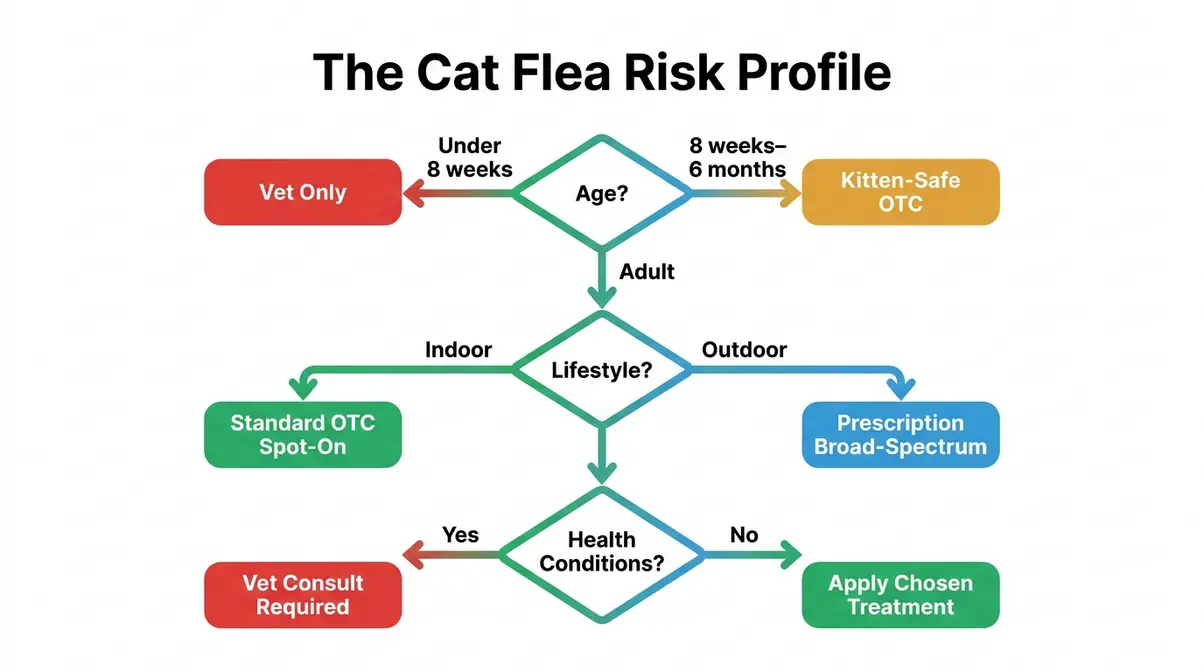
This framework is not a replacement for veterinary advice — it is a starting point that helps you walk into your vet’s office (or call the clinic) with the right questions already prepared. If your cat falls into the “vet consult required” category, do not delay that conversation.
Comparing Flea Treatment Types
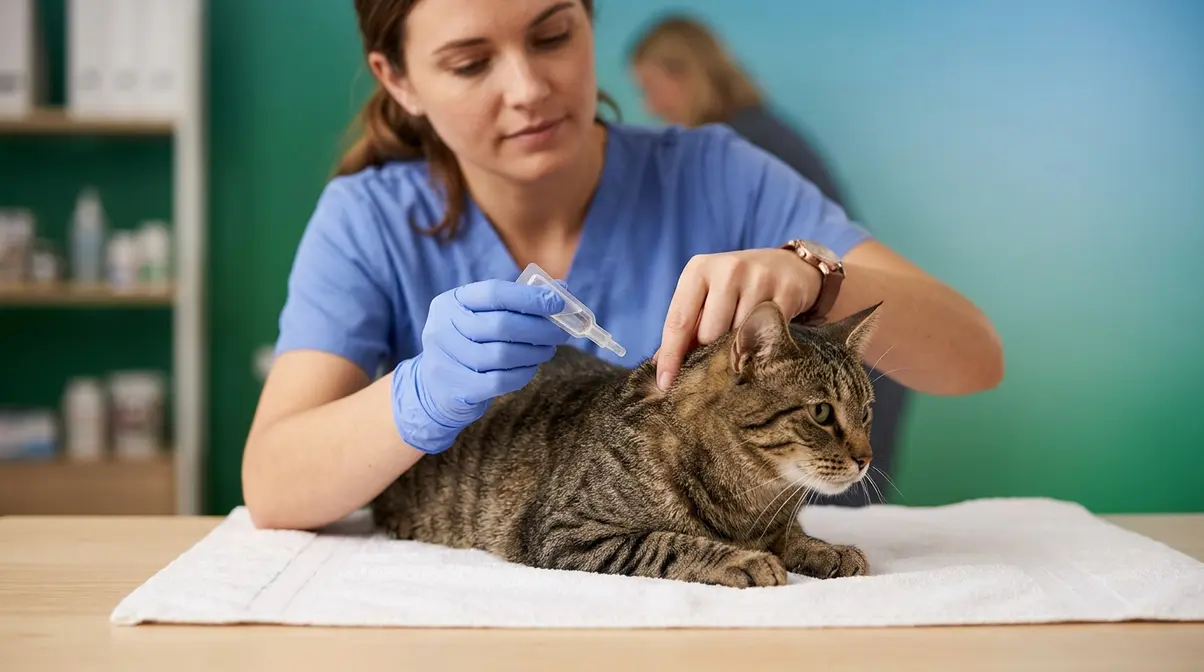
The three main categories of cat flea treatment — spot-on, oral, and collar — work differently, suit different cats, and carry different risks. Research from VCA Hospitals and PDSA confirms that spot-on treatments remain the most widely recommended starting point for most healthy adult cats, though oral options are gaining clinical favor for their speed of action.
Understanding how each type works helps you apply The Cat Flea Risk Profile more precisely.
Spot-On (Topical) Treatments
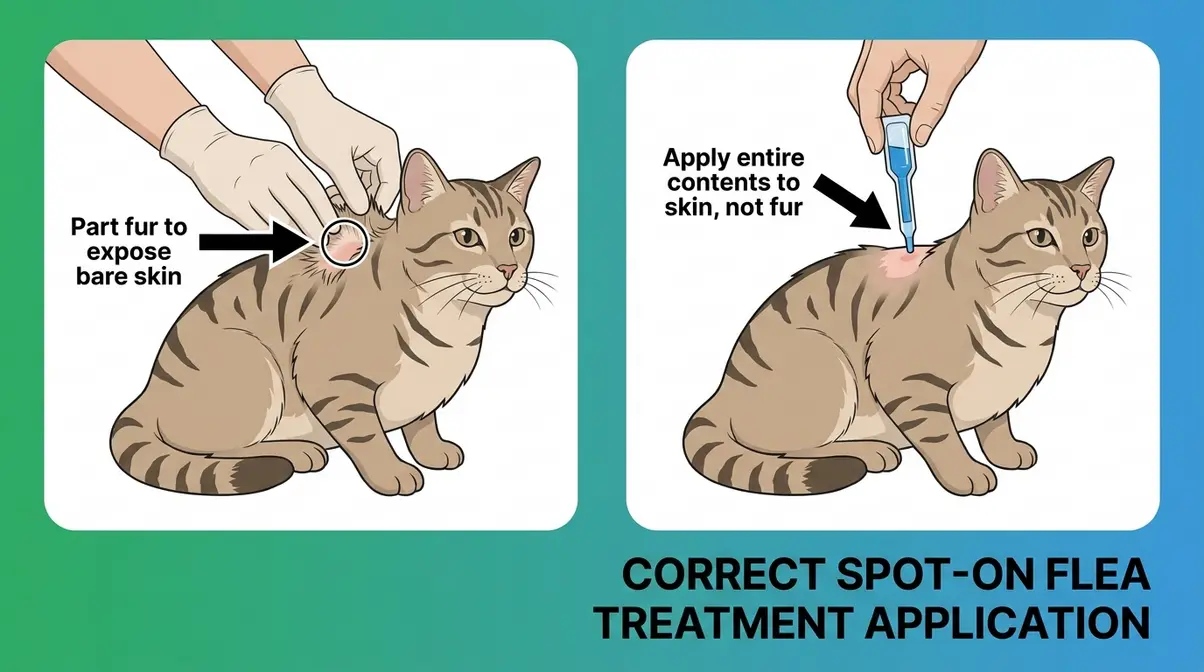
Spot-on treatments are liquid products applied directly to the skin at the back of the neck, where your cat cannot lick them off. They are the most widely vet-recommended flea treatment category for cats.
Most spot-on products work in one of two ways: contact kill (the flea dies when it touches the treated skin without needing to bite) or systemic absorption (the ingredient is absorbed into the bloodstream and kills fleas when they bite). Advantage II uses imidacloprid (the active ingredient that kills adult fleas on contact) combined with pyriproxyfen (an insect growth regulator, or IGR, that prevents flea eggs and larvae from developing into adults). Frontline Plus uses fipronil (which disrupts the flea’s nervous system) combined with S-methoprene (another IGR).
- Pros of spot-on treatments:
- Easy to apply for most cat owners
- Generally waterproof after 24–48 hours
- One application lasts up to 30 days
- Many options available at different price points
- Suitable for cats 8 weeks and older
Cons:
- Cat must stay dry for 24–48 hours after application
- Some cats react to the application site (temporary hair loss or skin irritation)
- Does not cover lungworm or intestinal worms unless specified
Consult your veterinarian if your cat has sensitive skin or a history of reactions to topical products.
Oral Flea Treatments
Oral flea treatments are tablets or chewable products your cat swallows. They work systemically — meaning the active ingredient enters the bloodstream, and fleas die when they bite your cat.
The main advantage of oral treatments is speed. Capstar (nitenpyram) begins killing adult fleas within 30 minutes and eliminates most adult fleas within 6 hours, according to Blue Cross veterinary guidance. However, Capstar’s protection lasts only 24 hours, making it best used as an emergency treatment to knock down a heavy infestation — not as a standalone monthly preventative.
Longer-acting oral options, such as Credelio (lotilaner) for cats, provide up to 30 days of protection. These belong to the isoxazoline class, which carries an FDA safety notice about potential neurological effects in some animals. They are generally safe for healthy adult cats, but your vet should be consulted before use, particularly if your cat has a seizure history.
- Oral treatments are particularly useful when:
- Your cat resists spot-on application
- You need rapid knockdown of a severe infestation
- Your cat swims or gets bathed frequently (no waterproofing concern)
Flea Collars: Pros and Cons
Flea collars release active ingredients continuously over several months. The Seresto collar, for example, releases imidacloprid and flumethrin (a synthetic pyrethroid safe for cats at collar-release concentrations) over 8 months, making it one of the longer-lasting OTC options available.
However, flea collars have meaningful limitations. According to PetMD, standard flea collars provide protection primarily around the head and neck — coverage may be uneven across the body, particularly the hindquarters where fleas often concentrate. Additionally, some collars pose a strangulation risk if they do not have a quick-release safety mechanism; always check for this feature before purchasing.
Flea collars work best as a supplementary tool — for example, combined with environmental flea control (vacuuming, washing bedding) — rather than as a sole treatment for an active infestation. If your cat already has fleas, a spot-on or oral treatment will act faster.
Comparison: The Three Main Flea Treatment Types
| Feature | Spot-On | Oral | Collar |
|---|---|---|---|
| Application method | Skin (back of neck) | Swallowed | Worn around neck |
| Speed of action | 12–24 hours | 30 min–6 hours | 24–48 hours |
| Duration | ~30 days | 24 hours–30 days | Up to 8 months |
| Covers egg/larvae? | Yes (with IGR) | Some products | Some products |
| Covers ticks? | Some products | Some products | Some products |
| Prescription needed? | OTC and Rx available | OTC and Rx available | OTC available |
| Best for | Most adult cats | Resistant cats; severe infestations | Low-risk supplementation |
Advantage vs. Frontline for Cats
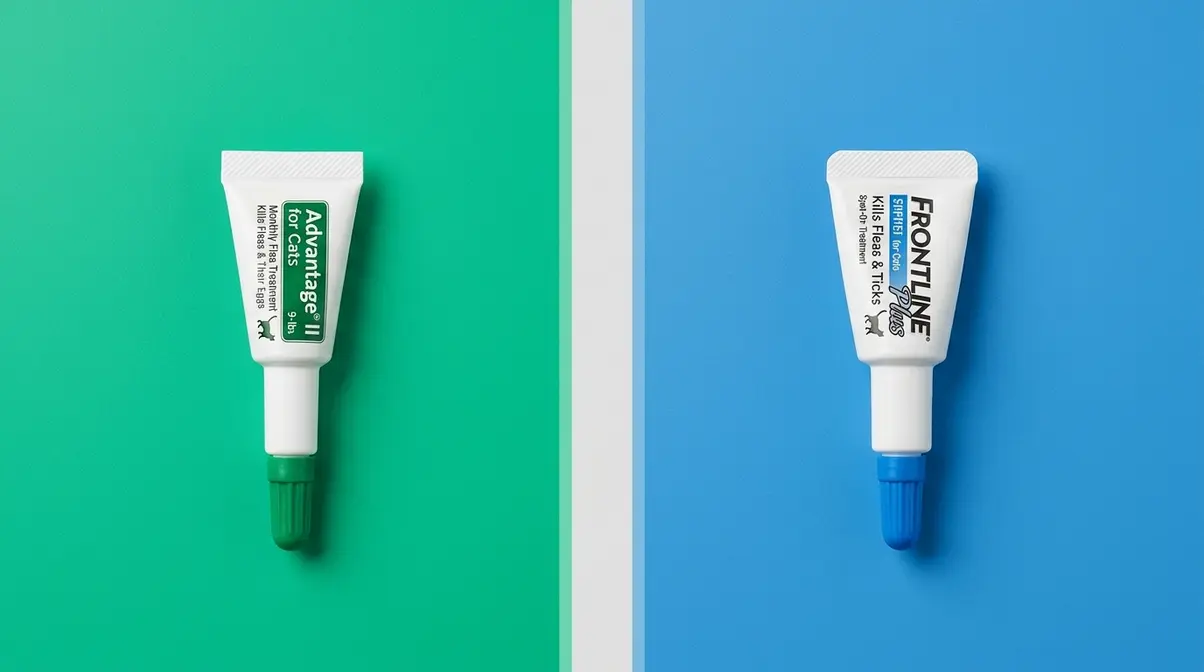
Advantage II and Frontline Plus are the two most commonly compared OTC flea treatments for cats. Both are effective, widely available, and vet-recommended for healthy adult cats — but they work differently, and the differences matter depending on your cat’s specific needs.
Imidacloprid vs. Fipronil
Advantage II uses imidacloprid as its primary active ingredient. Imidacloprid works by contact kill — fleas do not need to bite your cat to die. It also contains pyriproxyfen, an IGR that prevents flea eggs and larvae from maturing, breaking the flea life cycle. Importantly, Advantage II is flea-only: it provides no tick protection.
Frontline Plus uses fipronil, which disrupts the flea’s central nervous system. Fipronil spreads across the skin surface via the skin’s oil layer, providing full-body coverage. It also contains S-methoprene, another IGR. Unlike Advantage II, Frontline Plus covers both fleas and ticks, which may be relevant if your cat has any outdoor access.
A 2026 clinical study comparing efficacy published in Parasites & Vectors noted emerging reports of reduced fipronil efficacy in some flea populations in Europe, suggesting that regional flea resistance to older active ingredients is a growing concern. If Frontline Plus is not controlling fleas after a full treatment cycle, consult your vet — this may indicate local resistance rather than application error.
Speed and Duration
| Criterion | Advantage II | Frontline Plus |
|---|---|---|
| Primary active ingredient | Imidacloprid | Fipronil |
| Secondary ingredient | Pyriproxyfen (IGR) | S-methoprene (IGR) |
| Kills adult fleas within | ~12 hours | ~24–48 hours |
| Kills flea eggs/larvae | Yes (pyriproxyfen) | Yes (S-methoprene) |
| Tick protection | No | Yes |
| Waterproof after | 24 hours | 48 hours |
| Duration of protection | ~30 days | ~30 days |
| Minimum age | 8 weeks | 8 weeks |
| Minimum weight | 2 lbs | 1.5 lbs |
| Prescription required? | No | No |
| Available for kittens? | Yes (kitten formula) | Yes |
Both products are applied monthly and are generally well-tolerated by healthy adult cats. According to PDSA veterinary guidance, neither product should be used on cats that are sick, underweight, or recovering from illness without prior veterinary consultation.
Prescription vs. OTC
The OTC vs. prescription distinction is not simply about convenience — it reflects meaningful differences in active ingredient generation, spectrum of coverage, and clinical oversight.
OTC products like Advantage II and Frontline Plus use well-established active ingredients that have been on the market for decades. They are effective for many cats, but they do not cover parasites beyond fleas (and ticks, in Frontline’s case). They are also the products most likely to be affected by developing flea resistance.
Prescription products — such as Revolution Plus (Zoetis’s prescription-only broad-spectrum treatment covering fleas, ticks, heartworm, ear mites, and roundworms) and Bravecto Plus — use newer generation molecules with broader coverage and, in some cases, faster action. They require a veterinary examination because the prescribing vet needs to assess your cat’s health before recommending them.
If your cat goes outdoors, lives in a multi-pet household, or has not responded to OTC treatments, your vet may recommend moving to a prescription option. That conversation is always worth having.
Advantage or Frontline?
If you are wondering what is better for fleas – Advantage or Frontline – neither product is universally “better.” For most healthy indoor adult cats with a straightforward flea problem, Advantage II is a strong first choice — its contact-kill mechanism means faster flea death, and it does not require a bite to work. For cats with any outdoor access or tick exposure, Frontline Plus adds tick protection that Advantage II lacks.
The right choice depends on your cat’s Cat Flea Risk Profile — specifically their lifestyle (indoor vs. outdoor) and whether tick coverage is needed.
Choose if: Your cat is indoor-only, you want fast contact-kill without waiting for a flea bite, and ticks are not a concern in your area.
Choose if: Your cat has any outdoor access, you need combined flea and tick protection, or you prefer a product with a longer track record of broad-spectrum OTC use.
If neither product is controlling fleas after one full 30-day cycle, consult your veterinarian before buying another box — the issue may be flea resistance, environmental reinfestation, or an underlying health factor requiring a prescription solution.
How to Apply Flea Treatment
Applying flea treatment correctly is just as important as choosing the right product. Veterinary consensus indicates that a significant proportion of treatment failures are caused by incorrect application — not by product inefficacy. This section walks you through the exact process for spot-on treatments, which represent the most commonly used format.
- What you’ll need before you start:
- The correct flea treatment product (checked against your cat’s weight and age)
- A towel or non-slip surface
- A second person (optional but helpful for resistant cats)
- Estimated time: ~5 minutes
Step-by-Step Application Guide
Follow these steps exactly. Each one exists for a specific safety reason.
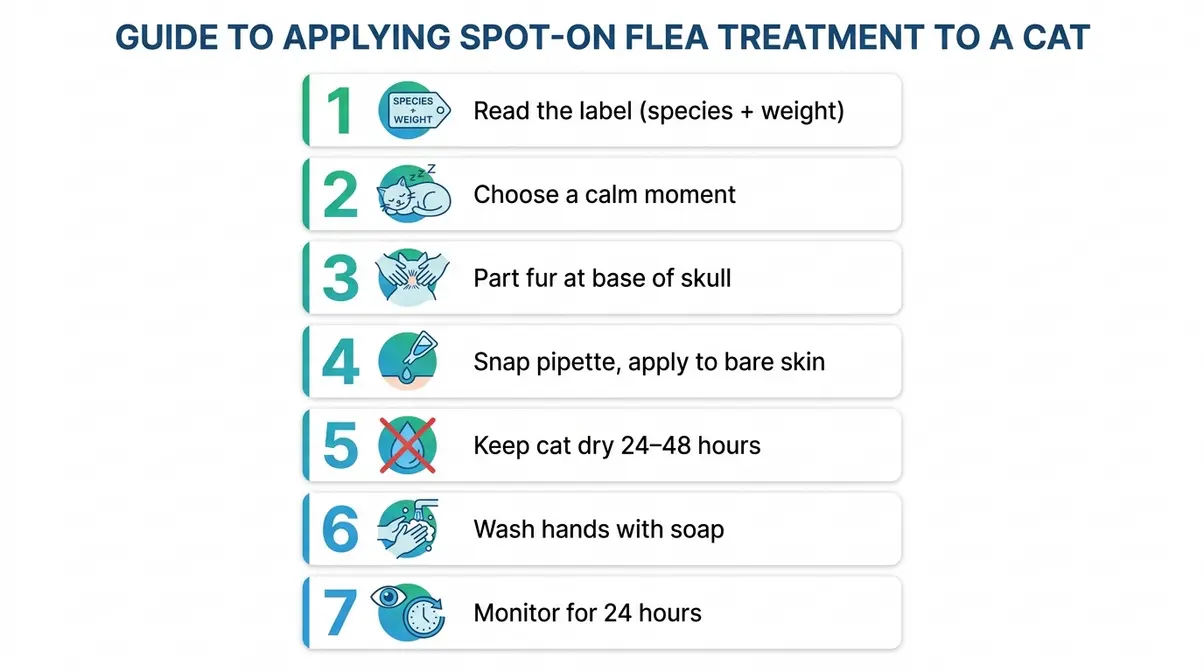
- Read the label completely before opening the pipette (the small tube of liquid). Confirm the product is labeled for cats, not dogs. Confirm the weight range matches your cat. Why: Dog flea products — especially those containing permethrin — are toxic to cats and can be fatal.
- Choose the right moment. Apply when your cat is calm — after a meal is ideal. Avoid applying when your cat is agitated or immediately after bathing. Why: A relaxed cat holds still longer, reducing the chance of the product landing on fur instead of skin.
- Part the fur at the base of the skull. Use your fingers to separate the fur at the back of the neck, between the shoulder blades — the area your cat cannot reach to lick. The goal is to expose bare skin. Why: The active ingredient must contact skin to absorb. Applying to fur significantly reduces efficacy.
- Snap the tip of the pipette and apply directly to skin. Hold the tube upright, snap or twist the tip open, and squeeze the entire contents onto the exposed skin in one or two spots. Do not spread it around. Why: Concentrating the dose allows it to spread naturally via the skin’s oil layer.
- Keep your cat dry for 24–48 hours. No bathing, swimming, or going out in heavy rain. Check your product label — Advantage II requires 24 hours; Frontline Plus requires 48 hours. Why: Water exposure before the product has fully absorbed can wash away the active ingredient.
- Wash your hands thoroughly with soap and water immediately after application. Why: Active ingredients are safe for cats at labeled doses but should not remain on human skin.
- Monitor your cat for the next 24 hours. Mild scratching at the application site is common and temporary. Contact your vet if you observe: excessive drooling, vomiting, trembling, difficulty breathing, or severe skin reaction. Why: Rare adverse reactions are most likely to appear within the first few hours.
Settings Reference: What to Check Before Applying
| Check | What to Look For | Why It Matters |
|---|---|---|
| Species label | “For cats only” | Dog products may contain permethrin — fatal to cats |
| Weight range | Cat’s current weight fits the range | Under/overdosing causes treatment failure or toxicity |
| Age minimum | Cat meets minimum age (usually 8 weeks) | Young kittens cannot metabolize adult-formula ingredients |
| Health warnings | No contraindications for your cat’s conditions | Certain ingredients unsafe for cats with epilepsy or liver disease |
| Expiry date | Product is within its use-by date | Expired products lose efficacy |
If Your Cat Resists Treatment
Many cats resist the application process. This is normal — they dislike being held, and the sensation of liquid on their neck is unfamiliar. These strategies help, according to PDSA veterinary guidance:
- Wrap your cat in a towel (a “cat burrito”) to limit movement while you apply with one hand
- Use a treat distraction — offer a high-value treat immediately before and after application to create a positive association
- Ask for help — have a second person hold the cat gently while you apply
- Consider an oral alternative — if your cat consistently resists spot-on application, discuss oral flea treatment options with your vet
Never force the application in a way that stresses your cat severely. A stressed cat is more likely to shake off the product before it absorbs.
Why Fleas Persist After Treatment
This is one of the most common and frustrating experiences cat owners face — and it almost always has an explanation. Research from veterinary dermatology sources confirms that seeing fleas after treatment does not automatically mean the treatment failed.
The most likely reasons fleas persist after treatment:
- The flea life cycle: Only about 5% of fleas in your home are adult fleas on your cat. The other 95% are eggs, larvae, and pupae living in carpets, furniture, and bedding. Spot-on treatments kill adult fleas but cannot eliminate environmental stages instantly — the full cycle can take 3 months to break, according to Cornell Feline Health Center statistics.
- Reinfestation: If the environment (your home, garden, or other pets) is not treated alongside your cat, new adult fleas will keep emerging and jumping onto your cat even after the product has killed the existing ones.
- Application error: Product applied to fur rather than skin, or the cat bathed within the waterproof window, can significantly reduce efficacy.
- Flea resistance: Emerging resistance to fipronil (the active ingredient in Frontline Plus) has been documented in some European flea populations. If you have been using the same product for years without success, consult your vet about switching active ingredients.
To break the cycle, treat the environment at the same time: vacuum carpets and furniture daily, wash all bedding at 60°C, and consider a household flea spray containing an IGR to kill pre-adult stages.
Lungworm & Parasite Protection
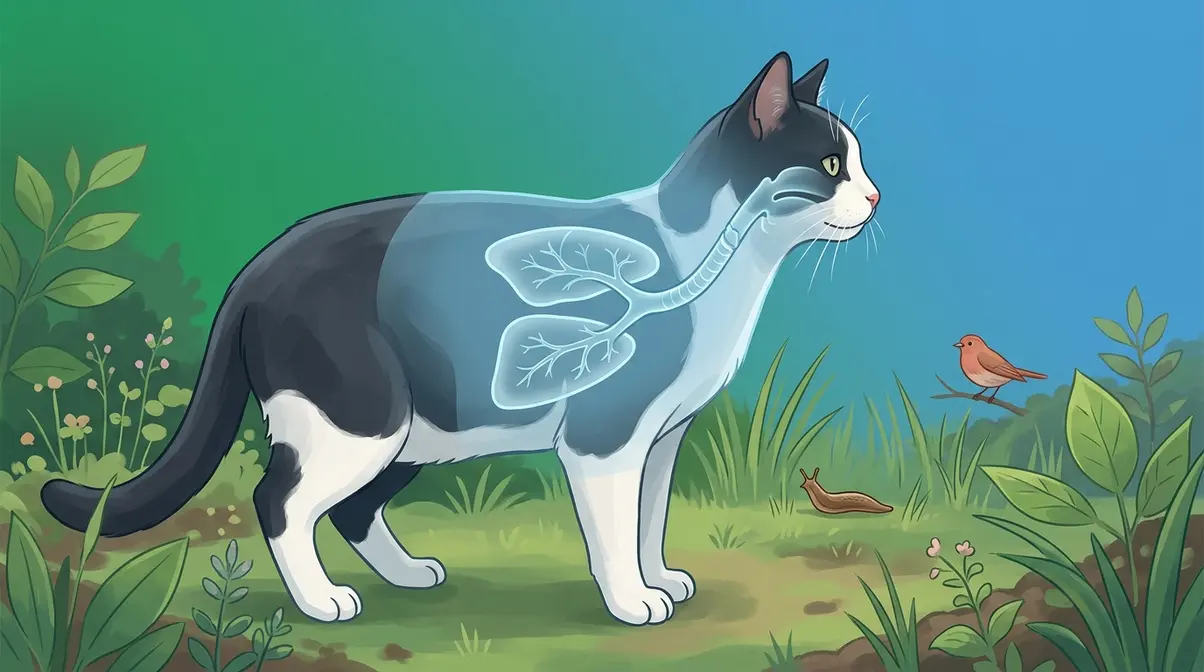
Standard flea treatments protect against fleas — and some protect against ticks. But they do not automatically protect against internal parasites, including the feline lungworm Aelurostrongylus abstrusus. According to Blue Cross veterinary guidance, this is a critical gap that many cat owners are unaware of until their cat becomes symptomatic.
What Is Feline Lungworm?
Feline lungworm (Aelurostrongylus abstrusus) is a parasitic worm that lives in a cat’s lungs and airways. Cats become infected by eating infected intermediate hosts — most commonly slugs, snails, or prey animals (birds and rodents) that have consumed infected slugs. This means outdoor cats and cats that hunt are at significantly higher risk.
Symptoms of lungworm infection include: persistent coughing, wheezing, labored breathing, and in severe cases, weight loss and lethargy. Because these symptoms overlap with feline asthma and other respiratory conditions, lungworm is often misdiagnosed without specific testing. If your cat hunts or goes outdoors and shows any respiratory symptoms, consult your veterinarian — do not assume it is a standard flea or worm issue.
Lungworm is not covered by any standard flea treatment. It requires a product specifically formulated to target this parasite.
What flea treatment covers lungworm?
The following prescription treatments have demonstrated efficacy against feline lungworm, according to research on topical treatments and ESCCAP guidelines:
- Prinovox (imidacloprid + moxidectin): A spot-on treatment that covers fleas, lungworm, heartworm, ear mites, and intestinal worms. Requires a prescription.
- Bravecto Plus (fluralaner + moxidectin): A spot-on applied every 2–3 months that covers fleas, ticks, and lungworm. Requires a prescription.
- Advocate (imidacloprid + moxidectin): Widely used in the UK and Europe; covers fleas, lungworm, and several other parasites.
Does Frontline prevent lungworm? No. Frontline Plus contains fipronil and S-methoprene, neither of which has any activity against lungworm or other internal parasites. The same applies to Advantage II. If lungworm coverage is needed, consult your vet about a prescription broad-spectrum product.
Flea Treatments to Avoid
This section covers the most important safety information in this entire guide. The wrong flea treatment can cause serious harm to your cat. Every claim here is supported by regulatory authority sources. Consult your veterinarian if you are uncertain whether a product is safe for your specific cat.
What cat flea treatments should I avoid?
The most critical ingredient to avoid is permethrin, found in many dog flea products. Additionally, avoid organophosphate-based flea collars (e.g., those containing tetrachlorvinphos), essential oil-based “natural” flea treatments (including tea tree and pennyroyal oil products), and any flea product labeled for dogs only. Always check that a product is explicitly labeled for cats before applying it.
Permethrin Toxicity in Cats
Permethrin is a synthetic pyrethroid (a type of insecticide) used in many dog flea treatments, yard sprays, and some human lice treatments. It is highly effective against fleas and ticks in dogs — and highly toxic to cats.
Cats lack a specific liver enzyme (glucuronyl transferase) that allows dogs and humans to metabolize permethrin safely. As a result, permethrin accumulates to toxic levels in a cat’s system, causing severe neurological symptoms within hours of exposure. According to EPA safety guidelines, permethrin is one of the most common causes of feline pesticide poisoning, with symptoms including: muscle tremors, seizures, hyperthermia (overheating), and death if untreated.
- Critical rules to follow:
- Never apply any dog flea product to a cat
- Never let a cat sleep with or groom a dog that has recently been treated with a permethrin-containing spot-on
- Check the label of any household flea spray for permethrin before using it in rooms where your cat spends time
- If you suspect permethrin exposure, contact your veterinarian or an emergency animal poison control line immediately — do not wait for symptoms to worsen
Other Ingredients to Avoid
Beyond permethrin, several other flea treatment ingredients and product types warrant caution, according to veterinary guidance from the FDA and GoodRx:
- Organophosphates (e.g., chlorpyrifos, tetrachlorvinphos): Older insecticides found in some low-cost flea collars and sprays. These have been associated with significant toxicity in cats and are no longer recommended by most veterinarians. Check the ingredient list of any budget flea collar carefully.
- Essential oil-based products: Products marketed as “natural” flea treatments — including those containing tea tree oil, eucalyptus oil, or pennyroyal — are not proven effective against fleas and can cause toxic reactions in cats. “Natural” does not mean safe for cats.
- Flea shampoos for dogs: Even if a dog flea shampoo does not contain permethrin, it may contain other ingredients not tested for feline safety. Use only products specifically labeled for cats.
- Outdated OTC products: Some older brands still sold in discount stores contain ingredients (such as pyrethrins in high concentrations) that carry elevated risk profiles compared to modern formulations. When in doubt, ask your vet before purchasing.
Limitations and Next Steps
Even the right flea treatment, correctly applied, has real-world limitations. Understanding those limitations — and knowing when to escalate — protects your cat and prevents wasted money on repeated treatments that cannot solve the underlying problem. Consult your veterinarian if fleas persist after two full monthly treatment cycles.
Common Treatment Mistakes
Veterinary consensus identifies several specific, avoidable errors that account for most treatment failures:
- Treating only the cat, not the environment: As noted earlier, 95% of the flea population lives off the cat. Treating your cat alone will not resolve a household infestation. Vacuum daily, wash bedding at 60°C, and use a household IGR spray.
- Missing the treatment window: Applying spot-on treatments late (e.g., every 6–7 weeks instead of every 4 weeks) allows adult flea populations to recover between applications. Set a recurring calendar reminder.
- Applying to wet or dirty fur: Active ingredients absorb poorly through wet or heavily soiled coat. Always apply to clean, dry fur.
- Using the wrong product for the cat’s weight: An underweight cat given a product for larger cats may experience adverse effects; an overweight cat given a product for smaller cats will receive an insufficient dose.
- Stopping treatment too soon: Many owners stop after one application when they no longer see fleas jumping. The flea life cycle requires 3 months of consistent treatment to fully break in a moderately infested home.
When to Call Your Vet
Some flea situations require professional veterinary involvement — not just a different product. Contact your vet promptly if:
- Your cat is under 4 weeks old and has visible fleas (no safe OTC product exists for this age group)
- Your cat has shown any adverse reaction to a previous flea treatment (tremors, excessive salivation, skin sores)
- Fleas persist after two consecutive monthly treatment cycles with a correctly applied product
- Your cat is showing signs of flea allergy dermatitis (FAD): intense itching, hair loss, skin crusting, or hot spots — a vet can prescribe additional treatment for the allergic reaction
- Your cat has any chronic health condition, or is pregnant, nursing, or very elderly
In these scenarios, a vet visit is not optional — it is the most efficient and safest path forward. Continuing to try different OTC products without veterinary guidance risks further stress and potential harm to your cat.
Frequently Asked Questions
What is the most vet-recommended flea treatment for cats?
Veterinary consensus most commonly recommends prescription broad-spectrum spot-on treatments — such as Revolution Plus (Zoetis) and Bravecto Plus — for cats with outdoor access or complex health needs, because they cover multiple parasites in one application. For healthy indoor adult cats, Advantage II and Frontline Plus are widely recommended OTC starting points. According to the AVMA, the safest choice always depends on the individual cat’s age, weight, and health history — there is no single product that is “best” for all cats. Always confirm the recommendation with your own veterinarian before purchasing.
What is the most effective non-prescription flea treatment for cats?
Among OTC options, Advantage II and Frontline Plus have the strongest evidence base and widest veterinary endorsement for healthy adult cats. Advantage II’s contact-kill mechanism means fleas die without biting, and its IGR component breaks the flea life cycle. For fast knockdown of an active infestation, Capstar (nitenpyram) oral tablets begin working within 30 minutes — though they only last 24 hours and should be combined with a monthly preventative. According to GoodRx pet health guidance, OTC products are appropriate for many cats but may not be sufficient for outdoor cats or multi-pet households.
What’s the worst month for fleas?
Flea populations peak during warm, humid months — typically late summer and early autumn (August through October in most of the Northern Hemisphere). However, centrally heated homes maintain temperatures warm enough for fleas to survive and reproduce year-round, which is why the Companion Animal Parasite Council (CAPC) recommends year-round flea prevention for all cats, regardless of season. Do not assume your cat is safe from fleas in winter — indoor flea infestations are common even in cold climates.
Does Frontline prevent lungworm?
No. Frontline Plus does not prevent lungworm. Its active ingredients — fipronil and S-methoprene — have no activity against Aelurostrongylus abstrusus or any other internal parasites. Frontline Plus is effective against fleas and ticks only. If your cat goes outdoors and hunts, consult your veterinarian about adding a lungworm-active product (such as Prinovox or Advocate) to their parasite prevention routine. Assuming standard flea treatment provides complete parasite protection is one of the most common and potentially serious mistakes cat owners make.
What flea and worm treatment do vets recommend?
Veterinarians most commonly recommend a combination approach: a monthly broad-spectrum spot-on for flea, tick, and parasite prevention, combined with a separate quarterly worming treatment if the spot-on does not cover all relevant worm species. Products like Revolution Plus (fleas, ticks, heartworm, ear mites, roundworms) and Bravecto Plus (fleas, ticks, lungworm) come closest to all-in-one coverage. According to PDSA veterinary guidance, the ideal regimen depends on your cat’s lifestyle, age, and local parasite prevalence — which is why a conversation with your vet is the most reliable way to build the right prevention plan.
Start With the Right Profile
Understanding how to choose flea treatment for cats does not have to feel overwhelming. The core principle is simple: match the product to the cat, not the other way around. For most healthy adult cats, a monthly spot-on treatment — whether Advantage II for indoor cats or Frontline Plus for those with outdoor access — provides solid, vet-endorsed protection. Research consistently shows that correct product selection, combined with consistent environmental treatment, resolves the vast majority of flea infestations within 3 months.
The Cat Flea Risk Profile brings that principle into a practical framework. By evaluating your cat’s Age, Lifestyle, and Health Status before you buy anything, you eliminate the guesswork that leads to treatment failures — and you arrive at any vet conversation already prepared with the right questions.
The next step is straightforward: work through your cat’s Risk Profile using the framework in this guide, then call or visit your veterinarian to confirm the right product choice before applying anything. If your cat is a kitten, has health conditions, or has not responded to OTC treatments, that conversation is not optional — it is the fastest route to a parasite-free cat.