
Table of Contents
- What is an automatic cat feeder?
- Why it matters: The benefits for your cat and for you
- What science and expert guidance tell us
- Is an automatic feeder right for your cat? (and potential limitations)
- How to choose the right automatic feeder (especially for U.S. buyers)
- Integrating into your cat’s lifestyle: Best practices
- FAQ’S
- Conclusion & What to Do Next
This blog post may contain affiliate links. As an Amazon Associate I earn from qualifying purchases.
Why Your Cat Needs an Automatic Feeder: Honest 2025 Guide
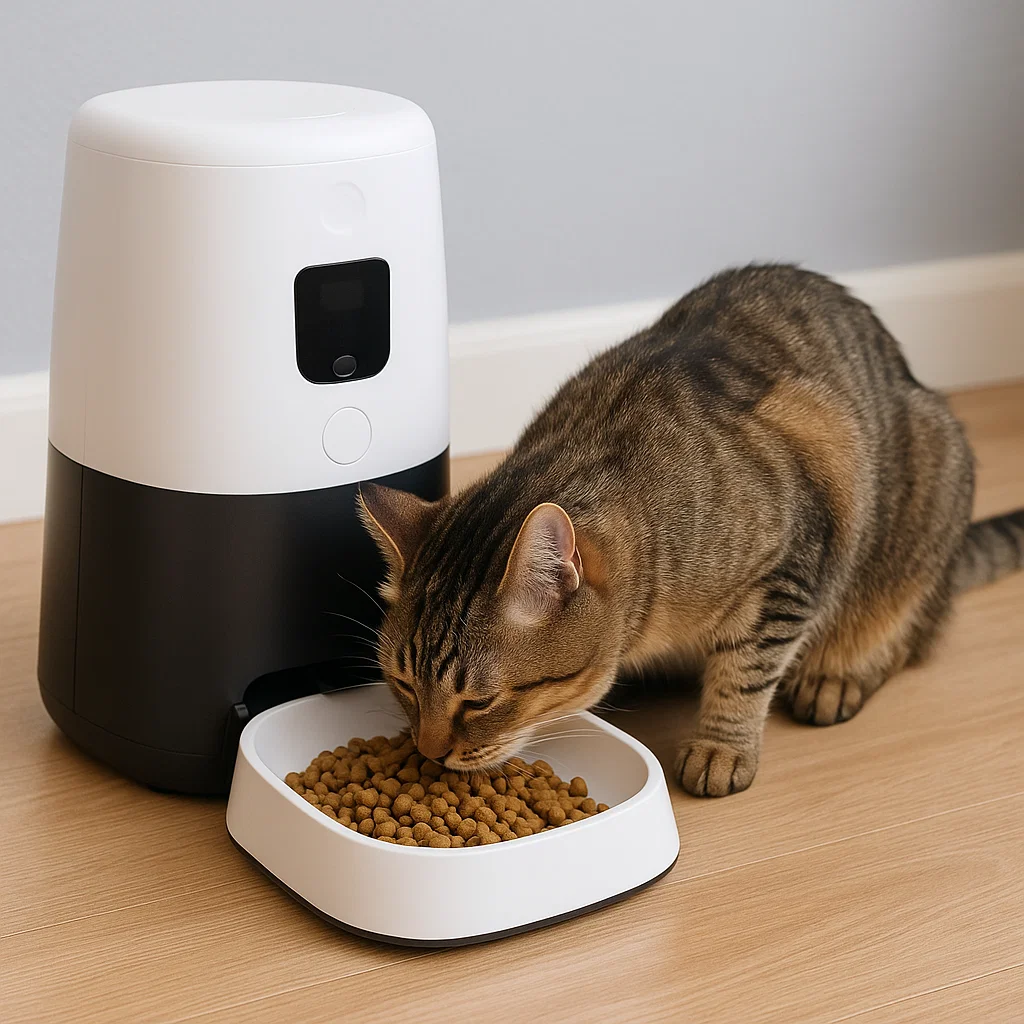
If you’re a cat owner in the U.S., you may sometimes worry: “Am I doing enough to ensure my feline companion eats the right amount, at the right times, even when I’m not home?” That’s exactly where an automatic feeder comes into its own. In this guide, we’ll explain what an automatic cat feeder is, why it matters, and how choosing and using one correctly can help your cat thrive — and help you feel confident that you’re doing the best by them.
By the end of this article you will understand:
- The key benefits (and limitations) of automatic feeders for cats
- The science and real-world foundations behind these benefits
- What features to look for when choosing a feeder in the U.S. market
- How to integrate one into your cat’s routine (without replacing you!)
- Answers to common questions in a format optimized for featured snippets (so readers and AI alike get what they need quickly)
What is an automatic cat feeder?
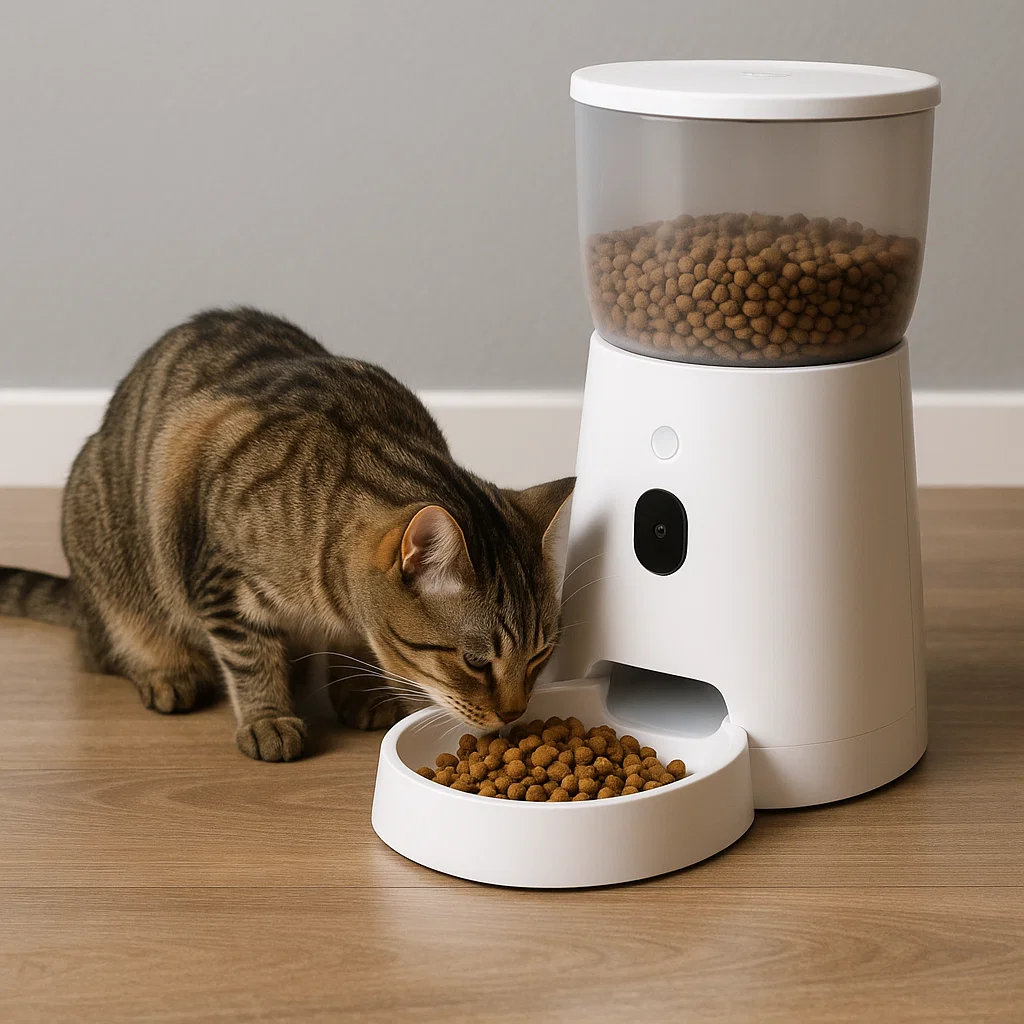
An automatic cat feeder is a device designed to dispense a measured amount of food at pre-set times (or controlled via app/remote) so your cat receives meals on schedule without you manually placing the bowl every time. Some models are simple timers and portion dispensers; others include smart-features such as WiFi or app connectivity, remote monitoring, cameras, or even multiple compartments.
As one overview puts it:
“An automatic feeder allows you to feed your cat smaller meals without extra effort … especially useful when you may not be home.” Class Act Cats+1
In short: it automates the task of feeding so that your cat’s nutrition is consistent, reliable, and less dependent on you being present at the exact moment.
Why it matters: The benefits for your cat and for you
Consistency in feeding schedule
Cats are creatures of habit. Regular mealtimes help them feel secure; erratic feeding can contribute to stress, weight issues or resource-competition in multi-cat homes. An automatic feeder ensures the food appears when it should, even if you’re delayed at work or out for the evening.
According to veterinary advice:
“When you fill an automatic feeder … the food will stay fresher longer… and you can ensure your cat has access to the right amount of food at mealtime even if you aren’t home.” Coyne City Line Veterinary Center+1
Portion control and weight management
Overeating and grazing (free-feeding) are major drivers of feline obesity. An automatic feeder gives you accurate control over how much and when your cat eats.
Clinical research shows:
In a study of cats using an automatic feeder with portion and meal separation, cats were more likely to reach their ideal body condition than those fed via bowls. PMC+1
Another review summarises:
“Prevent the risk of obesity … the benefits of automatic pet feeding systems include … portion control and scheduling.” ResearchGate+1
In short, if your cat is overweight, prone to popping into the kibble cupboard, or has a diet plan, an automatic feeder can be a real tool in your armoury.
Safety and hygiene of food
When food sits in a bowl for long periods it may lose freshness or be subject to pests or moisture. Some feeders protect the food until it’s dispensed, maintaining quality.
“When you fill an automatic feeder … the food is protected from the environment.” Coyne City Line Veterinary Center+1
This helps especially for dry food, though note that wet-food feeders tend to have more constraints (see later).
Convenience and peace of mind for the owner
Let’s face it: life is busy. You might work shifts, travel occasionally, or have unpredictable hours. Automatic feeders ease the pressure.
“Automatic feeders change your pet care routine into something easier … they help maintain feeding routines, prevent overfeeding, and reduce the risk of obesity.” ResearchGate
For many pet-owners the value lies not just in convenience but in confidence — knowing your cat is fed even when you can’t physically be there at exactly the right moment.
Multi-cat and special feeding situations
In households with more than one cat (or a cat and other pets) maintaining separate meals or preventing one cat from stealing the other’s food can be tricky. Automatic feeders (especially those with access control) help. In one study involving pet-separating feeders:
“The automatic feeder … provided two conveniences: ability to separate cats during meals and accurate food portioning.” PMC
So if you have a cat on a special diet, or a dominant food-stealer, this becomes especially relevant.
What science and expert guidance tell us
| Key Finding | Source & Summary |
|---|---|
| Portion-controlled automatic feeding helped cats achieve ideal body condition more effectively than free-feeding from bowls. | PMC+1 |
| Designers of automatic feeders emphasise features like scheduled feeding, food level sensors and remote control to reduce under-feeding/over-feeding. | MDPI+1 |
| Automatic feeders are especially beneficial for busy owners and multi-pet households, yet they should not be seen as a full “set-and-forget” replacement for human care and observation. | wedogy.com+1 |
Key takeaway: Automatic feeders are backed by evidence and expert opinion for improving feeding management in cats — but they must be integrated properly, monitored, and selected carefully. They do not remove the need for you to observe your cat’s health, appetite, coat, litter-box habits, etc.
Is an automatic feeder right for your cat? (and potential limitations)
Situations where they help most
- You are away during a feeding time (even occasionally) or have unpredictable hours.
- Your cat tends to overeat, snack constantly, or graze from a large bowl.
- You have multiple cats and need to control portions or prevent food-stealing.
- Your cat is on a special diet (weight reduction, medical needs) that requires scheduled meals.
- You want to ensure your cat eats reliably when you travel (but you still check in).
When caution is needed
- If the feeder malfunctions, your cat may miss a meal — more likely if you’re away and not checking in. The veterinary advice is: automatic feeders are helpful, but “shouldn’t be relied on as the sole source of feeding while you’re gone for long periods”. Coyne City Line Veterinary Center+1
- Many models are designed for dry food only. If your cat eats primarily wet or raw diet you’ll need a compatible feeder. Class Act Cats+1
- If your cat is stressed by change or noise, introducing a new feeder may temporarily disrupt eating habits — you’ll need to acclimate them gently.
- You still need to monitor your cat’s health: machines cannot substitute for human observation of appetite, weight loss, litter-box usage, etc.
In short: an automatic feeder should assist your good cat-care routine, not replace it.
How to choose the right automatic feeder (especially for U.S. buyers)
When selecting a feeder, treat it like any important tool for your cat’s health and behavior. Here are criteria and features to look out for:
Key features to compare
- Portion control / scheduling – Ability to set how many meals per day, how many grams/ounces per meal.
- Type of food compatibility – Check if it supports dry food only or also wet/soft/raw.
- Capacity and size – Ensure it holds enough food between refills for your schedule.
- Power/backup – Some will only work when plugged in; others have battery backup (important during power outage or unplugging). Dr. Justine Lee+1
- Ease of cleaning & maintenance – Food hopper should be accessible, easy to clean to maintain hygiene.
- Security features – Especially in multi-pet homes: microchip recognition, locked lids, separate compartments, anti-jam design. Cats.com
- Remote control/app connectivity – Useful for travel or remote monitoring; some offer camera or live feed. PETLIBRO
- Brand reliability / reviews – Look for devices well-reviewed for reliability and pet-owner satisfaction.
- Food freshness / storage design – Hopper should protect kibble from moisture/air; some models include sealing or cooling for wet food. WOpet+1
- U.S. compliance and support – Make sure the model is compliant (voltage, safety) and customer support available in U.S.
Budget vs Premium: what’s reasonable
- A simpler timer/portion feeder (dry food only, no app) may suffice if your feeding schedule is stable and you’re at home most days.
- If you travel, have multiple cats, use wet food, or want remote monitoring, a higher-tier smart feeder is worth the investment.
Setting it up the right way
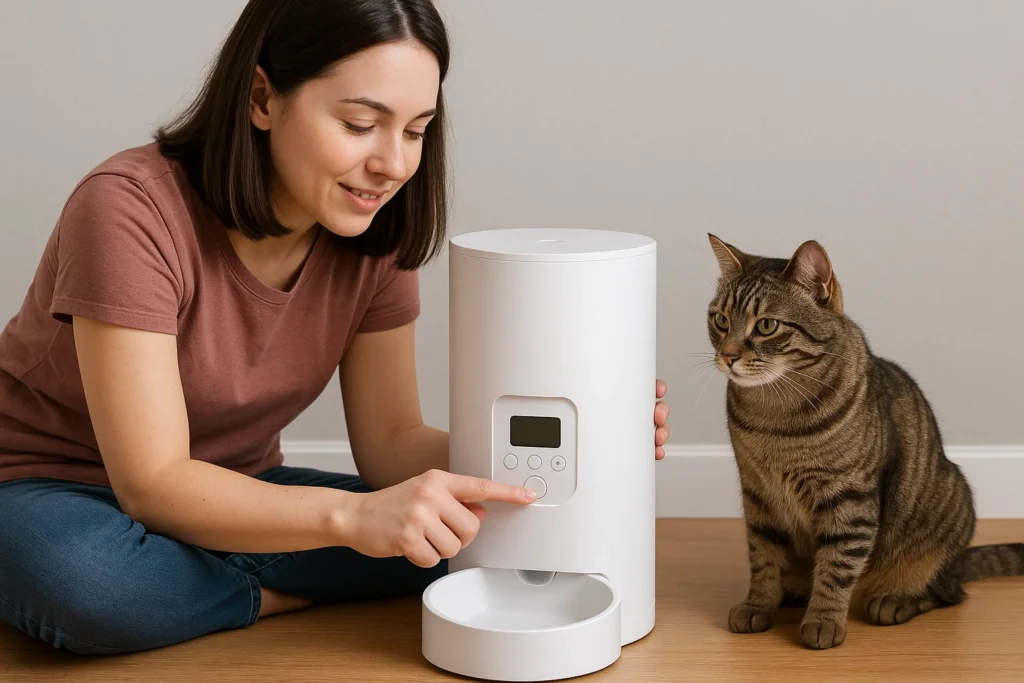
- Place feeder in a stable location, out of direct sunlight, away from water/traffic, so the cat feels safe to use it.
- Introduce the feeder while you’re at home: show your cat, allow them to explore it, run a few training/dispense sessions so they recognise it as a food source.
- Program portions carefully based on your cat’s daily caloric needs (consult your vet if needed).
- Monitor for the first week: is the cat using it? Any leftover food spoilage? Ensure hopper dispenses reliably.
- Maintain hygiene: empty hopper occasionally, wipe clean, check for moisture/clogs.
- Continue your regular observation: weight, coat, litter box, behaviour — the feeder doesn’t replace that.
Integrating into your cat’s lifestyle: Best practices
Work routine / away-from-home use
If you work long hours or travel occasionally:
- Use the automatic feeder to cover at least one of the meals you might miss.
- Still check in (via pet cam or neighbour) especially if you’ll be away for multiple days — machines can fail.
- Pair the feeder with interactive play or food puzzle sessions when you are home — to satisfy hunting/foraging instincts.
Multi-cat households
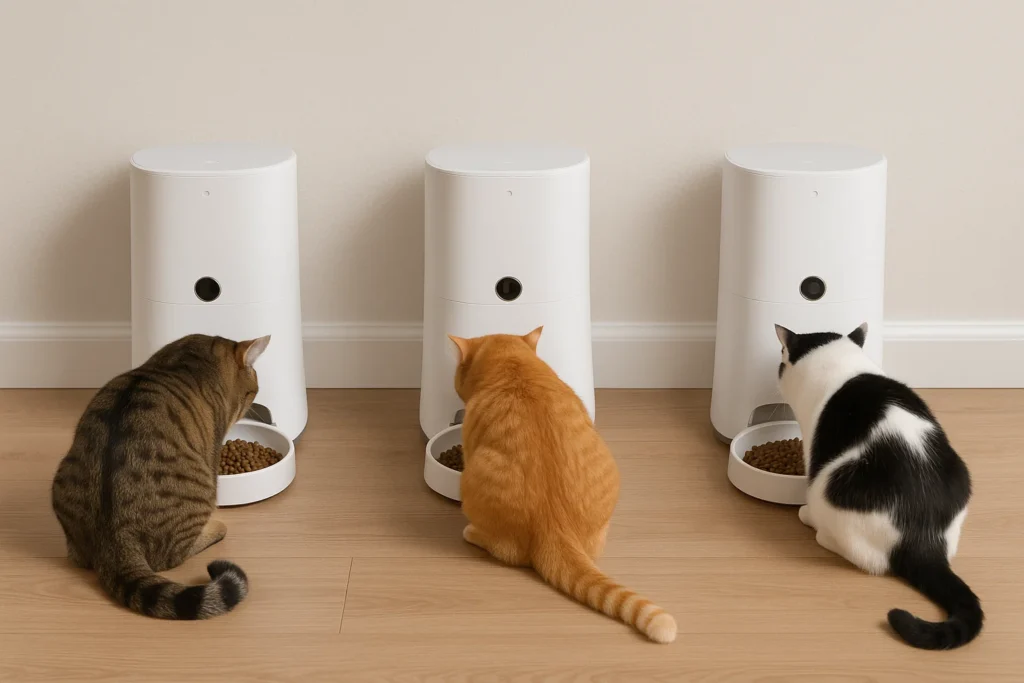
- Assign each cat a feeder if diet varies or to prevent domination/food-stealing.
- If sharing one feeder, ensure it has access control (microchip or RFID) or is placed away from competitive cats.
- Monitor whether the dominant cat is monopolising the feeder; manual supervision may still be required initially.
Health or weight management
- Work with your vet to determine daily caloric intake. Then programme the feeder accordingly.
- Younger cats or active cats may need more meals or snacks; older or less active cats may need smaller portions.
- Consider splitting the day’s food into multiple smaller meals rather than one large one — research shows frequent smaller meals may improve satiety and reduce begging-behaviour. PMC+1
- Use the feeder as one element of a broader plan: diet control, exercise (playtime), vet check-ups.
Travel or extended absence
- If you’ll be away for more than a day: ask someone (friend/neighbour/pet-sitter) to check the feeder and the cat.
- Ensure your feeder is reliable, has battery backup, and the food inside is protected from spoilage or pests.
- Preload food but avoid leaving too long without human supervision; feeders are helpful — not a full replacement for care.
- Inform your pet-sitter about the feeder’s schedule, how to top up, how to reset if needed.
FAQ’S
What is the best automatic feeder for cats?
The “best” depends on your cat’s diet, your schedule, and home setup. Look for one with accurate portion control, clean design, and compatible with the food type you use (dry or wet). Smart-features (app control, camera) are a bonus if you travel or want remote monitoring. Review-sites recommend models with microchip access for multi-cat homes. Cats.com+1
Can automatic feeders handle wet food?
Some can, but many automatic feeders are designed for dry food only. Wet-food feeders often have added complexity (cooling, cleaning, spoilage control). Always check the manufacturer’s specifications. Class Act Cats+1
Will my cat eat less if I use an automatic feeder?
Yes — if you programme smaller, frequent meals instead of leaving food out all day. Automatic feeders help regulate portions and discourage grazing, which can lead to overeating and obesity. PETLIBRO+1
Are there risks or downsides to automatic feeders?
There are a few:
- Malfunctions can leave the cat without food if unchecked. Coyne City Line Veterinary Center+1
- Some cats may be wary of the machine initially (noise or unfamiliarity).
- If used incorrectly (e.g., not cleaned), food quality may suffer.
- They do not replace checking on your cat’s overall health.
As one expert summary states: “Vets advise against relying solely on automatic feeders; regular monitoring of pets’ health is essential.” wedogy.com
How many meals per day should I set?
That depends on your cat’s age, breed, activity level and diet. Many veterinarians and studies suggest multiple small meals are better than one large one — especially for weight management or grazing cats. One study compared six meals vs two per day and found feeding more frequently (with portion control) helped improve outcomes. PMC+1
How do I transition my cat to using an automatic feeder?
- Place the feeder while you’re home and allow your cat to explore it.
- Run a few trial meal dispenses so your cat associates the sound/hopper with eating.
- Program it for one of their regular meals initially while you supervise.
- Once they are using it reliably, adjust other meals accordingly.
- Monitor appetite and behaviour closely for first week to ensure acceptance and consistent eating.
Do automatic feeders save money?
Indirectly, yes. By controlling portions and preventing overeating, you may reduce wasted food and health-costs associated with obesity (dietary disease, vet visits). They also reduce your time spent manually measuring and pouring meals — saving you effort, if not always direct dollars.
Conclusion & What to Do Next
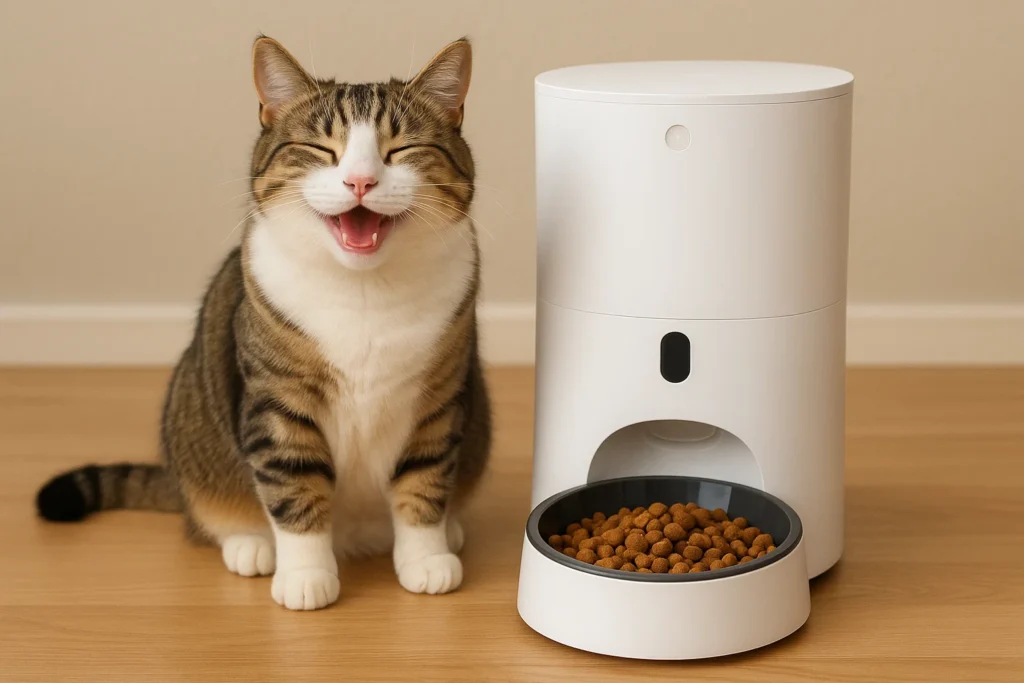
As the team at Carden IT Group, we believe in applying the right tools so you can focus on what matters — and in the case of your cat’s feeding, that means using an automatic feeder to provide consistent, accurate meals while freeing you from the pressure of rigid schedules. When you choose the right model, introduce it carefully, and remain attentive to your cat’s overall health, you’ll experience the dual benefit of better eating habits for your cat and greater peace of mind for you.
Here’s your next-step checklist:
- Evaluate your cat’s current feeding routine: Are there irregularities? Is grazing an issue?
- Choose a feeder that matches your cat’s food type, portion needs, and your schedule (simple vs smart).
- Introduce it gradually and monitor for acceptance and performance.
- Programme meals and portions in consultation with your vet if needed.
- Continue your regular cat-health routines: weigh your cat, check appetite and litter-box habits, maintain playtime and enrichment.
- Use the feeder as part of the routine — not as a full substitute for your care and observation.
By doing so, you’ll position your cat for a healthier, happier life — and you’ll rest easier knowing their feeding is taken care of intelligently.
Useful Reads
- Petlibro Automatic Cat Feeder Review – A relevant review page directly related to automatic feeders.