
Reviewed by a Licensed Veterinary Professional, DVM | Updated: January 2026
Between 50% and 90% of cats older than four years suffer from some form of dental disease, making it one of the most preventable yet most neglected health problems in cats (Cornell Feline Health Center). The trouble is, most cats respond to a toothbrush the way they respond to a bath — with absolute, personal outrage.
And that’s exactly the problem this guide was built to solve. Cat teeth cleaning at home doesn’t have to be a wrestling match. It just has to match your cat’s actual tolerance level, not some idealized version of a cat who sits politely with their mouth open.
“My foster would murder me if I tried to brush his teeth so I’m wondering if there’s a supplement or treat that helps clean their teeth.”
That question — asked by a real cat owner in a veterinary community forum — captures what most guides miss entirely. Not every cat will accept a toothbrush. But every cat can receive some level of dental care. This guide shows you how to find your cat’s starting point and build from there.
By the end, you’ll know exactly how to perform cat teeth cleaning at home — or find the right alternative if brushing simply isn’t possible — so you can protect your cat’s health starting today. We’ll cover why dental care matters, how to brush safely, alternatives for resistant cats, the truth about anesthesia-free cleaning, professional procedure costs, and when to call your vet.
| # | Image | Product | Best For | Buy |
|---|---|---|---|---|
| 1 | 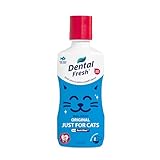 |
Dental Fresh Tuna Water Additive | Easy daily dental care | Buy on Amazon |
Cat teeth cleaning at home is achievable for most owners — even if your cat resists brushing. Between 50% and 90% of cats over four years old already have dental disease (Cornell Feline Health Center).
- The Dental Acceptance Ladder: Match the method to your cat’s tolerance — start with water additives or wipes if brushing fails, then work upward at your cat’s pace
- Daily brushing is ideal, but VOHC-approved dental wipes, treats, and water additives all provide meaningful protection
- Never use human toothpaste — fluoride and xylitol are toxic to cats (Tufts University Cummings School of Veterinary Medicine)
- Professional cleaning requires anesthesia — anesthesia-free options are not endorsed by the AAHA and carry real risks
- Signs of dental disease include bad breath, drooling, and pawing at the mouth — see your vet if you notice any of these
- Table of Contents
- Why Cat Dental Care Matters More Than You Think
- How to Clean Your Cat’s Teeth at Home: Step-by-Step
- Dental Care Products and Brushing Alternatives
- Anesthesia, Risks, and “Anesthesia-Free” Cleaning
- Professional Cat Teeth Cleaning: Costs and What to Expect
- When Home Care Isn’t Enough
- Frequently Asked Questions
Why Cat Dental Care Matters More Than You Think
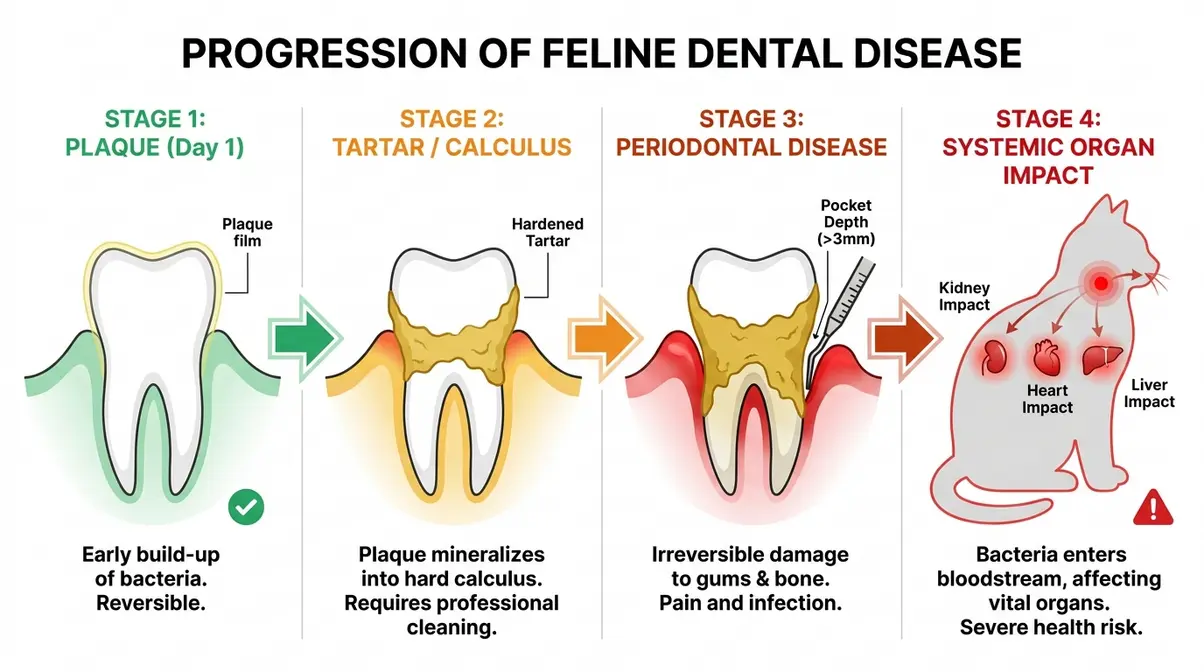
Feline dental care is necessary — not optional. Periodontal disease (a progressive infection of the gums and the bone supporting your cat’s teeth) affects the majority of adult cats, and it rarely announces itself with obvious pain. Because cats instinctively hide discomfort, your cat could be suffering from significant dental disease right now without you knowing. The bacteria responsible don’t stay in the mouth, either — they can enter the bloodstream and travel to the kidneys, heart, and liver, turning what looks like a tooth problem into a full-body health crisis.
How Common Is Feline Dental Disease?
Cat dental disease is far more common than most owners realize, and the numbers are striking. According to the Cornell Feline Health Center, between 50% and 90% of cats older than four years suffer from some form of dental disease — meaning if you have a four-year-old cat who has never had a dental exam, the odds are better than even that she already has a problem.
The timeline starts even earlier than most people expect. AVMA guidelines note that by three years of age, most cats already show evidence of periodontal disease. That’s not a typo — three years old.
Why are cats so prone to this? Modern commercial cat food, while nutritionally complete, doesn’t provide the natural tooth-scrubbing action that wild prey would. Plaque (a soft film of bacteria) forms on teeth daily. Left alone, it mineralizes into tartar (also called calculus — the hard, yellow-brown crust you can sometimes see on a cat’s back teeth), which can only be removed professionally. If your cat is five years old and has never had a dental check-up, your vet will very likely find at least early-stage tartar buildup at the next visit.
Between 50% and 90% of cats older than four years suffer from dental disease, making it one of the most common preventable health issues in felines (Cornell Feline Health Center).
Signs Your Cat Needs Dental Attention
Cats are masters at hiding pain — which is exactly why dental disease earns its reputation as a “silent killer of cats.” The absence of obvious symptoms does not mean healthy teeth. That said, there are observable signs worth checking for regularly:
- Bad breath (halitosis): A persistent, unpleasant odor that goes beyond normal “cat breath”
- Yellow-brown buildup on teeth (tartar/calculus): Visible crust along the gumline, especially on upper back teeth
- Red or swollen gumline: Healthy gums are pale pink and firm — redness signals inflammation
- Drooling more than usual: Especially if your cat doesn’t normally drool
- Pawing at the mouth: A sign of oral discomfort
- Chewing on one side only: Cats compensate by favoring the less painful side
- Dropping food or reluctance to eat hard kibble: Often the first behavioral sign owners notice
To do a quick home visual check, gently lift your cat’s upper lip on one side and look at the outer surfaces of the back teeth. That’s where tartar accumulates first. If you see a yellow-brown crust along the gumline, that is tartar — and at that stage, it can only be removed by a vet. Your job at home is to prevent it from forming in the first place.
The Real Cost of Ignoring Your Cat’s Teeth
The pros of regular dental care are clear: fresher breath, reduced infection risk, longer lifespan, and lower vet bills over time. The cons of neglect are more serious. Untreated periodontal disease causes chronic pain, tooth loss, and in advanced cases, jaw bone deterioration. More critically, the bacteria from infected gum tissue can enter the bloodstream and affect the kidneys, heart, and liver — organs already vulnerable in older cats.
Professional dental cleanings under anesthesia typically cost between $300 and $1,400 depending on the severity of disease, your location, and whether extractions are needed (VCA Hospitals). A consistent home care routine — even an imperfect one — significantly reduces the frequency and complexity of those procedures. Think of it this way: five minutes a few times a week at home could save hundreds of dollars and spare your cat genuine suffering.
This is where The Dental Acceptance Ladder becomes essential. The goal isn’t perfection — it’s finding the highest rung of dental care your cat will actually tolerate, starting today, and building from there.
How to Clean Your Cat’s Teeth at Home: Step-by-Step
Daily brushing is the gold standard for feline dental care, according to veterinary consensus across multiple professional organizations. However, “gold standard” doesn’t mean “only option” — and it certainly doesn’t mean “easy.” This section walks you through everything: what to buy, how to train your cat over four weeks, the eight-step brushing technique, and — critically — what to do when your cat absolutely refuses.
What You’ll Need Before You Start
Gather these supplies before your first session. Having everything ready reduces stress for both of you.
Essential supplies:
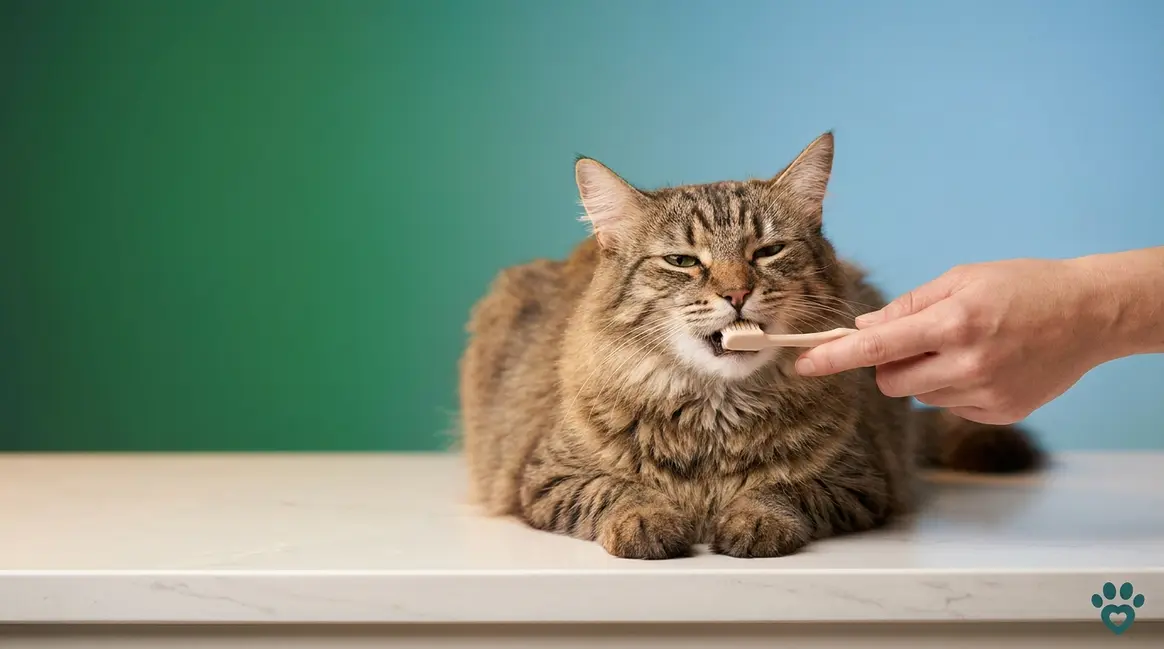
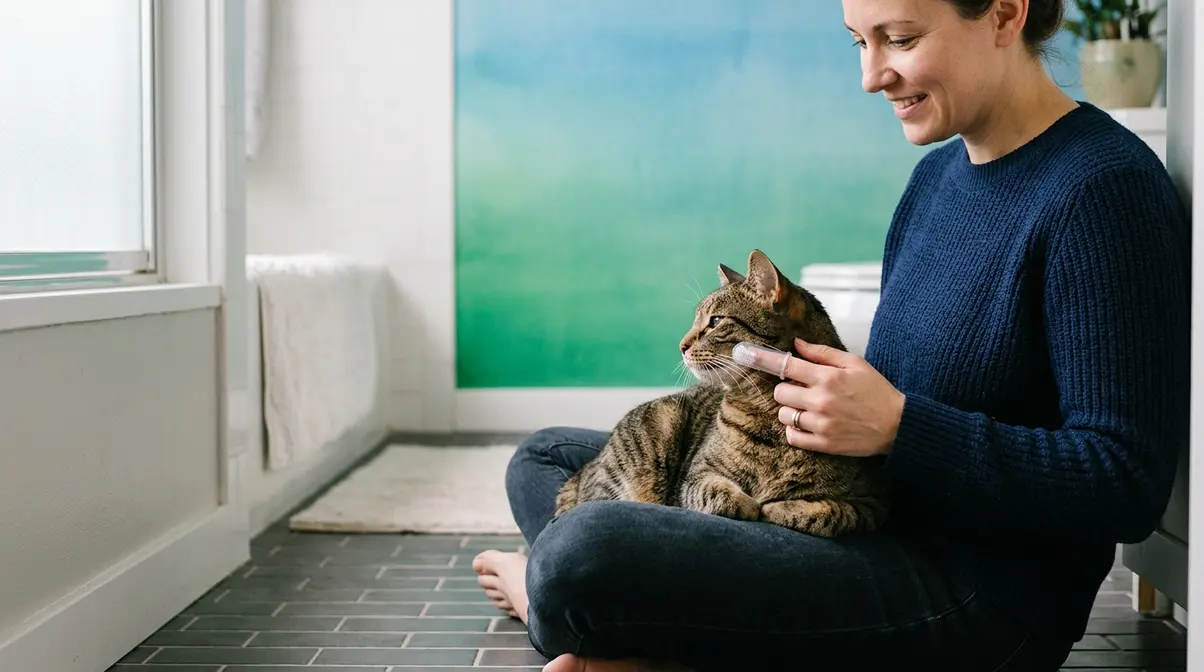
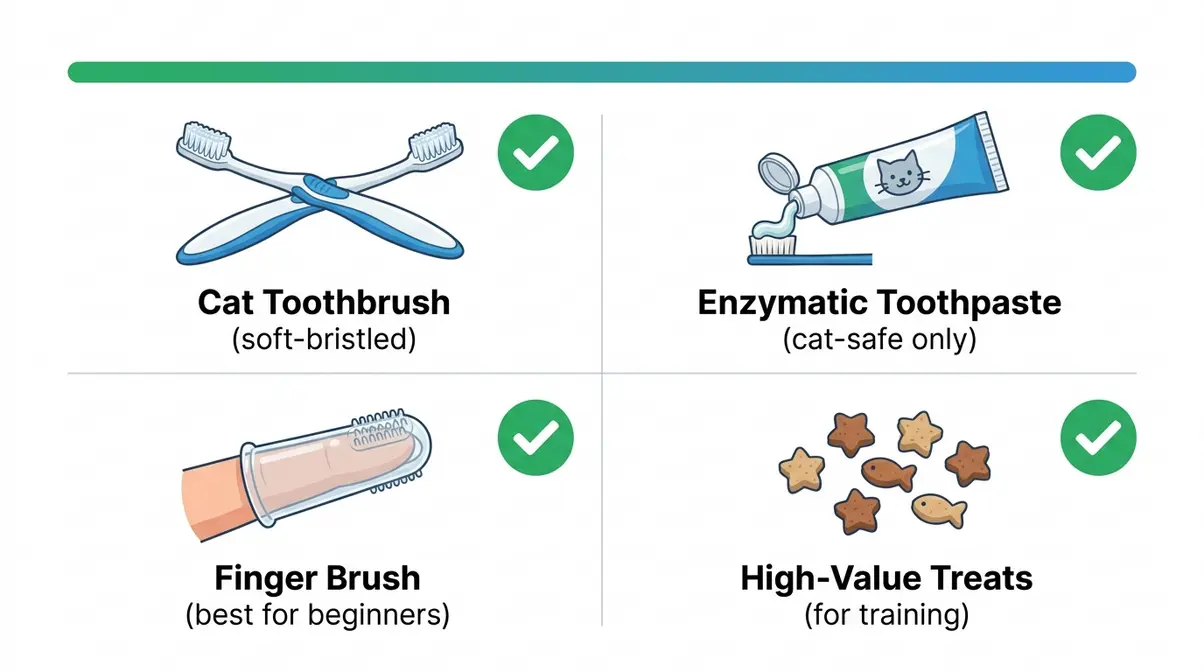
- Cat-specific toothbrush: A soft-bristled brush designed for cats — smaller head, angled handle. Finger brushes (a rubber cap that fits over your fingertip) are often easier for beginners and less threatening to cats.
- Enzymatic cat toothpaste: This is non-negotiable. Enzymatic toothpaste is a toothpaste that uses enzymes to chemically break down plaque, even if you don’t achieve perfect mechanical scrubbing. It comes in flavors cats accept — poultry, malt, seafood. The enzymes do meaningful work even with partial contact.
- High-value treats: Small, soft, and reserved exclusively for dental training sessions. These anchor the positive association.
- A calm, quiet space: No other pets, no sudden noises. A bathroom counter or a lap works well.
What you must never use:
Human toothpaste is toxic to cats. It contains fluoride and often xylitol — both of which are dangerous to cats even in small amounts (Tufts University Cummings School of Veterinary Medicine). Never substitute human toothpaste, baking soda, or any product not specifically formulated for cats.
The 4-Week Desensitization Training Plan
Trying to brush your cat’s teeth on Day 1 is the fastest way to ensure there is no Day 2. Cats need to associate mouth-touching with positive outcomes before they’ll tolerate it. Veterinary behaviorists consistently recommend a gradual desensitization approach over three to four weeks. Here’s a realistic, week-by-week plan:
- Week 1 — Touch tolerance (mouth and face)
- Goal: Your cat accepts gentle handling around the face and muzzle without pulling away.
- Session length: 1–2 minutes, once or twice daily.
- Method: With your cat relaxed in your lap, gently stroke their face, then briefly touch the outside of their lips. Reward immediately with a treat. End every session on a positive note — stop before your cat shows any signs of irritation (tail flicking, ear flattening, turning away).
- Success marker: Cat remains relaxed when you touch the outside of their lips.
- Week 2 — Lip lifting and gum contact
- Goal: Your cat accepts having their lip lifted and a finger touching their outer gum surface.
- Session length: 2–3 minutes.
- Method: Dip your fingertip in the enzymatic toothpaste (let your cat lick it off first — this builds positive flavor association). Then gently lift the upper lip and touch the outer gum surface for one to two seconds. Reward. Repeat on the other side.
- Success marker: Cat tolerates a fingertip on the outer gum without retreating.
- Week 3 — Introduce the brush
- Goal: Your cat accepts the toothbrush touching their teeth without reacting.
- Session length: 2–3 minutes.
- Method: Let your cat sniff and lick the toothbrush with toothpaste on it. Then gently touch the brush to the outer surface of two or three teeth. Do not attempt circular motions yet. Reward after each brief contact.
- Success marker: Cat accepts brush contact on outer tooth surfaces.
- Week 4 — Full brushing motion
- Goal: A complete (or near-complete) brushing session.
- Session length: 3–5 minutes.
- Method: Using small circular or back-and-forth motions, work along the outer surfaces of the upper and lower teeth. Focus on the back upper teeth first — that’s where tartar builds fastest. Even 30 seconds of contact is meaningful progress.
- Success marker: Cat tolerates 30–60 seconds of active brushing on multiple teeth.
Consistency is more important than perfection. A two-minute session three times a week is more effective than a monthly five-minute battle.
Step-by-Step: How to Brush Your Cat’s Teeth (8 Steps)
Once your cat has completed desensitization training (or if you have a tolerant cat who’s ready now), follow this eight-step technique. Each step builds on the previous one — don’t skip ahead.
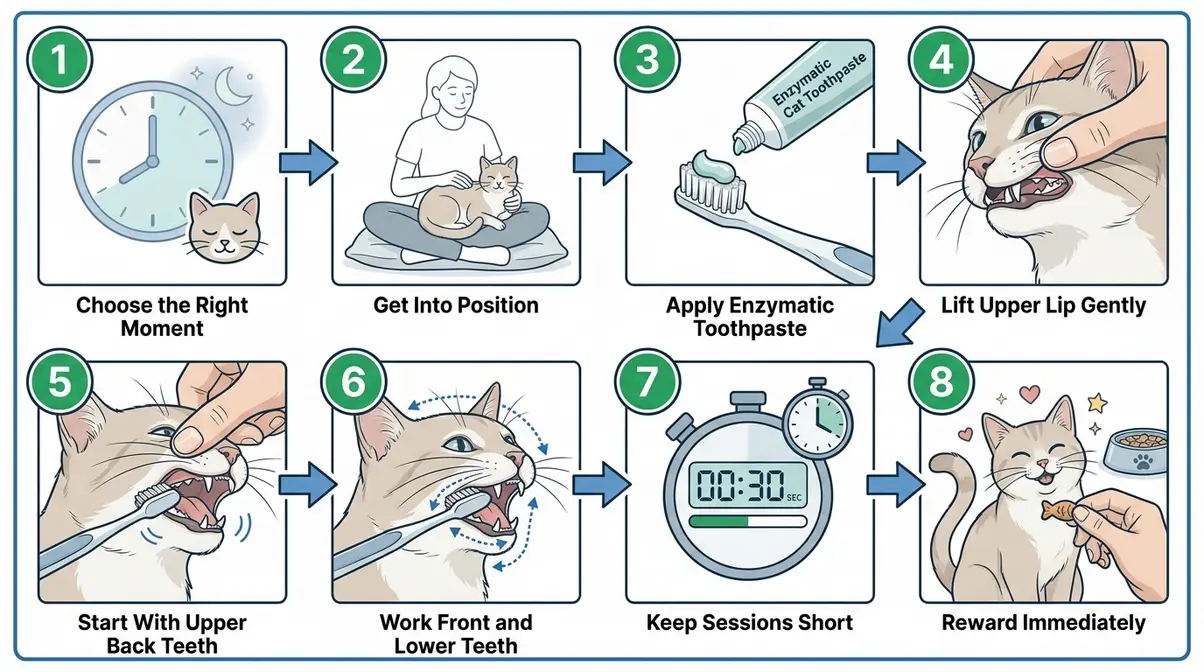
Step 1 — Choose the right moment.
Pick a time when your cat is calm and slightly sleepy — after a meal or a play session. Avoid brushing when your cat is energetic, hungry, or agitated. A relaxed cat is a cooperative cat.
Step 2 — Get into position.
Sit on the floor or a low surface. Place your cat in your lap facing away from you, or sit beside them. Never restrain your cat tightly — that creates panic. The goal is gentle, confident control, not a hold.
Step 3 — Apply toothpaste to the brush.
Use a pea-sized amount of enzymatic cat toothpaste. Let your cat sniff or lick the brush first as a warm-up and flavor reminder.
Step 4 — Lift the upper lip gently.
Using your non-dominant hand, place your thumb and forefinger on either side of your cat’s muzzle. Gently lift the upper lip on one side to expose the outer surfaces of the upper teeth. Do not force the mouth open — you only need to access the outer surfaces.
Step 5 — Start with the upper back teeth.
These are the largest teeth and the highest-priority area for tartar prevention. Using a gentle circular or back-and-forth motion, brush the outer surfaces of the upper premolars and molars. Aim for 10–15 seconds per side.
Step 6 — Move to the upper front teeth, then the lower teeth.
Work your way forward along the upper teeth, then repeat on the lower jaw. The inner surfaces (tongue side) are less critical — cats’ tongues provide some natural cleaning action there, and most cats won’t tolerate inner surface brushing anyway.
Step 7 — Keep sessions short.
A complete session takes 30–60 seconds once your cat is trained. That’s it. Do not push for longer if your cat is showing stress signals. A short, positive session every day beats a long, stressful one every week.
Step 8 — Reward immediately and consistently.
The moment you finish — or the moment your cat shows they’ve had enough — give a high-value treat. This is the single most important step for building long-term cooperation. Your cat needs to know that tolerating the brush predicts something good.
What to Do If Your Cat Bites or Refuses
This is the section most guides skip entirely. Here’s what to do in specific scenarios:
If your cat bites the brush: Stop immediately — do not pull away sharply (that triggers prey instinct). Calmly remove the brush, end the session, and give a small treat anyway. Note how far into the session the bite happened. Next session, stop one step before that point and end positively. Gradually extend duration over days.
If your cat freezes and won’t move: Freezing is a fear response, not cooperation. Do not interpret stillness as tolerance. Reduce session length, go back to Week 1 desensitization, and rebuild the positive association. Freezing cats are stressed cats.
If your cat scratches: Wrap your cat loosely in a towel (“burrito wrap”) so their front paws are contained. This technique — used by veterinary technicians — reduces scratching without causing panic, provided the wrap is snug but not tight.
If your cat consistently refuses brushing after four weeks of patient training: Move down The Dental Acceptance Ladder. Finger brushes are often better accepted than standard brushes. If finger brushes fail, dental wipes are the next rung. Below that: enzymatic gels, dental treats, and water additives all provide meaningful — if partial — protection. Something is always better than nothing.
Dental Care Products and Brushing Alternatives
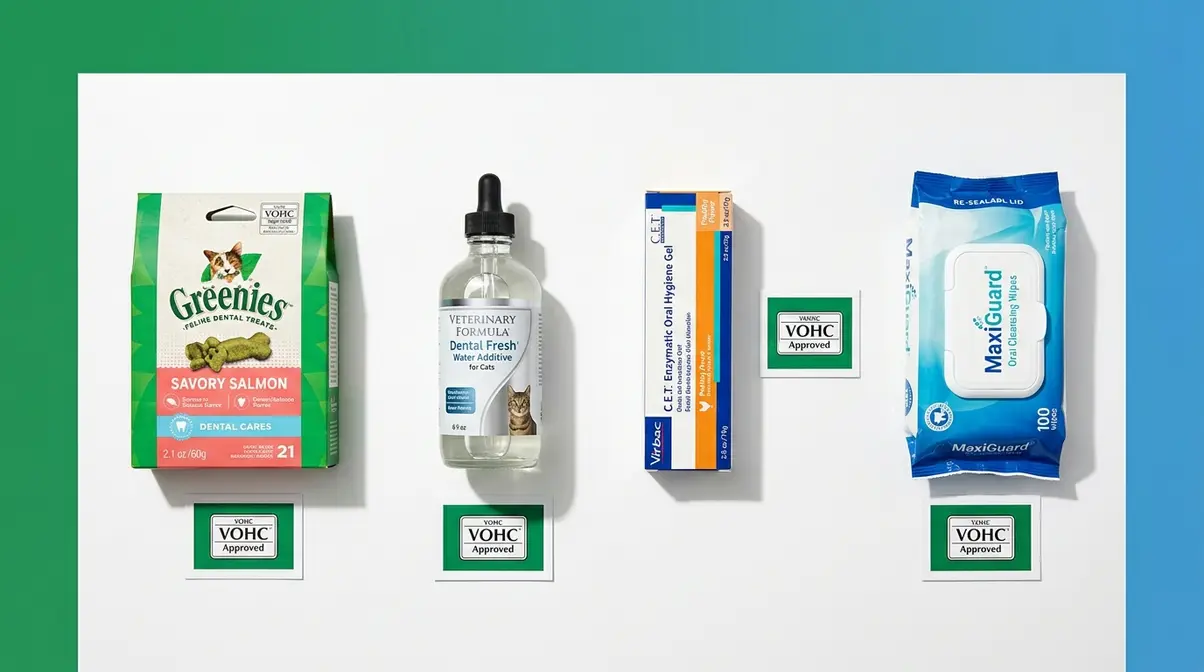
Not every cat will accept a toothbrush — and that’s okay. The Dental Acceptance Ladder exists precisely for this situation. The VOHC (Veterinary Oral Health Council, the independent body that evaluates and certifies pet dental products) has awarded its seal of acceptance to a range of products beyond toothbrushes. Each rung of the ladder provides less mechanical cleaning than brushing but still delivers measurable plaque and tartar reduction.
Dental Wipes and Gels
Dental wipes are pre-moistened textured pads that you wrap around your finger to manually wipe the outer tooth surfaces. They provide a gentle scrubbing action without the intimidating shape of a toothbrush. For cats who freeze or bite at the sight of a brush, a finger wrapped in a wipe is often far less threatening.
Enzymatic dental gels work similarly to enzymatic toothpaste — you apply the gel to the gum line with a finger or wipe, and the enzymes break down plaque chemically. Some gels are formulated to be licked off, requiring no brushing contact at all. This makes them particularly useful for cats who won’t tolerate any mouth-touching beyond a brief lip lift.
Veterinary professionals consistently recommend wipes and gels as a meaningful second option for cats who resist brushing. They won’t remove established tartar, but they can slow new plaque accumulation significantly. Look for products carrying the VOHC seal — that indicates independent testing has confirmed the plaque-reduction claim.
Dental Treats and Prescription Diets
Dental treats work through a combination of mechanical abrasion (the chewing action scrubs tooth surfaces) and active ingredients (enzymes, antimicrobial compounds). The key is that your cat must actually chew them — cats who swallow treats whole get no dental benefit.
VOHC-approved dental treats — such as those in the Greenies Feline line — have demonstrated plaque and tartar reduction in controlled studies. They’re not a substitute for brushing, but for cats who won’t tolerate any direct mouth contact, daily dental treats represent a real and accessible rung on the ladder.
Prescription dental diets (such as Hill’s Prescription Diet t/d) use a unique kibble texture specifically engineered to clean the tooth surface as the cat bites through it. Unlike regular dry food (which provides minimal dental benefit despite the common belief otherwise), these diets have earned VOHC approval. They require a veterinary recommendation and are typically used for cats with documented dental disease risk.
What food cleans cats’ teeth naturally? No common food completely cleans cat teeth without additional intervention. However, VOHC-approved dental diets come closest to a “natural” mechanical cleaning approach. Raw meaty bones are sometimes cited in online communities, but veterinary consensus does not endorse them due to fracture and bacterial contamination risks.
Water Additives for Cats
Water additives are the lowest-effort rung on The Dental Acceptance Ladder — you simply add a measured amount to your cat’s water bowl each day. They typically contain enzymes, antimicrobial compounds (such as chlorhexidine in low concentrations), or zinc compounds that reduce bacterial growth in the mouth.
For cats who absolutely will not tolerate any direct mouth contact, a VOHC-approved water additive provides a baseline level of protection that is genuinely better than nothing. The trade-off: some cats refuse to drink treated water, particularly if the additive has any detectable taste or odor. Tuna-flavored formulas — like Dental Fresh Cat Water Additive — are specifically designed to address this, making the additive more palatable for cats who are sensitive to unfamiliar flavors in their water.
Always introduce water additives gradually — start with a quarter of the recommended dose for the first few days to let your cat adjust.
VOHC-Approved Alternatives: Comparison Table
This is the table most dental care guides don’t include. The VOHC (Veterinary Oral Health Council) independently tests and certifies products that demonstrate genuine plaque or tartar reduction. The seal matters — it’s the difference between a marketing claim and a verified result.
| Product Type | Effort Level | VOHC Approved? | Best For | Limitations |
|---|---|---|---|---|
| Toothbrushing | High | N/A (technique, not product) | Maximum plaque removal | Requires training; many cats refuse |
| Enzymatic Toothpaste | High | Yes (brand-dependent) | Boosts brushing effectiveness | Requires some brushing cooperation |
| Dental Wipes | Medium | Yes (brand-dependent) | Cats who reject brushes | Less effective than brushing |
| Enzymatic Gel | Low–Medium | Yes (brand-dependent) | Cats who won’t tolerate wipes | Requires brief lip access |
| Dental Treats | Low | Yes (e.g., Greenies Feline) | Cats who won’t allow mouth contact | Cat must chew, not swallow whole |
| Prescription Dental Diet | Low | Yes (e.g., Hill’s t/d) | High-risk cats; vet-recommended | Requires vet prescription; cost |
| Water Additives | Very Low | Yes (brand-dependent) | Absolute minimum intervention | Some cats refuse treated water |
| Raw Bones | N/A | No | Not recommended by veterinary consensus | Fracture risk; bacterial contamination |
Note: Always verify the VOHC seal on the product packaging or at vohc.org before purchasing. Product formulations change, and approval status is product-specific.
Anesthesia, Risks, and the Truth About “Anesthesia-Free” Cleaning
Professional dental cleaning is a medical procedure — and like all medical procedures, it carries both benefits and risks worth understanding. This section addresses the questions that keep many cat owners up at night: Is anesthesia safe? What about “anesthesia-free” cleaning? And can you scrape tartar at home?
How Safe Is Professional Dental Cleaning Under Anesthesia?
General anesthesia for cats has become significantly safer over the past two decades. Modern veterinary protocols include pre-anesthetic blood work to screen for organ function, IV fluid support during the procedure, continuous vital sign monitoring, and careful temperature management — all of which dramatically reduce risk. According to VCA Hospitals, the risk of serious anesthetic complications in healthy adult cats is low when appropriate pre-anesthetic screening is performed.
The reason anesthesia is required — not optional — for proper dental cleaning is straightforward. A complete oral examination requires probing below the gumline, dental X-rays, and scaling of all tooth surfaces including the subgingival (below-gum) areas where the most dangerous bacteria live. None of this is possible in a conscious, moving cat. Attempting it without anesthesia means leaving the most critical areas untreated.
Older cats and cats with underlying conditions (kidney disease, heart disease, hyperthyroidism) do face higher anesthetic risk. However, for many of these cats, the risk of untreated dental disease — chronic pain, systemic bacterial spread, and accelerated organ damage — outweighs the procedural risk. Your veterinarian can help you weigh this trade-off based on your cat’s specific bloodwork and health profile.
Why Anesthesia-Free Cleaning Is Controversial
“Anesthesia-free dental cleaning” — sometimes offered at groomers, pet stores, or mobile services — sounds appealing, especially for owners who are anxious about putting their cat under. However, the American Animal Hospital Association (AAHA) explicitly does not endorse anesthesia-free dental procedures for cats or dogs. The AAHA’s position is that these procedures provide cosmetic improvement only — removing visible surface tartar — while leaving subgingival disease completely unaddressed.
There are additional concerns beyond ineffectiveness. Scaling tools used on a conscious, stressed animal create a real risk of injury to the gingival (gum) tissue and the tooth enamel. The procedure is also genuinely stressful for cats, which carries its own health implications. A cat teeth cleaning without anesthesia may look like a clean result, but it doesn’t address where dental disease actually lives — below the gumline.
Cat owners searching for “cat teeth cleaning without anesthesia” are often motivated by cost or fear — both completely understandable. The honest answer is that a rigorous home care routine (daily brushing, VOHC-approved alternatives) is a more effective and safer approach than anesthesia-free professional cleaning.
Never Scrape Tartar at Home — Here’s Why
This needs to be stated clearly: do not attempt to scrape tartar off your cat’s teeth at home. Dental scalers — even the blunt-tipped tools sold in pet stores — require professional training to use safely. Used incorrectly, they can scratch and score the enamel surface, creating microscopic grooves where bacteria accumulate faster than before. They can also lacerate the gum tissue, introducing bacteria directly into the bloodstream.
Beyond the physical risk, at-home tartar scraping addresses only the visible surface. Subgingival tartar — the buildup below the gumline where periodontal disease originates — is completely inaccessible without professional instruments and anesthesia. Scraping the visible portion while leaving the subgingival deposits intact creates a false sense of progress.
If your cat has visible tartar buildup, schedule a professional veterinary dental cleaning. That is the only safe and effective way to remove established tartar.
Professional Cat Teeth Cleaning: Costs and What to Expect
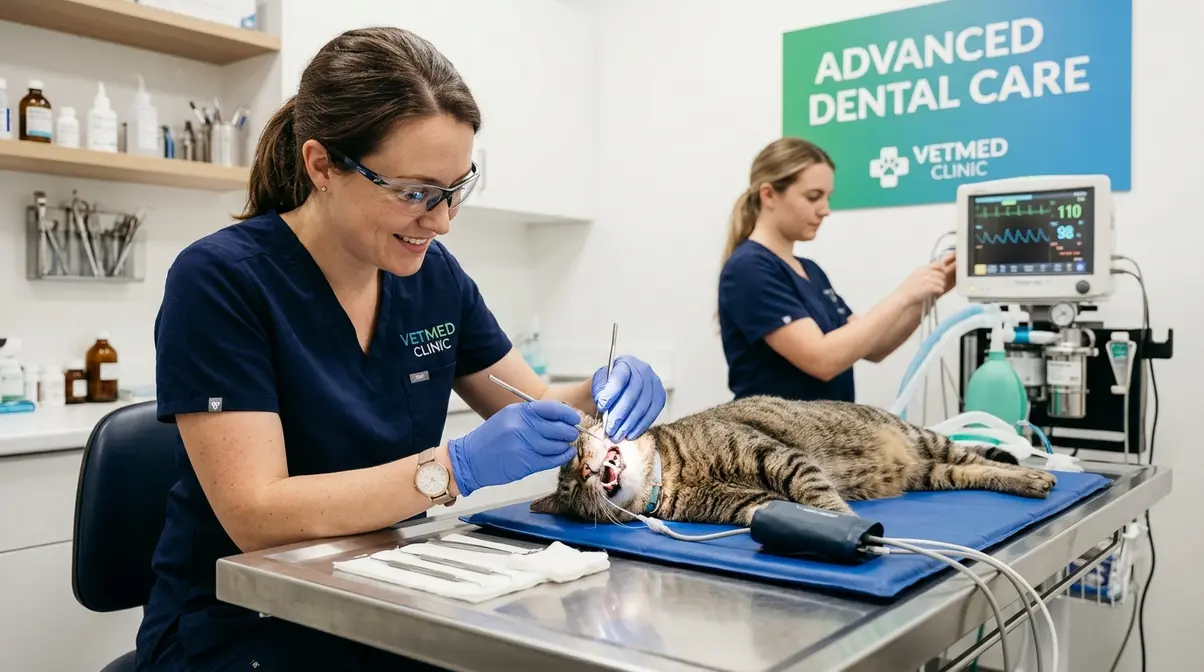
Understanding what happens during a professional dental cleaning — and what it costs — helps you have a more informed conversation with your vet and plan financially for your cat’s care.
What Happens During a Professional Dental Cleaning
A professional feline dental cleaning is a multi-step medical procedure, not a simple polish. Here’s what to expect, according to VCA Hospitals:
- Pre-anesthetic exam and bloodwork: Your vet evaluates your cat’s overall health and checks kidney, liver, and blood cell values to confirm anesthesia safety.
- Anesthesia induction and intubation: Your cat is placed under general anesthesia and intubated (a breathing tube is placed) to protect the airway from water and debris during cleaning.
- Full oral examination: The vet or veterinary dentist examines every tooth and probes the gum pockets around each tooth root.
- Dental X-rays: Full-mouth radiographs reveal disease below the gumline — the area invisible to the naked eye and the source of most serious periodontal disease.
- Ultrasonic scaling: An ultrasonic scaler removes tartar from all tooth surfaces, including subgingival areas.
- Polishing: Tooth surfaces are polished to remove microscopic scratches that attract new plaque.
- Extractions (if needed): Teeth that are non-viable — severely infected, fractured, or with advanced bone loss — are extracted. This is often the most significant cost variable.
- Recovery monitoring: Your cat is monitored until fully awake, then typically discharged the same day.
The entire procedure usually takes one to three hours. Your cat will likely be groggy for the remainder of the day and should be offered soft food if extractions were performed.
How Much Does Cat Teeth Cleaning Cost?
Professional cat teeth cleaning costs vary widely based on geographic location, the severity of dental disease, whether extractions are needed, and the individual practice. Based on current veterinary pricing data, typical ranges are:
| Service Component | Typical Cost Range |
|---|---|
| Pre-anesthetic bloodwork | $80–$200 |
| Anesthesia and monitoring | $100–$300 |
| Dental examination and cleaning | $150–$400 |
| Full-mouth dental X-rays | $75–$200 |
| Tooth extractions (per tooth) | $50–$300+ |
| Total (no extractions) | $300–$800 |
| Total (with extractions) | $500–$1,400+ |
(Cost estimates based on 2026 veterinary pricing data from VCA Hospitals and Lincoln Road Veterinary Centre. Prices vary by region and individual practice.)
Pet insurance that includes dental coverage can significantly offset these costs. Many policies cover dental cleanings when dental disease has been diagnosed — check your policy details carefully, as “wellness” dental cleanings are often excluded while disease treatment is covered.
Some owners ask about PetSmart or Banfield dental cleaning costs. Banfield Pet Hospital offers dental cleanings as part of their Optimum Wellness Plans, which spread costs across monthly payments. Prices vary by location, but the procedure itself follows the same anesthesia-required standard.
What to Expect After the Procedure
Most cats recover quickly from routine dental cleaning. Here’s what’s normal and what warrants a call to your vet:
- Normal post-procedure behavior (first 24 hours):
- Grogginess and sleepiness — anesthesia takes several hours to fully clear
- Reduced appetite, especially if extractions were performed
- Slight pawing at the mouth (mild discomfort)
- Pink-tinged saliva (minor bleeding from gum sites)
- What warrants a call to your vet:
- Refusal to eat for more than 24–48 hours
- Significant bleeding from the mouth
- Extreme lethargy beyond 24 hours post-procedure
- Swelling around the jaw or face
- Labored breathing
If extractions were performed, your vet will likely prescribe pain medication and possibly antibiotics. Offer soft or wet food for three to five days to allow extraction sites to heal. Avoid brushing near extraction sites until your vet confirms healing is complete — typically seven to ten days.
When Home Care Isn’t Enough
Home dental care is genuinely powerful — but it has real limits. Knowing when to step back and call your vet is as important as knowing how to brush.
Warning Signs That Need a Vet Visit
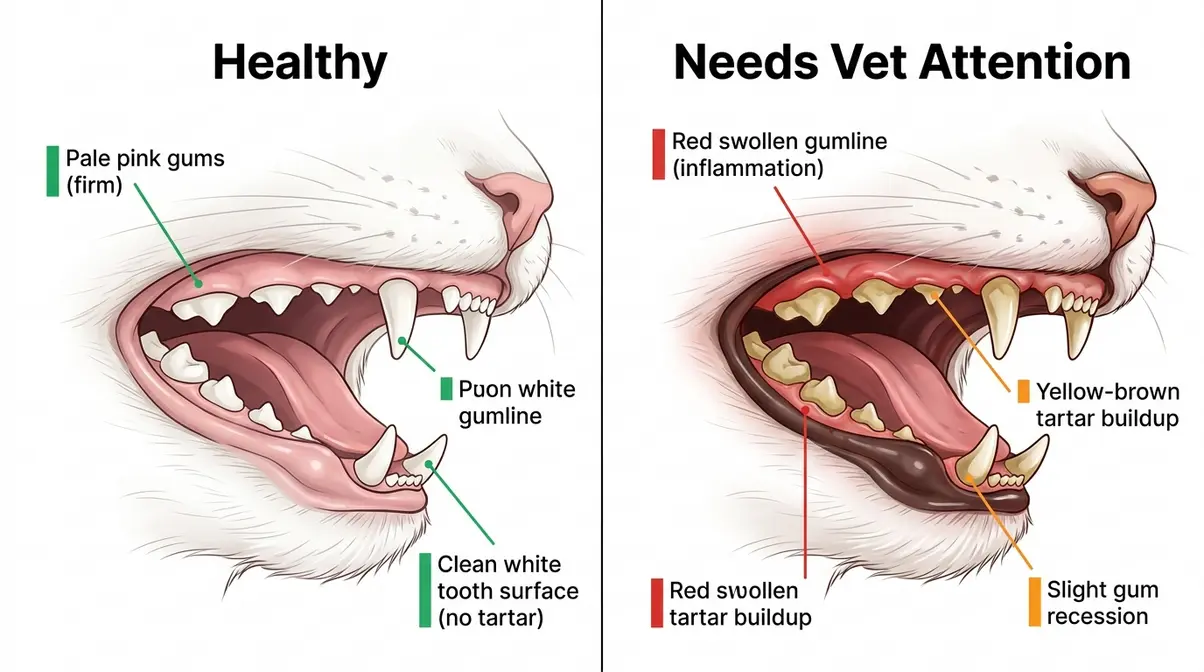
Some signs indicate dental disease that has already progressed beyond what home care can address. Contact your veterinarian promptly if you notice:
- Persistent bad breath that doesn’t improve with home care — this often signals active infection
- Visible red, swollen, or bleeding gums — a sign of gingivitis (gum inflammation) or more advanced periodontal disease
- Yellow-brown tartar buildup on tooth surfaces — this requires professional scaling, not home brushing
- Loose or missing teeth — advanced bone loss
- Difficulty eating, dropping food, or sudden preference for soft food — pain-driven behavioral change
- Facial swelling — may indicate an abscess (a pocket of infection at the tooth root)
- Blood in saliva or food bowl — active oral bleeding
⚠️ These signs indicate a condition requiring veterinary diagnosis and treatment. Home care cannot resolve established infection, tartar, or structural tooth damage. Consult your veterinarian before starting or continuing any dental care routine if your cat shows any of the above signs.
Special Cases: Older Cats, Sick Cats, and High-Stress Cats
Older cats (10+ years): Senior cats benefit enormously from dental care but often have compounding health conditions — kidney disease, hyperthyroidism, heart disease — that require careful pre-anesthetic evaluation. This does not mean dental cleaning should be avoided; it means the pre-procedure bloodwork and exam become even more important. Discuss the risk-benefit balance with your vet. For home care, older cats with sore mouths may only tolerate the lowest rungs of The Dental Acceptance Ladder — water additives and soft dental treats are often the most realistic options.
Diabetic cats: Periodontal disease and diabetes have a documented bidirectional relationship — each worsens the other. Dental infection increases insulin resistance, making blood sugar control harder. Veterinary consensus strongly recommends proactive dental management for diabetic cats, even though anesthesia requires careful glucose monitoring. Work closely with your vet to time any procedures around your cat’s insulin schedule.
High-stress cats: For cats with anxiety disorders or a history of trauma, even gentle desensitization training can be challenging. Feline pheromone products (like Feliway) used before and during training sessions may reduce baseline anxiety. If your cat’s stress response to dental handling is severe, discuss options with your vet — including whether anti-anxiety medication before sessions is appropriate. Never force dental care on a severely stressed cat; the psychological harm outweighs the dental benefit.
Foster cats and newly adopted cats: Give newly arrived cats at least four to six weeks to settle before attempting desensitization training. A cat who doesn’t yet trust you will not cooperate with mouth handling. Build the relationship first — dental care follows naturally once trust is established.
Frequently Asked Questions
Can I clean my cat’s teeth myself?
Yes, you can clean your cat’s teeth at home — and veterinary professionals actively encourage it. Daily brushing with a soft-bristled cat toothbrush and enzymatic toothpaste is the gold standard for home dental care. If your cat resists brushing, dental wipes, VOHC-approved treats, and water additives all provide meaningful protection. The key is starting with whatever level of intervention your cat will actually tolerate, then gradually building from there. Home care does not replace professional veterinary cleanings, but it significantly reduces the frequency and severity of disease.
Can you remove plaque from a cat’s teeth at home?
Yes — plaque (the soft bacterial film that forms daily) can be removed at home through brushing, dental wipes, or enzymatic gels. Plaque is soft and responds to mechanical and enzymatic action. However, once plaque mineralizes into tartar (the hard, yellow-brown crust), it cannot be removed at home — only a professional veterinary cleaning with ultrasonic scaling can address tartar safely. This is why daily home care matters so much: it prevents plaque from ever hardening into tartar in the first place.
What can I do instead of brushing my cat’s teeth?
Several VOHC-approved alternatives exist for cats who won’t tolerate brushing. Dental wipes provide gentle mechanical cleaning via a finger-wrap technique. Enzymatic gels can be applied to the gumline with minimal cooperation required. VOHC-approved dental treats — like Greenies Feline — reduce plaque through chewing action. Prescription dental diets (such as Hill’s t/d) use specially engineered kibble texture. Water additives require no mouth contact at all. Each option provides less protection than brushing, but all are better than no dental care. The VOHC seal confirms independent testing has verified the plaque-reduction claim.
Is it too late to start brushing my cat’s teeth?
It is almost never too late to start, though the starting point may be different for an older cat. If your cat has visible tartar buildup or signs of gum disease, schedule a professional cleaning first — brushing cannot remove established tartar, and attempting to brush over inflamed gums can cause pain that permanently sours your cat on dental handling. Once your vet has cleared the baseline, begin the four-week desensitization training plan regardless of your cat’s age. Senior cats can absolutely learn to tolerate dental care — it just requires more patience and smaller steps.
Can I scrape tartar off my cat’s teeth at home?
No — do not attempt to scrape tartar at home. Dental scalers require professional training to use without damaging tooth enamel or lacerating gum tissue. Even blunt-tipped tools sold in pet stores can score the enamel surface, creating microscopic grooves that actually accelerate future plaque accumulation. More critically, at-home scraping only addresses visible surface tartar while leaving the subgingival (below-gumline) deposits — where periodontal disease originates — completely untouched. If your cat has visible tartar, the only safe and effective solution is a professional veterinary dental cleaning under anesthesia.
What food cleans cats’ teeth naturally?
No common food completely cleans cat teeth on its own, but VOHC-approved dental diets come closest to a functional answer. Hill’s Prescription Diet t/d uses a uniquely engineered kibble texture that mechanically cleans the tooth surface as the cat bites through it — and has earned VOHC approval to support that claim. Regular dry kibble provides minimal dental benefit despite the widespread belief otherwise. Raw meaty bones are sometimes suggested online, but veterinary consensus does not endorse them due to tooth fracture risk and bacterial contamination concerns. VOHC-approved dental treats are the most practical “food-adjacent” option for most cats.
Can brushing a cat’s teeth remove tartar?
Brushing removes plaque but cannot remove established tartar. Plaque is a soft, sticky bacterial film that forms daily — it responds well to the mechanical action of a brush plus the enzymatic action of cat toothpaste. Tartar (calculus) is mineralized plaque that has hardened onto the tooth surface over days to weeks. It bonds to enamel in a way that no brush can dislodge without risking damage. The practical implication: brushing daily prevents tartar from forming. Once tartar is present, a professional veterinary cleaning is required to remove it safely.
What is the silent killer of cats?
Dental disease is frequently called the “silent killer of cats” because it causes significant pain and systemic damage while showing few obvious symptoms — cats instinctively hide discomfort, so owners often don’t realize there’s a problem until disease is advanced. Between 50% and 90% of cats over four show some form of dental disease (Cornell Feline Health Center). Untreated periodontal infection allows bacteria to enter the bloodstream, where they can damage the kidneys, heart, and liver — turning a dental problem into a life-shortening systemic crisis. Regular home care and annual veterinary dental exams are the most effective prevention.
Protecting Your Cat’s Health Starts With One Small Step
For cat owners who’ve been putting off dental care — or who’ve tried and failed — the research is unambiguous: between 50% and 90% of cats over four years old already have dental disease, and untreated infection doesn’t stay in the mouth. The kidneys, heart, and liver are all downstream targets of periodontal bacteria. Starting a home dental routine now, even an imperfect one, is one of the highest-impact things you can do for your cat’s long-term health.
The Dental Acceptance Ladder is the practical answer to “but my cat would never let me do that.” You don’t have to start at the top rung. If daily brushing isn’t possible today, a VOHC-approved water additive is a real starting point. If your cat accepts a finger brush but not a standard toothbrush, that’s your rung. Progress looks different for every cat — what matters is that you find a level of care that works and stay consistent.
Start with the desensitization plan this week. Even five minutes of gentle face-touching with a high-value treat at the end is a genuine first step. If brushing doesn’t work after four weeks of patient training, move to the alternatives table and pick the highest rung your cat will accept. And schedule that veterinary dental exam — your vet can assess where your cat’s mouth currently stands and help you build a realistic home care plan from there.

Dave King
Cat owner and writer at Mad Cat Man.