
Table of Contents
This blog post may contain affiliate links. As an Amazon Associate I earn from qualifying purchases.
This article is for informational purposes only and does not constitute veterinary medical advice. Always consult a licensed veterinarian for diagnosis and treatment of your pet’s health concerns.
Reviewed by Dr. Sarah Thomas, DVM, 2026. | Last Vet Reviewed: May 2026
“Hi, looking for some advice please. Ever since we’ve had our little Bengal cat, he’s had a dry nose. We apply a soothing cream everyday which…”
This message — shared by a cat owner in an online forum — captures exactly what thousands of worried cat parents feel every day. If you’re asking “why is my cat’s nose dry,” here’s the good news: in most cases, it’s completely normal.
But “most cases” isn’t all cases. A dry nose accompanied by cracking, sores, lethargy, or loss of appetite can signal something that genuinely needs a vet’s attention — and knowing the difference matters. A cat’s dry nose on its own is rarely an emergency, but paired symptoms change that picture entirely.
By the end of this guide, you’ll know exactly which causes are harmless, which are red flags, and what you can safely do at home — no guesswork required. We’ll walk through the normal reasons a cat’s nose goes dry, the warning signs to watch for, safe home-care steps, and a clear checklist for when to call your vet.
If you are wondering “why is my cat’s nose dry,” the answer is usually harmless — caused by sleeping, sunbathing, or low humidity. But cracks, sores, lethargy, or colored discharge are red flags that need a vet.
- Normal dryness is temporary and disappears on its own within minutes to hours
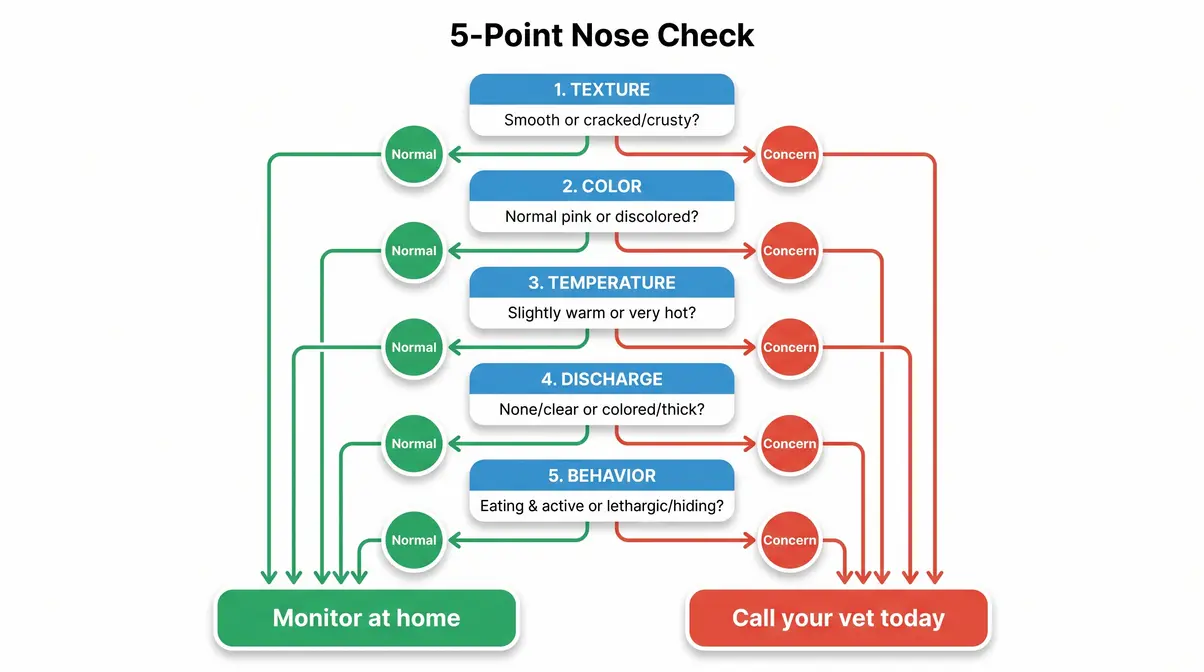
- The 5-Point Nose Check (texture, color, temperature, discharge, behavior) tells you which category your cat falls into
- Never apply Vaseline, human lotion, or essential oils to your cat’s nose without vet guidance
- Call your vet today if you see cracking, sores, thick discharge, or behavior changes
- Senior cats face higher risk from dehydration — check them more frequently
When a Dry Cat Nose Is Completely Normal
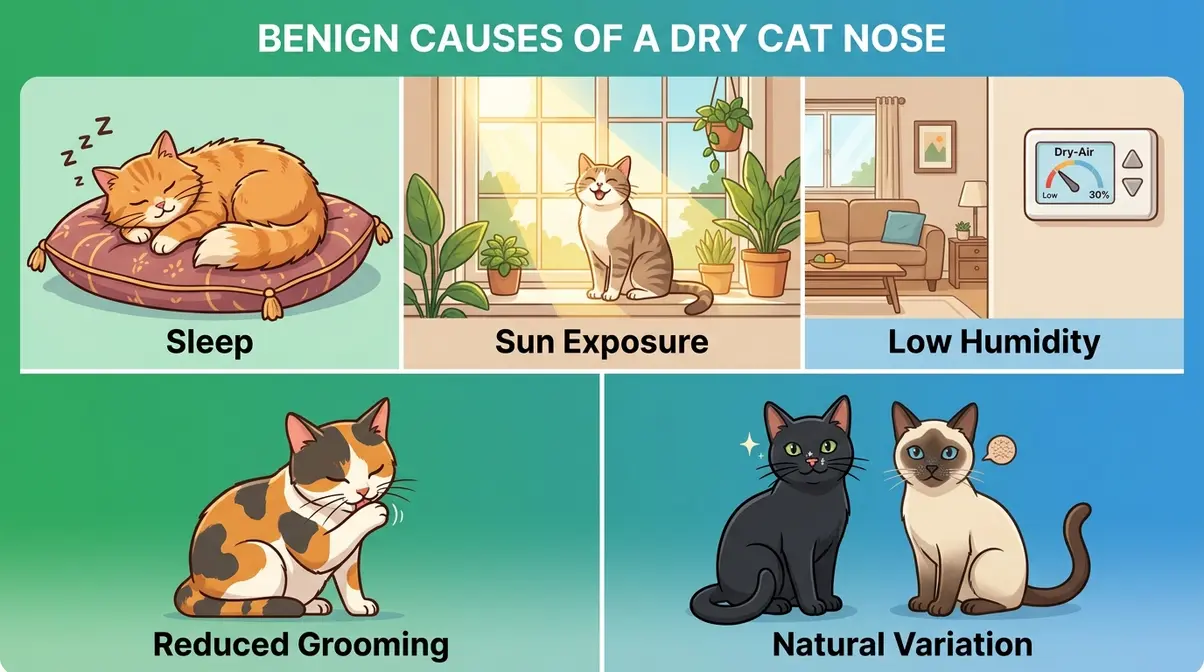
A dry cat nose is not, by itself, a reliable indicator of illness. According to Chewy’s veterinary health team, nose moisture alone is not a reliable health indicator — it fluctuates throughout the day based on entirely benign factors. Most of the time, the answer to “why is my cat’s nose dry” is as simple as a warm nap in a sunny spot.
These home-care observations reflect veterinary consensus from peer-reviewed sources and are reviewed by a licensed DVM. Understanding the normal reasons for nose dryness is the first step in the 5-Point Nose Check — the framework this guide uses to help you assess texture, color, temperature, discharge, and behavior systematically.
5 Common Reasons for a Dry Cat Nose
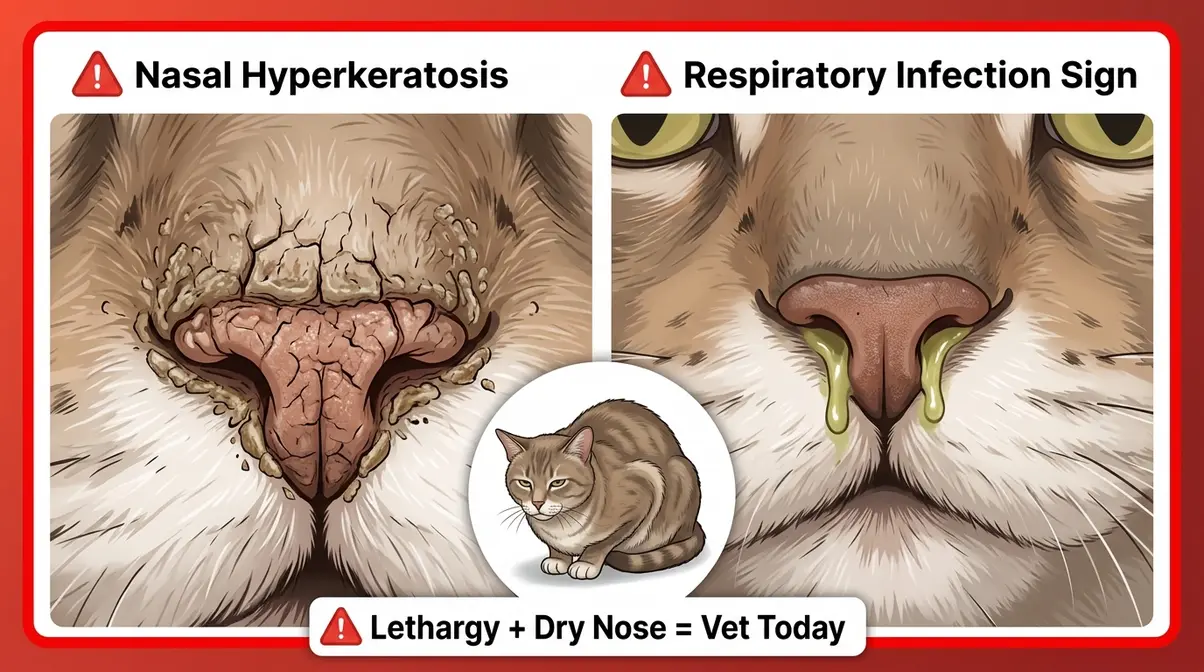
Most dry noses trace back to one of these five benign causes:
- Sleep. When cats rest, they stop grooming their noses. That light moisture film — produced partly by small sweat glands on the nasal planum (the hairless tip of the nose) — evaporates. A nose that feels dry right after your cat wakes up is almost always nothing to worry about.
- Sun exposure or warmth. Cats love sunbeams and heating vents. Direct heat evaporates nasal moisture quickly, just like chapped lips in winter. This is temporary and reverses once your cat moves away from the heat source.
- Low indoor humidity. Central heating and air conditioning reduce indoor humidity significantly. Dry air draws moisture away from your cat’s nose continuously. If your home feels dry to you, it’s dry for your cat too.
- Reduced grooming. Cats groom their faces frequently, and this grooming redistributes moisture across the nose. An older cat or one resting deeply may simply groom less for a few hours — leaving the nose feeling drier than usual.
- Natural individual variation. Some cats simply have drier noses than others. Purina’s veterinary team confirms that a dry nose on its own may not be anything to worry about — individual baseline differences are real and common (Purina, 2026).
Here’s the physiological detail no competitor explains: cats have a small number of eccrine sweat glands on their nasal planum. These glands produce a thin moisture film. When environmental heat, low humidity, or sleep reduces that output, the nose dries temporarily. This is a thermoregulation mechanism, not a sign of sickness.
Is a Dry Nose After a Nap Normal?
Yes — almost always. This is one of the most common concerns cat owners report, and it has a straightforward explanation. During sleep, a cat’s grooming stops, the eccrine glands on the nose slow their output, and ambient air dries the surface. The nose typically returns to its normal moisture level within 10–30 minutes of waking.
What to watch: If the nose stays dry for more than an hour after your cat is fully awake and active, or if you notice other changes like lethargy or not eating, then it’s worth a closer look using the 5-Point Nose Check outlined in the next section.
The ASPCA Pet Insurance team confirms that a dry cat nose on its own is not cause for alarm — context and accompanying symptoms are what matter (ASPCA Pet Insurance, 2026).
Why Nose Moisture Fluctuates All Day
Think of your cat’s nose like the skin on your own lips. On a dry day, after a hot drink, or after sleeping with your mouth open, your lips feel drier — but that doesn’t mean something is wrong. Your cat’s nose works similarly.
Moisture levels rise and fall throughout the day based on:
- Grooming frequency — more grooming = more moisture redistributed
- Activity level — active cats breathe more, which can affect nasal moisture
- Room temperature and humidity — fluctuations happen hour to hour
- Water intake — a well-hydrated cat maintains better nasal moisture overall
Veterinary consensus from Chewy’s health team indicates that this natural variation in nose moisture is completely expected and does not signal illness when it occurs in an otherwise healthy, active cat (Chewy, 2026). If your cat is eating normally, playing, and showing no other symptoms, daily fluctuations in nose dryness are not something to stress about.
Warning Signs: When to Worry About a Dry Nose
This is where the 5-Point Nose Check becomes essential. When asking why is my cat’s nose dry, it is crucial to remember that not all dry noses are equal. Evaluating your cat’s nose across five factors — texture, color, temperature, discharge, and behavior — gives you a systematic way to distinguish normal dryness from a genuine red flag.
A dry nose combined with any of the warning signs below deserves prompt veterinary attention. Veterinary consensus indicates that it’s the combination of a dry nose with other symptoms that signals a problem — not the dry nose alone.
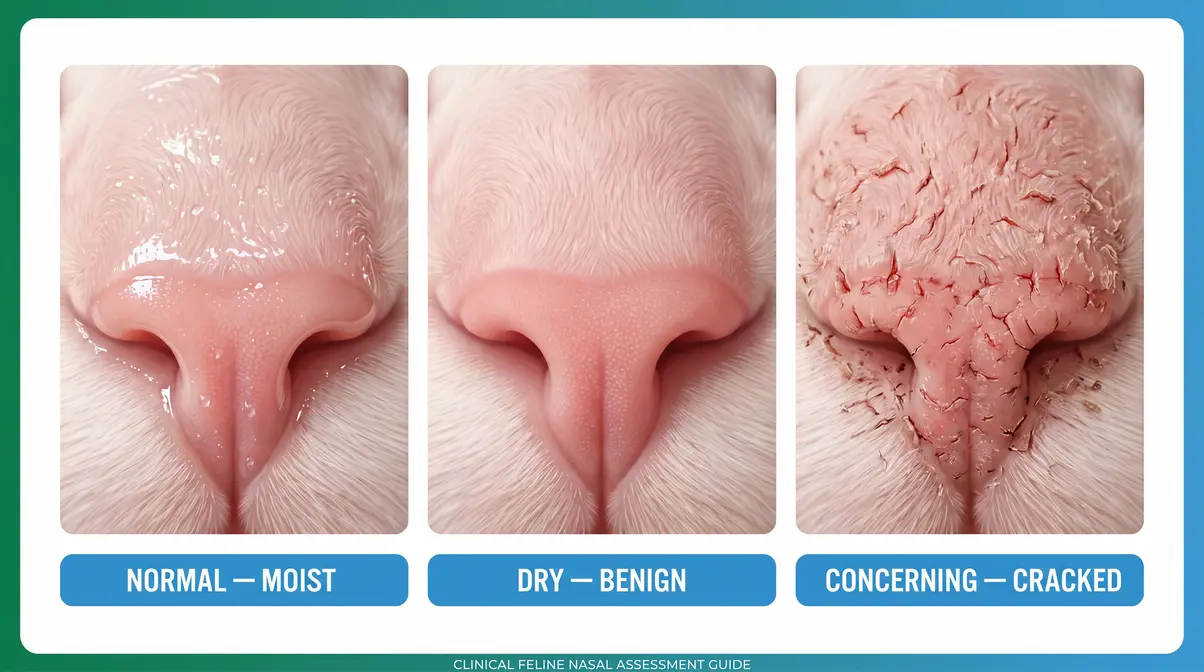
Cracked or Crusty: Nasal Hyperkeratosis
If your cat’s nose isn’t just dry but cracked, thickened, or covered in crusty buildup, you may be looking at nasal hyperkeratosis — a condition where the skin on the nose thickens and becomes crusty due to an overproduction of keratin (the protein that makes up skin and nails).
Nasal hyperkeratosis is particularly recognized in Bengal cats, where it is sometimes called “Bengal nose.” The University of Bern’s Institute of Genetics has identified a hereditary basis for this condition in Bengals — it causes persistent crusts on the nasal planum and can lead to painful fissures if left untreated (University of Bern, 2023). This is precisely why that Bengal owner’s forum post resonates so widely.
- Key signs that point to hyperkeratosis:
- Thick, rough, or “cobblestoned” texture on the nose surface
- Dry crusts that don’t resolve after your cat wakes and grooms
- Cracking or fissures, which can become painful
- No other systemic symptoms (eating and behavior are often normal)
Treatment is largely supportive — a vet-prescribed moisturizing or keratolytic (crust-softening) balm applied regularly keeps the condition manageable. There is no cure, but with proper care, affected cats maintain a good quality of life. If you suspect hyperkeratosis, consult your vet for a diagnosis before applying any products, as other nasal conditions (including autoimmune disease) can look similar.
Autoimmune conditions like pemphigus complex can also cause crusty, red patches on a cat’s nose, according to Purina’s veterinary team — making professional diagnosis essential before home treatment (Purina, 2026).
How to Check If Your Cat Has a Fever
A warm, dry nose is one of the most common reasons cat owners worry. Here’s the truth: you cannot reliably diagnose a fever by touching your cat’s nose. A nose can feel warm simply because your cat sat in a sunbeam. Accurate fever assessment requires a rectal thermometer — a normal feline temperature ranges from 100.5°F to 102.5°F (38.1°C to 39.2°C).
However, a warm, dry nose combined with other signs may indicate fever:
- Lethargy or unusual tiredness — your cat is much less active than normal
- Loss of appetite — not eating for more than 24 hours
- Shivering or hunching — a cat trying to conserve heat
- Rapid breathing — more than 30 breaths per minute at rest
- Hot ears — ears that feel noticeably warmer than usual
If you see three or more of these signs alongside a dry nose, consult your vet promptly. Hill’s Pet Nutrition veterinary team notes that symptoms to check alongside a dry nose include changes in energy, eating habits, and general demeanor (Hill’s Pet, 2026). Do not attempt to take a cat’s temperature at home unless you have been shown how to do this safely by your vet.
Respiratory Infections and a Dry Nose
Upper respiratory infections are a common cause of concern in cats — and they can indirectly cause a dry nose. Here’s how: when a cat has nasal congestion from a respiratory infection, it breathes more through its mouth, which dries out the nose. Additionally, fever associated with infection raises body temperature and accelerates moisture loss.
Feline calicivirus (FCV) is one of the most common upper respiratory viruses in cats. According to Cornell University College of Veterinary Medicine, early FCV signs include sneezing, nasal congestion, fever, and sometimes drooling — with large amounts of discharge from the eyes and nose as the infection progresses (Cornell University, 2026). A dry nose is nonspecific for FCV, but the accompanying symptoms are distinctive.
- Watch for these respiratory infection warning signs alongside a dry nose:
- Sneezing — frequent or in bursts
- Nasal or eye discharge — especially if yellow, green, or thick
- Oral ulcers — sores on the tongue, gums, or lips
- Fever and lethargy — often appearing together
- Reduced appetite — common with painful mouth ulcers
If your cat is sneezing frequently and has colored discharge alongside a dry nose, this combination warrants a vet visit. The Merck Veterinary Manual notes that the feline respiratory disease complex — which includes calicivirus — can cause inflammation of the nasal and sinus linings, conjunctivitis, and excessive salivation (Merck Veterinary Manual, 2026).
Dehydration: The At-Home Skin Tent Test
Dehydration is one of the more serious causes of a persistently dry nose — and it’s one you can screen for at home using two simple tests. Think of these as a preliminary check, not a diagnosis.
Cornell University’s Feline Health Center explains that skin turgor (the skin’s ability to snap back) is a key indicator of hydration status in cats (Cornell University, 2026).
Test 1: The Skin Tent Test
- Make sure your cat is calm and relaxed — sitting or standing comfortably.
- Using your thumb and forefinger, gently pinch a small fold of skin between your cat’s shoulder blades.
- Lift the skin gently into a “tent” shape, then release it.
- Watch how quickly the skin returns to its normal position.
- What the results mean:
- Snaps back immediately (within 1–2 seconds): Normal hydration — good sign.
- Returns slowly over several seconds: May indicate mild to moderate dehydration. Monitor closely and contact your vet, especially if other symptoms are present.
- Stays tented or barely moves: Suggests significant dehydration — seek veterinary care promptly.
Important caveat: This test is less reliable in senior cats, whose skin naturally loses elasticity with age (Hill’s Pet Nutrition, 2026).
Test 2: The Capillary Refill Time (CRT) Check
- Gently lift your cat’s lip to expose the gums.
- Check that the gums look pink and moist — this is normal.
- Using a fingertip, press gently on the gum tissue until it turns pale or white.
- Release and count how long it takes for the pink color to return.
- What the results mean:
- Color returns within 2 seconds: Normal circulation — reassuring.
- Takes more than 2 seconds: May indicate poor circulation or significant dehydration — contact your vet.
- Gums are dry, tacky, or pale without pressing: Seek veterinary attention right away.
If either test raises concern, do not wait. Dehydration in cats can escalate quickly and may indicate an underlying condition requiring prompt treatment.
Senior Cats: Extra Risks to Know
If your cat is over 10 years old, a dry nose warrants closer attention. According to Cornell University’s Feline Health Center, dehydration is a consequence of many diseases common to older cats, and the skin of an older cat is thinner — making the skin tent test less reliable as a standalone assessment (Cornell University, 2026).
Senior cats face a compounding risk: chronic kidney disease (CKD) is one of the most common conditions in aging cats, and it causes increased urination, which accelerates fluid loss. A senior cat with CKD may become dehydrated faster than a younger cat under the same conditions. Banfield Pet Hospital’s veterinary team identifies chronic dehydration itself as a risk factor for kidney disease in older cats — creating a harmful cycle (Banfield, 2026).
- For senior cats specifically, consult your vet promptly if you notice:
- A dry nose that persists beyond a few hours
- Increased thirst or urination
- Weight loss, even gradual
- Reduced appetite or vomiting
- Lethargy beyond normal senior sleepiness
Twice-yearly wellness exams are strongly recommended for cats over 10 — early detection of kidney disease makes a significant difference in management and quality of life.
Safe Home Care for Your Cat’s Dry Nose
When your cat’s dry nose is benign — caused by sleep, warmth, or low humidity — there are several safe, practical steps you can take at home. These recommendations reflect veterinary consensus from peer-reviewed sources and are reviewed by a licensed DVM.
Safe Moisturizers for Your Cat’s Nose
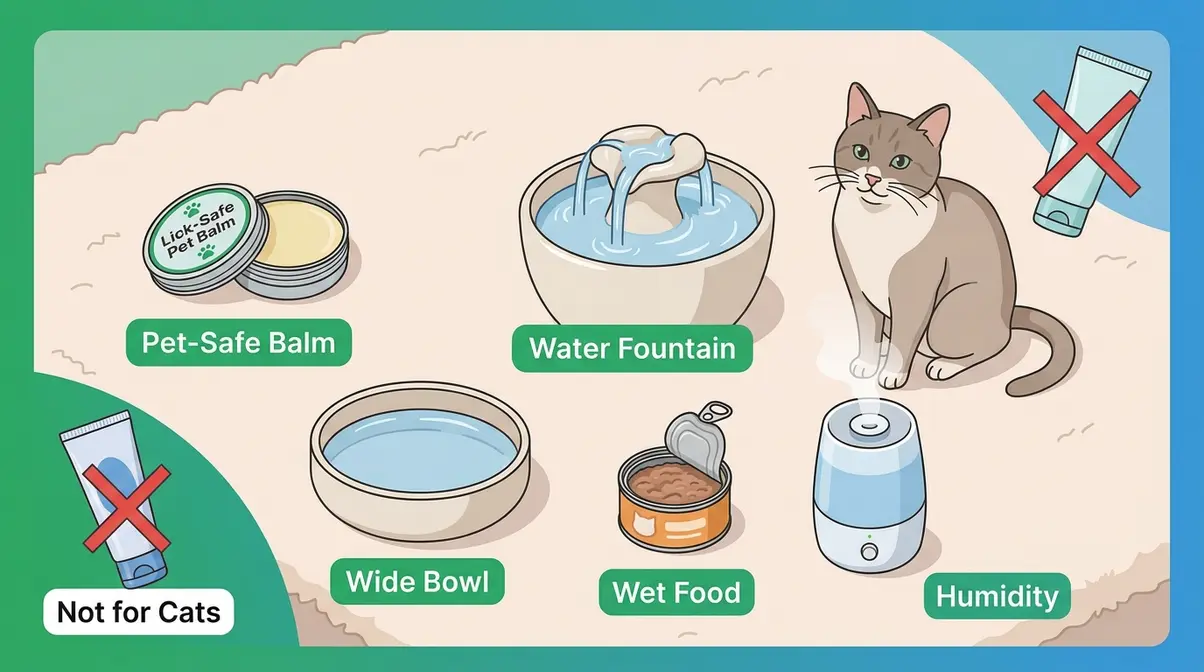
For cats with chronically dry noses (or conditions like nasal hyperkeratosis diagnosed by a vet), a pet-specific, lick-safe nose balm can provide relief. The key requirement: it must be formulated for pets and safe if ingested, because cats will groom their noses.
Vet-aligned options to consider:
| Product Type | Key Ingredients | Cat-Safe? | Notes |
|---|---|---|---|
| Pet-specific nose/paw balm (e.g., Vetericyn Paw ‘N Snout) | Manuka honey, aloe vera, hyaluronic acid | ✅ Yes — labeled for cats | Apply sparingly; lick-safe formulation |
| USDA Certified Organic pet balm | Organic oils, no fillers | ✅ Yes — if labeled for cats | Check label confirms cat-safe |
| Natural oil balm (coconut oil, shea butter, beeswax, vitamin E) | Plant-based ingredients | ✅ Generally yes | Use pet-specific versions; avoid human skincare |
| Human lotion or cream | Fragrances, parabens, preservatives | ❌ No | Not formulated for cats; ingestion risk |
| Essential oil-based products | Tea tree, eucalyptus, peppermint, citrus | ❌ Never | Toxic to cats even in small amounts |
Choose balms specifically labeled for cats or for both dogs and cats. Lolahemp’s cat health guide confirms that balm is safe for cats as long as it is formulated for pets, non-toxic, and lick-safe (Lolahemp, 2026). Always confirm with your vet before starting any new topical product, especially for cats with diagnosed skin conditions.
- How to apply a pet-safe nose balm:
- Choose a moment when your cat is calm and relaxed — after a meal works well.
- Place a tiny amount (pea-sized or smaller) on your fingertip.
- Gently dab the balm onto the nose surface with light, circular strokes.
- Do not force the application — if your cat resists, try again later.
- Apply once daily or as directed by your vet.
Products to Never Put on a Cat’s Nose
This point matters more than many owners realize. Cats groom constantly — anything you put on their nose will be licked off and swallowed within minutes.
- Never apply these to your cat’s nose:
- Human lotions or moisturizers — contain fragrances, parabens, and preservatives that are not safe for feline ingestion
- Essential oils (tea tree, eucalyptus, peppermint, lavender, citrus) — toxic to cats even in small amounts; can cause liver damage and neurological symptoms
- Zinc oxide creams (including many sunscreens) — highly toxic to cats if ingested
- Aloe vera gel from the plant — the raw gel contains saponins that are toxic to cats, unlike processed pet-safe versions in formulated balms
What about Vaseline? The answer is nuanced. Some vets consider small amounts of petroleum jelly (Vaseline) topically safe for short-term use. However, it is not formulated for cats, creates an occlusive barrier that can trap bacteria, and is not the best long-term choice. If you’re considering Vaseline, consult your vet first — there are better, purpose-built alternatives available (VeterinarySecrets.com, 2026).
How to Help Your Cat Drink More Water
Increasing water intake is one of the most effective ways to support a cat with a persistently dry nose, especially if mild dehydration is suspected. Cats are notoriously poor drinkers — in the wild, they get most of their moisture from prey.
Five practical steps to boost your cat’s water intake:
- Switch to wet food or add water to dry kibble. Wet food contains approximately 75–80% water versus only 6–10% in dry kibble. This single change can dramatically increase daily fluid intake.
- Try a cat water fountain. Many cats strongly prefer moving water over still water in a bowl. A recirculating fountain encourages more frequent drinking.
- Place multiple water bowls around the home. Cats drink more when water is easily accessible in different locations — especially away from their food bowl.
- Use wide, shallow bowls. Cats dislike having their whiskers touch the sides of a bowl (called whisker fatigue). A wider bowl encourages longer drinking sessions.
- Refresh water daily. Cats are sensitive to stale or contaminated water. Fresh, clean water every day makes a noticeable difference in intake.
If your cat is not drinking despite these measures and also shows lethargy, loss of appetite, or sunken eyes, contact your vet. These signs together may indicate dehydration requiring medical treatment. For even more creative strategies to boost fluid intake, check out our full guide on cat hydration hacks.
Step-by-Step: The Skin Tent Test
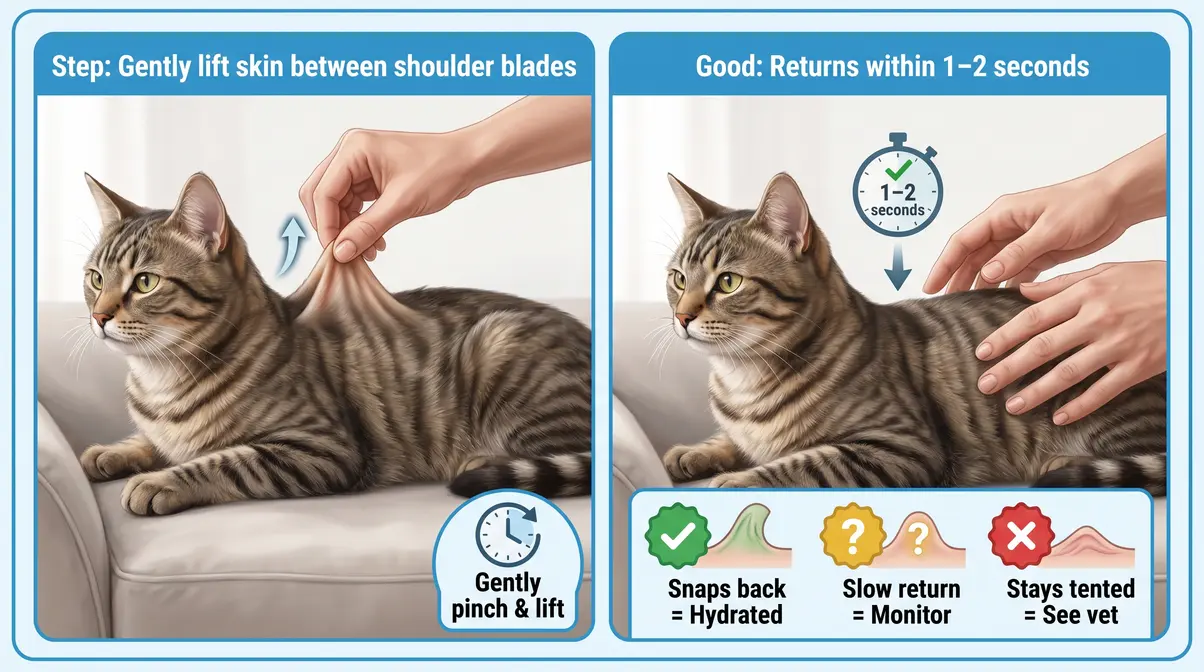
The skin tent test is the most accessible at-home hydration check available to cat owners. Veterinary consensus from Cornell University’s Feline Health Center confirms this as a standard screening tool for hydration status (Cornell University, 2026). Here is the complete, step-by-step process:
What you need: Just your hands and a calm cat. No equipment required. Estimated time: 30 seconds.
- Choose the right moment. Perform this test when your cat is calm — after eating or during a quiet rest period. An agitated cat will tense its muscles, which affects the skin’s response.
- Position your cat. Let your cat sit or stand naturally. Do not restrain them.
- Locate the scruff area. Find the skin between your cat’s shoulder blades — this is the most reliable testing site.
- Gently pinch and lift. Using your thumb and forefinger, pinch a small fold of skin and lift it gently upward into a “tent” shape. Do not pull hard — a gentle lift is sufficient.
- Release and observe. Let go of the skin and watch carefully.
- Time the return. Count the seconds until the skin lies flat again.
Interpreting your results:
| Result | Time to Flatten | What It May Mean | Action |
|---|---|---|---|
| Snaps back immediately | < 1 second | Well hydrated | No action needed |
| Returns within 1–2 seconds | 1–2 seconds | Normal to mildly dry | Offer more water; monitor |
| Returns slowly | 2–4 seconds | Possible mild dehydration | Contact your vet |
| Stays tented | > 4 seconds | Significant dehydration | Seek veterinary care today |
Important limitations: In senior cats, skin elasticity naturally decreases with age. A slow skin return in a 12-year-old cat does not automatically mean dehydration — combine this test with the capillary refill check and overall behavior assessment for a fuller picture (Hill’s Pet Nutrition, 2026).
Why Is a Cat’s Nose Normally Wet?
A cat’s nose is typically moist because of those small eccrine sweat glands on the nasal planum, combined with regular self-grooming. Cats lick their noses frequently throughout the day, redistributing saliva and maintaining that characteristic cool, damp feel. Some cats also secrete a thin fluid from the nose itself, which contributes to the moisture.
The moisture actually serves a function: it helps cats better detect scent particles in the air. A moist nasal surface traps airborne molecules more effectively, enhancing their already extraordinary sense of smell. So a wet nose isn’t just normal — it’s part of how cats interact with their environment.
For a deeper look at what a wet nose means and when that should concern you, see our full guide: why are cats’ noses wet or dry — which covers the full spectrum of nose moisture from the other direction.
It’s worth noting that neither a wet nose nor a dry nose is a standalone health indicator. Chewy’s veterinary health team puts it plainly: “A wet or dry cat nose can be normal, depending on what your cat has been doing recently” (Chewy, 2026). The context — and the five factors in the 5-Point Nose Check — always matter more than the moisture level alone.
When to Call the Vet: Your Quick Checklist
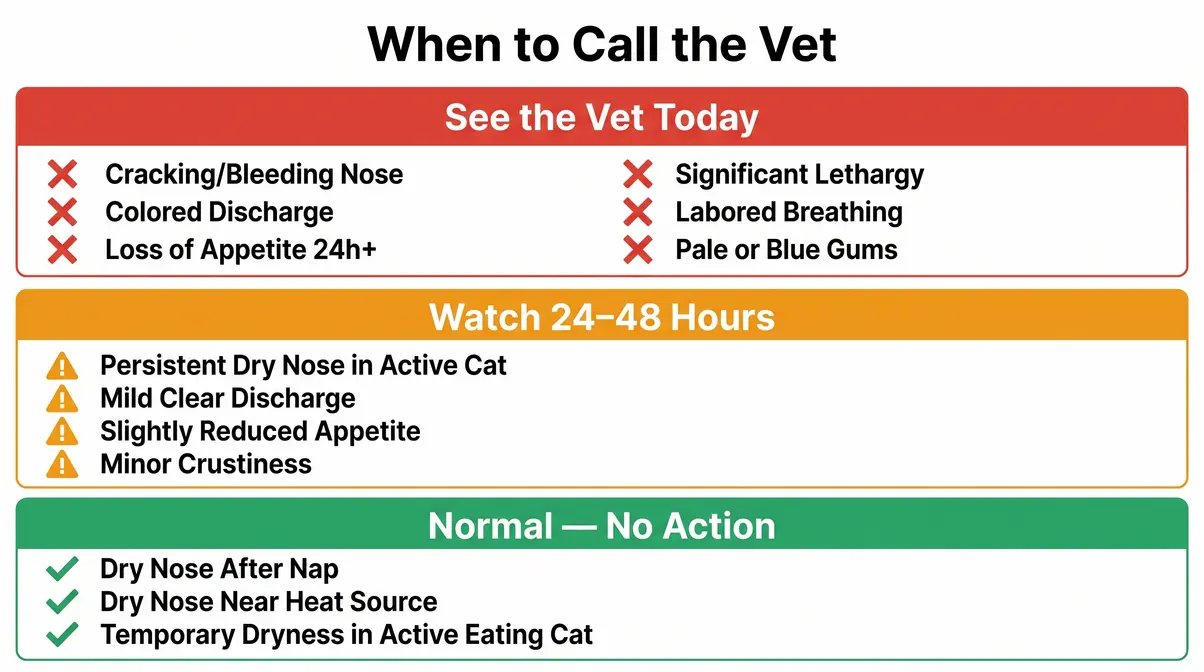
Knowing when to seek professional help is the most important practical skill this guide can give you. The following framework gives you clear, tiered guidance — not a binary “see a vet immediately” without context.
Red-Flag Symptoms: See the Vet Today
Call your vet today — do not wait — if your cat’s dry nose is accompanied by any of the following:
- Cracking, bleeding, or open sores on the nose surface
- Thick, colored discharge (yellow, green, or brown) from the nose or eyes
- Complete loss of appetite for more than 24 hours
- Significant lethargy — your cat is barely moving or unresponsive to interaction
- Difficulty breathing — labored, rapid, or open-mouth breathing
- Pale, white, blue, or gray gums — this is an emergency
- Skin tent test result stays tented for more than 4 seconds
- Capillary refill time longer than 2 seconds
- Swelling of the face, lips, or muzzle
- Suspected toxin ingestion — if your cat licked a household product
These symptoms, combined with a dry nose, indicate conditions that require professional diagnosis and treatment. Do not attempt to manage these at home.
Symptoms That Can Wait 24–48 Hours
The following symptoms are worth monitoring closely but do not typically require an emergency visit — provided they do not worsen:
- Dry nose that has persisted for more than a day in an otherwise active, eating cat
- Mild, clear nasal discharge with occasional sneezing
- Slightly reduced appetite (eating some food, just less than usual)
- Minor crustiness around the nose that is not bleeding or spreading
- A dry nose in a senior cat who is otherwise behaving normally
The rule: If any “wait and see” symptom worsens within 24 hours, or if you see it combined with a red-flag symptom, escalate to same-day veterinary care. When in doubt, call your vet’s office — a brief phone consultation can save you unnecessary worry or catch something early. For a broader understanding of routine and emergency care schedules, review our complete cat veterinary checklist.
The Limits of Home Assessment
Common Pitfalls to Avoid
Home assessment has real value — but it also has clear limits. These are the most common mistakes cat owners make when evaluating their cat’s nose:
- Relying on nose temperature alone. A warm nose does not confirm fever. Only a rectal thermometer gives an accurate temperature reading. Feeling your cat’s nose and concluding it has a fever is a common — and potentially misleading — shortcut.
- Treating the skin tent test as definitive. The skin tent test is a screening tool, not a diagnosis. In senior cats, overweight cats, or cats with skin conditions, results can be misleading. A vet’s assessment includes mucous membrane evaluation, blood work, and other diagnostics that no home test can replicate.
- Waiting too long because “it’s probably nothing.” Most dry noses are nothing. But the ones that aren’t can deteriorate quickly — especially in kittens and senior cats. If you’re genuinely worried, a phone call to your vet costs nothing and provides peace of mind.
- Applying human products. As covered in the home care section, this is a common and potentially dangerous mistake. Cats groom constantly. What goes on the nose goes into the cat.
- Ignoring behavioral changes. A cat that seems quieter than usual, less interested in food, or hiding more than normal is telling you something. Behavioral changes are often the earliest warning sign — don’t discount them because the nose “looks okay.”
When to Seek Expert Help
Some scenarios fall outside what home assessment can address:
- Persistent symptoms beyond 48 hours — even mild ones — warrant a vet visit
- Any skin lesion, sore, or unusual growth on the nose requires professional diagnosis; autoimmune conditions and nasal tumors can mimic simpler issues
- Senior cats showing any combination of symptoms — kidney disease and other age-related conditions require blood work to diagnose accurately
- Kittens under six months — they dehydrate faster and deteriorate more quickly than adult cats; err on the side of caution
- Cats with known chronic conditions (kidney disease, diabetes, hyperthyroidism) — any new symptom in these cats warrants prompt veterinary attention
The 5-Point Nose Check is a triage tool, not a diagnostic replacement. Its value is helping you ask better questions — not in replacing the clinical judgment of a licensed veterinarian.
Frequently Asked Questions
What does a dry nose on a cat mean?
A dry cat nose usually means your cat has been sleeping, sitting near a heat source, or is in a low-humidity environment — all completely normal. Nose moisture fluctuates throughout the day based on grooming, activity, and ambient conditions. A dry nose becomes concerning only when it is persistent and accompanied by other symptoms such as lethargy, loss of appetite, colored discharge, or cracking. According to Chewy’s veterinary team, nose moisture alone is not a reliable health indicator (Chewy, 2026). Most dry noses resolve on their own within minutes to hours.
Should I Worry If My Cat’s Nose Is Dry?
Not in most cases — a dry cat nose on its own is rarely a sign of illness. Concern is warranted when dryness appears alongside red-flag symptoms: cracking, sores, thick nasal discharge, significant lethargy, or refusal to eat for more than 24 hours. The ASPCA Pet Insurance team confirms that a dry nose alone does not require a vet visit, but a combination of symptoms does (ASPCA Pet Insurance, 2026). Use the 5-Point Nose Check — texture, color, temperature, discharge, and behavior — to assess the full picture before deciding.
How to Treat a Dry Cat Nose at Home
The safest at-home treatment for a dry cat nose is a pet-specific, lick-safe nose balm applied sparingly once daily. Products containing coconut oil, shea butter, beeswax, or manuka honey — formulated for cats — are appropriate options. Increase your cat’s water intake through wet food, a water fountain, and multiple water bowls. Never use human lotions, essential oils, or zinc oxide products on your cat’s nose. If the dryness is caused by an underlying condition like nasal hyperkeratosis, your vet will recommend a specific treatment protocol.
How do I hydrate my cat’s nose?
The most effective way to hydrate your cat’s nose is to improve overall hydration — not to apply topical products alone. Switch to wet food or add water to dry kibble, offer fresh water in multiple locations, and consider a cat water fountain. For surface dryness, a small amount of pet-safe, lick-safe balm (such as Vetericyn Paw ‘N Snout, formulated for cats) can provide temporary relief. Cornell University’s Feline Health Center identifies skin turgor testing as a useful at-home screening tool for hydration status (Cornell University, 2026).
When Does a Dry Cat Nose Need a Vet?
See your vet the same day if the dry nose is accompanied by cracking, bleeding, colored discharge, significant lethargy, loss of appetite for over 24 hours, difficulty breathing, or pale gums. These combinations suggest conditions — from dehydration to respiratory infection to autoimmune disease — that require professional diagnosis. A dry nose with only mild, clear discharge and no behavioral changes can typically be monitored for 24–48 hours. When in doubt, a quick phone call to your vet’s office provides guidance without requiring an in-person visit.
4 Signs Your Cat Is Suffering
Four key signs that your cat may be suffering and needs veterinary attention are: significant lethargy, complete loss of appetite, labored or open-mouth breathing, and hiding or withdrawal from normal interaction. Any one of these alongside a dry nose is a reason to contact your vet promptly. Additional signs include pale or gray gums, persistent vomiting, crying or vocalization when touched, and a hunched posture. Cats instinctively hide pain, so behavioral changes — even subtle ones — are often the first and most important signal that something is wrong.
Putting It All Together
If you started this guide wondering why is my cat’s nose dry, you now know it usually turns out to be exactly what it looks like: a benign, temporary change caused by sleep, warmth, or dry indoor air. The 5-Point Nose Check — assessing texture, color, temperature, discharge, and behavior together — gives you a reliable framework to move from worry to clarity in under two minutes.
The framework’s value lies in its systematic approach. A nose that is simply dry (texture: smooth, color: normal pink, temperature: slightly warm, discharge: none, behavior: eating and active) is almost always nothing to worry about. A nose that is cracked, discolored, accompanied by discharge, and paired with lethargy or not eating is a combination that warrants same-day veterinary attention.
Your next step is straightforward: run through the 5-Point Nose Check now. If your cat passes all five points — and is eating, active, and behaving normally — relax, offer some fresh water, and monitor over the next day. If you see red-flag symptoms, or if you’re uncertain, call your vet. A brief phone consultation can provide the reassurance you need or catch something early when it’s easiest to treat.